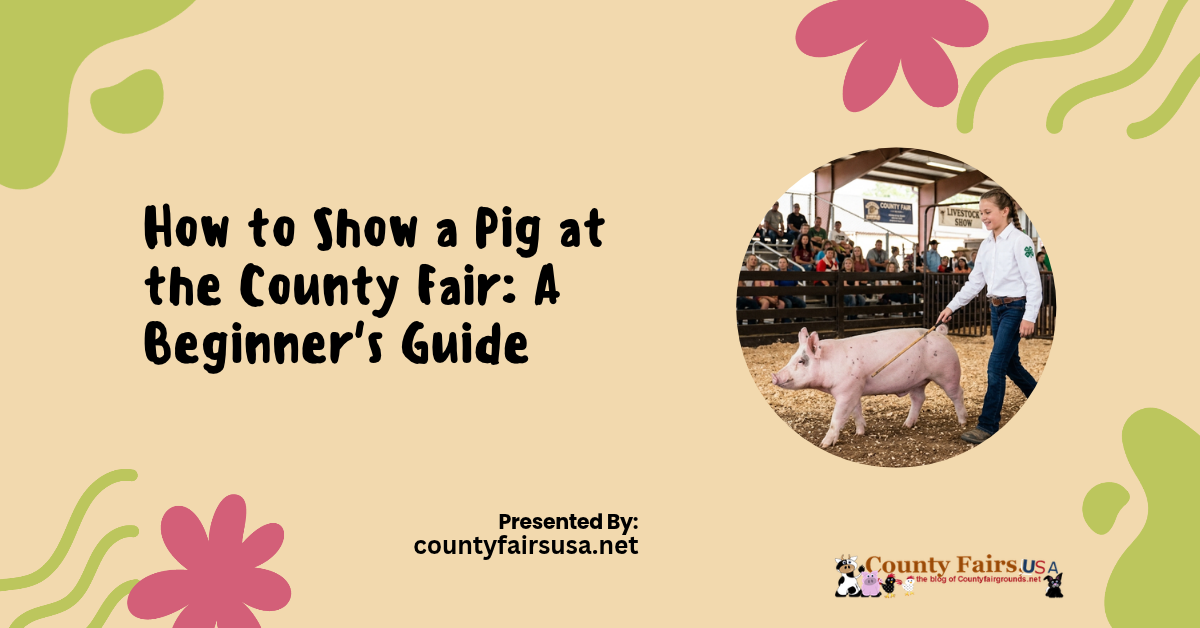
Learning how to show a pig comes down to daily walking practice, clean grooming, and calm control inside the show ring. You guide your animal with light taps from a show stick while keeping steady eye contact with the judge. Much like learning showing a goat, early preparation turns nervous beginners into confident exhibitors.
In this article: Key Takeaways, Understanding County Fair Swine Classes, Choosing and Raising Your Show Pig, Essential Gear for Show Day, How to Show a Pig During Daily Training, Mastering Hog Showmanship on Fair Day, Preparing Your Pig for the Ring, Frequently Asked Questions, Stepping Into the Show Ring
Key Takeaways
- Daily walking builds ring habits. Short, consistent practice sessions teach your pig to respond to light stick taps without panicking or running into corners.
- Showmanship judges the exhibitor. While market classes evaluate muscle and fat cover, swine showmanship scores your control, ring awareness, and presentation skills.
- Simple gear works best. A sturdy show stick, a soft brush, a small rag, and clean show clothes are all you need to enter the arena.
- Eye contact keeps you connected. Keeping your pig between you and the pig judge ensures the official always gets a clear, unobstructed view of your animal.
- Clean skin highlights structure. Washing and brushing your hog regularly keeps the skin healthy and makes muscle definition stand out under arena lights.
Understanding County Fair Swine Classes
Before you step into the sawdust, you need to know which classes you are entering. County fairs divide swine competitions into distinct categories based on the animal’s purpose and the exhibitor’s skill level. Most youth exhibitors participate through local agricultural groups, which form the backbone of 4-H and FFA programs across the country.
Market Hog Classes
A market hog is raised specifically for meat production. In these classes, the judge evaluates the pig’s physical traits rather than your handling skills. Officials look for structural correctness, heavy muscle volume, natural width, and an ideal level of fat cover.
Market hogs are typically weighed upon arrival at the fairgrounds and split into weight divisions. Common county fair market weights range from 230 to 290 pounds, though exact rules vary by region. Both barrows (castrated males) and gilts (young females) can compete in market divisions.
Breeding Gilt Classes
Breeding gilt classes focus on females kept for future herd reproduction. The pig judge looks for femininity, sound feet and legs, good underline development, and long-term durability. These classes are usually broken down by birth month rather than body weight.
Hog Showmanship Classes
Hog showmanship is all about you, the exhibitor. The judge watches how smoothly you move your animal, how well you follow instructions, and how calm you stay when another pig bumps into yours. You do not need the most expensive hog in the barn to win a showmanship ribbon.
| Class Type | Primary Focus | What the Judge Evaluates | Typical Grouping |
|---|---|---|---|
| Market Hog | Meat quality and carcass value | Muscle shape, trimness, structural soundness | Weight divisions |
| Breeding Gilt | Reproductive potential | Soundness, underline quality, maternal traits | Age or birth month |
| Hog Showmanship | Exhibitor handling skill | Control, eye contact, ring positioning | Exhibitor age or grade |
Choosing and Raising Your Show Pig
Success at the fair begins months before the gates open. Selecting a healthy, structurally sound show pig gives you a strong foundation for both market classes and showmanship.
Selecting a Healthy Prospect
Most exhibitors buy their feeder pigs in the spring for summer or fall fairs. Prices for a quality county fair prospect typically range from $150 to $500, depending on genetics and local demand. Look for a pig that walks freely with long, flexible strides and keeps its head up naturally.
Avoid pigs that walk stiffly, toes out severely, or show signs of respiratory illness like coughing. Check the skin for smooth, clean hair and bright, alert eyes. A pig with good natural balance will always be easier to guide in the ring.
Feeding and Daily Care
Your pig needs a balanced grower ration designed specifically for show swine, along with constant access to fresh, clean water. Pigs grow quickly, often gaining 1.5 to 2 pounds per day during the final months before the fair. Keep a close eye on your pig’s weight so it hits the fair’s target window without getting overly fat or falling underweight.
Clean housing is just as important as good feed. Fresh wood shavings or straw keep your pig’s skin free from stains and sores. A comfortable pig stays calmer and handles daily training much better.
Essential Gear for Show Day
You do not need a trailer full of expensive gadgets to look professional at the fair. Packing a small, organized show box keeps your ringside routine stress-free.
- Show stick or whip: A lightweight show stick, fiberglass whip, or sorting cane lets you tap the pig’s shoulder or jowl to guide its direction. Choose a length that feels comfortable in your hand, usually 36 to 42 inches.
- Pocket brush: A small, soft-bristled brush fits in your back pocket so you can sweep sawdust off your pig’s back while in the ring.
- Damp rag: Tuck a clean cloth into your pocket or belt loop to wipe mud or shavings off your pig’s face and flanks before entering the gate.
- Sturdy boots: Wear closed-toe leather boots with good traction to protect your feet in slick arena conditions.
- Neat show attire: Dark jeans, a collared shirt, and a leather belt create a sharp, traditional look that meets almost all fair dress codes.
- Spray bottle: Mist your pig lightly with water before the class to cool it down and give its hair a healthy sheen, unless your fair rules prohibit wet hogs.
How to Show a Pig During Daily Training
Learning how to show a pig effectively starts in your own backyard months before fair week. Pigs are intelligent animals, and short, positive practice sessions build trust faster than long, frustrating workouts. According to the Oklahoma State University Extension, consistent daily handling helps pigs stay relaxed when they eventually face noisy crowds.
- Start in a small pen. Begin your training inside a fenced area or small yard so your pig cannot bolt away. Let the pig explore and get used to you walking quietly beside it for the first few days.
- Introduce the show stick gently. Touch your pig’s back and sides with the stick so it learns the tool is not something to fear. Never hit your pig hard, as heavy strikes cause panic and bruising.
- Practice basic steering cues. Tap the right side of the pig’s jowl or cheek to turn it left, and tap the left side to turn it right. Use a light tap behind the shoulder or along the flank to ask the pig to move forward.
- Teach the pig to keep its head up. Lightly tickle or tap under the chin to encourage the pig to lift its head. A pig with its head up shows off a level topline and a cleaner neck.
- Build up walking stamina. Walk your pig for 15 to 20 minutes every day during the cooler morning or evening hours. Good stamina keeps your hog moving briskly through a 15-minute class without getting tired or lying down.
- Add distractions gradually. Play a radio near the pen or invite family members to watch your practice sessions. Getting your pig used to sudden noises prevents spooking when fairground loudspeakers crackle to life.
Mastering Hog Showmanship on Fair Day
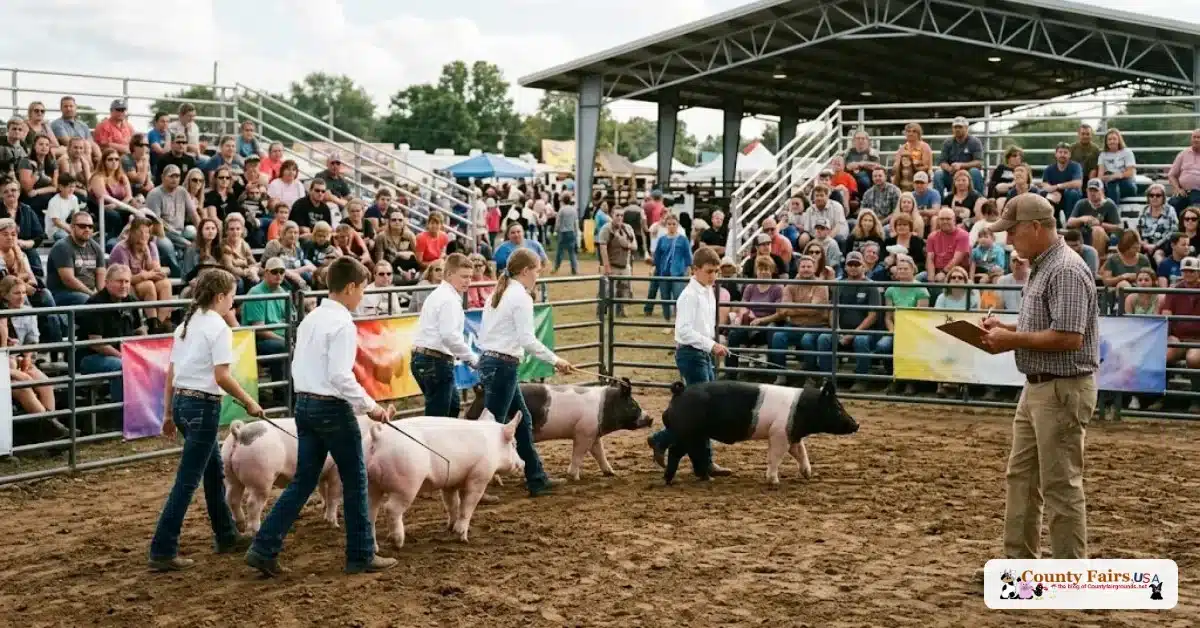
When the gate swings open for your class, driving a pig becomes a blend of steady hands and sharp spatial awareness. Your primary goal is to showcase your animal’s best angles while keeping a safe distance from other exhibitors.
Positioning Yourself and the Pig
Always keep your pig directly between you and the pig judge. Imagine a straight line connecting the judge, your pig, and you. As the judge walks around the arena, adjust your position smoothly so the official never has to look around your legs to see your animal.
Stay roughly 10 to 15 feet away from the judge whenever possible. Getting too close makes it hard for the judge to see the pig’s overall balance and topline. Drifting too far into the corners makes it look like you are hiding your animal.
Reading the Judge
Understanding what officials watch for makes a massive difference in your ring strategy. Gaining insight into how fair judges work helps you anticipate where they will move next. Keep your head up and watch the judge out of the corner of your eye, glancing down at your pig only long enough to check its path.
If the judge asks you a question about your project, stop your pig gently, smile, and answer clearly. Knowing your pig’s birth date, breed, weight, and feed ration shows true dedication to your project.
Handling Ring Traffic
Show rings get crowded, especially in large county fair classes. If another pig blocks your path, tap your hog’s jowl gently to turn it into open space rather than forcing it through a tight gap. If two pigs start to fight or rub aggressively, stay calm and guide your pig away smoothly without yelling or waving your arms.
Use your pocket brush whenever your pig picks up clumps of arena dirt on its back or sides. Quick, quiet grooming touches show the judge that you care about presentation from start to finish. Following proven livestock show tips like staying calm under pressure will set you apart in a competitive class.
Preparing Your Pig for the Ring
Cleanliness and skin care play a major role in swine showmanship and market evaluation. A clean pig looks healthier, fresher, and better cared for than a muddy one.
Bathing and Skin Care
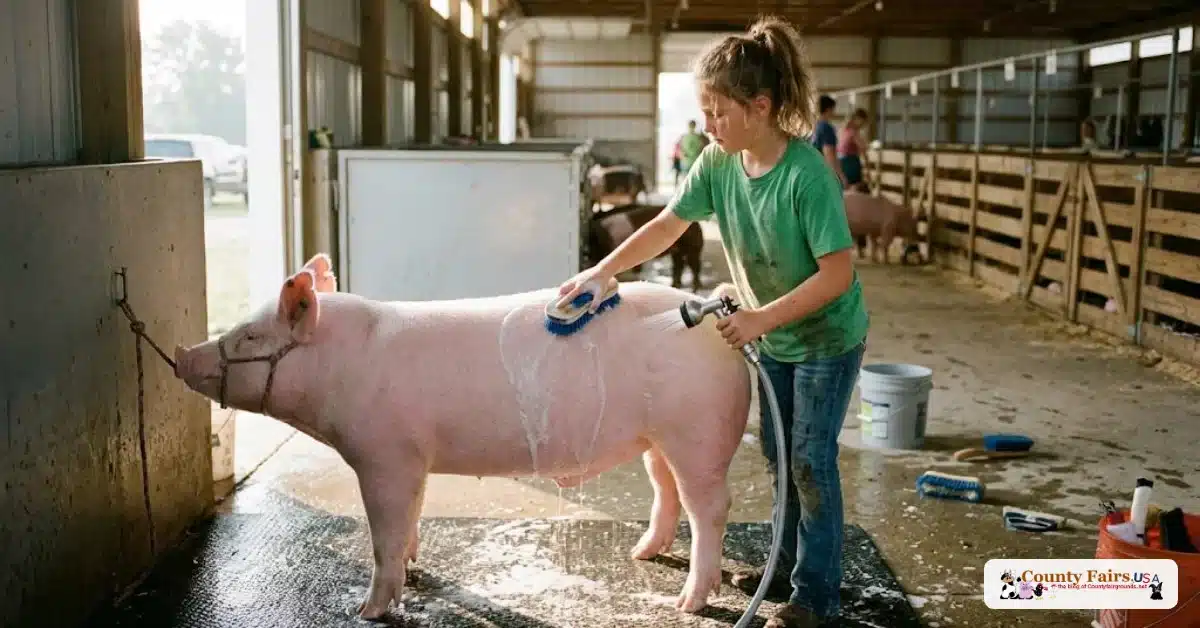
Wash your pig thoroughly the day before the show using a mild livestock shampoo and a soft scrub brush. Rinse all soap completely out of the hair, as leftover residue dries out the skin and causes flaking. On show morning, give your pig a quick rinse to remove any overnight pen stains.
Never use heavy oils, paints, or adhesives unless your fair explicitly allows them, as many county fairs strictly ban artificial coat dressings. Clean water and natural skin conditioners approved by your fair board keep the coat looking sharp and natural.
Hair Clipping Basics
Many exhibitors clip their pig’s hair a few days before the fair to create a neat, uniform look. Use electric clippers with a medium guard to trim long hairs on the ears, tail, and underline. Check your county fair rulebook before clipping, because some shows enforce minimum hair length rules to protect the pig’s skin from sunburn and meat packing issues.
Pre-Show Feeding and Watering
Give your pig a small, normal meal and plenty of water a couple of hours before your class. Avoid feeding a massive meal right before entering the ring, as a overly full pig can look sluggish or bloated. Keep your pig cool in the barn until the ring steward calls your class number to the holding pen.
Frequently Asked Questions
What makes a good market hog?
A good market hog combines heavy muscle, structural soundness, and an ideal amount of fat cover. Judges look for wide, natural stance, a level topline, and smooth, flexible movement on all four feet. The pig should carry enough condition to look fresh without appearing overly fat around the jowl or lower body.
How do you train a pig for the show ring?
You train a pig by walking it daily for 15 to 20 minutes in a small, enclosed space. Use light taps from a show stick on the jowl to steer left or right, and tap the shoulder to move forward. Keep sessions calm, short, and consistent so your pig builds trust and stamina.
What do judges look for in hog showmanship?
Judges look for smooth animal control, steady eye contact, and smart ring positioning. You must keep your pig between yourself and the judge at all times while maintaining a polite distance from other exhibitors. Staying calm during ring traffic and keeping your pig clean with a pocket brush also earn top marks.
How long does it take to raise a show pig?
Raising a county fair show pig typically takes three to five months. Most exhibitors purchase weaned feeder pigs weighing 50 to 70 pounds in the spring and feed them until they reach market weight of 230 to 290 pounds. Daily feeding, pen cleaning, and walking practice continue throughout that entire period.
What equipment do I need to show a pig?
You only need a few basic items to show a pig at the county fair. Bring a lightweight show stick or sorting cane, a small pocket brush, and a damp rag for quick touch-ups. Wear sturdy, closed-toe leather boots, dark jeans, and a neat collared shirt for a clean, safe presentation.
Stepping Into the Show Ring
Participating in a county fair swine show teaches responsibility, patience, and sportsmanship that stay with you long after the ribbons are handed out. Every county fair relies on youth exhibitors to showcase agriculture and keep vital livestock traditions alive for local communities.
Your best next step is to download the WSU swine showmanship guide and review your local county fair rulebook this week. Grab a show stick, step into the pen for a 15-minute walk today, and start building the teamwork that will carry you smoothly across the arena.