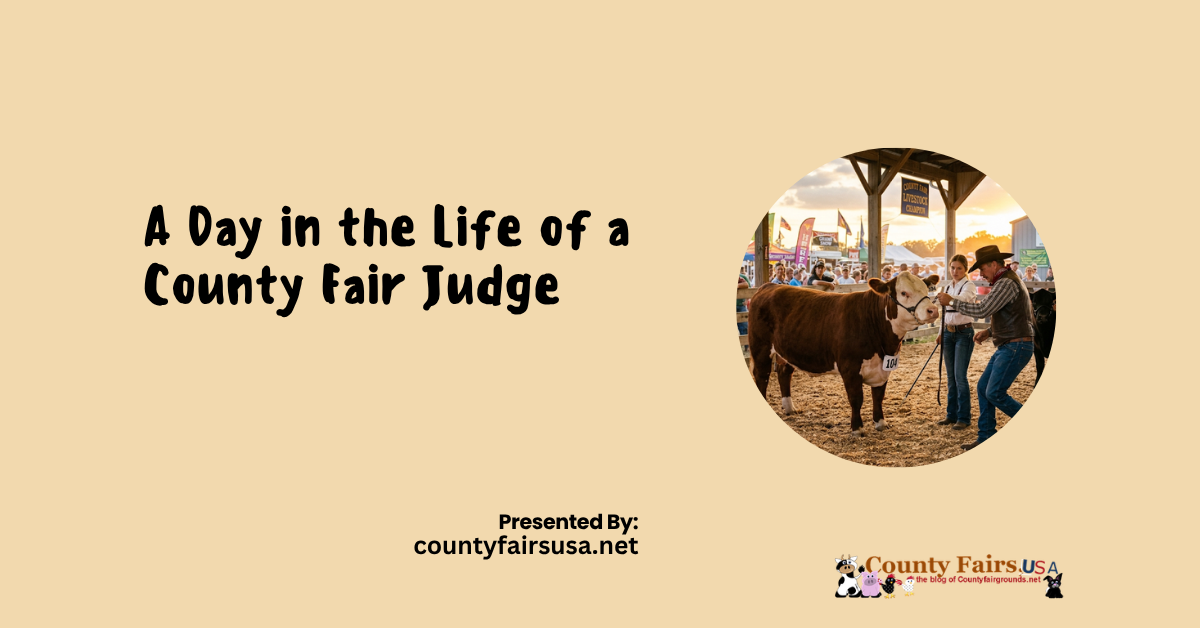
The moment a judge pins a purple grand champion ribbon on a 13-year-old’s Hereford steer, the kid’s face changes forever. Parents cry, phones come out, and the crowd erupts.
What nobody sees is the 14 hours that judge has already been on their feet. Here at Countyfairgrounds USA, we wanted to walk through what a real day actually looks like for the people who decide who takes home that blue ribbon.
Before Sunrise: Arrival and Briefing
Most county fair judges arrive between 5:30 and 6:30 AM. Gates do not open to the public until 9 or 10, but the work starts long before that first corn dog gets fried.
The first stop is usually the fair office to pick up paperwork and meet co-judges. A quiet coffee with fellow judges is where the real alignment happens about how strict to be on small faults.
Tasks handled before sunrise include:
- Signing in and collecting judging packets
- Reviewing class lists and scorecards
- Confirming any last-minute scratches
- Walking the barn before exhibitors start grooming
- Checking ring lighting and layout
The First Ring: Livestock Judging
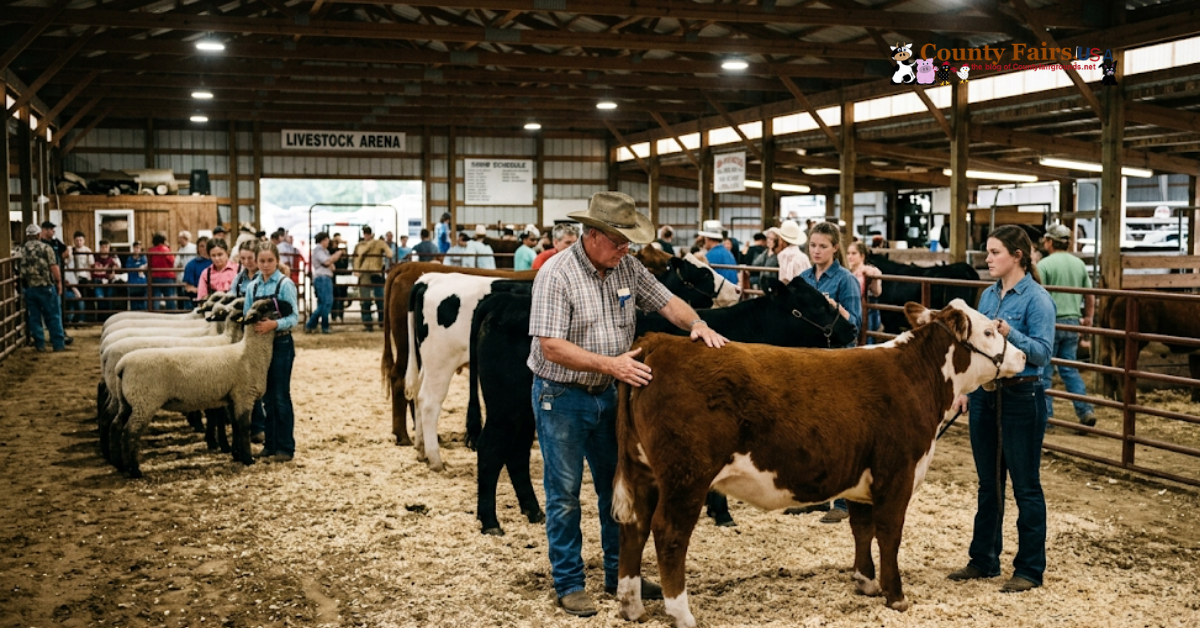
Livestock classes usually run first because animals are calmer in the cool morning air. The order typically moves from dairy cattle to beef, swine, sheep, goats, and finally small stock like poultry and rabbits.
Each animal gets only 2 to 5 minutes of evaluation. A judge walks around it, touches the loin or rump, asks the exhibitor to walk it across the ring, and places it against the others in the class.
What a livestock judge looks at:
- Conformation (body structure, muscle, frame)
- Condition (weight, finish, overall health)
- Breed character (does it look like a proper Angus or Holstein)
- Soundness (how it walks and stands)
- Handler presentation in showmanship classes
By 10 AM, a livestock judge has often placed five or six full classes. That is 40 to 60 animals evaluated before most fairgoers have finished breakfast.
Midday: Exhibit Hall Duty
Once livestock wraps, many judges rotate to the indoor exhibit halls. Different category, different skill set, same long day. This is where baked goods, canning, needlework, photography, and woodworking get scored.
Baked goods judging has its own rituals. Small bites only, water and plain crackers between samples, and scoring on appearance, texture, flavor, and category rules.
Common exhibit hall judging rules at most county fairs:
- A pie entered in the wrong category is disqualified before tasting
- Canning is judged on sight first, with jars opened only when needed
- Quilts are flipped to check back stitching
- Photos are scored on composition before subject matter
- Every entry card gets a short handwritten comment
That handwritten note is what turns a third-place ribbon into a learning moment for next year.
The Hardest Hour: Junior Exhibitors
Somewhere in the middle of the day, judges hit the junior classes. A 9-year-old who spent six months raising a market hog is not just hoping for a ribbon, they are hoping the judge sees the work.
Good judges adjust their tone for age. They kneel to talk to younger exhibitors, name one specific thing the kid did well, and offer one clear thing to work on.
Two scoring systems are commonly used:
- Danish system: every entry earns a blue, red, or white ribbon based on meeting a standard
- Ranking system: entries are placed against each other from first to last
Disqualifying a junior entry is the worst part of the day. Experienced judges always deliver that news privately, never in front of the crowd.
Lunch and Cross-Checking
Lunch is rarely longer than 30 minutes and almost always eaten in the judges’ tent. This is when co-judges compare notes on borderline placings and talk through anything controversial.
Smart judges drink a lot of water here. Decision fatigue is real, and the afternoon classes are often the showiest of the day.
Afternoon: Showmanship and Specialty Classes
Showmanship flips the focus. The animal does not matter as much, the handler does. A polished showman with an average animal can beat a poor showman with a great one.
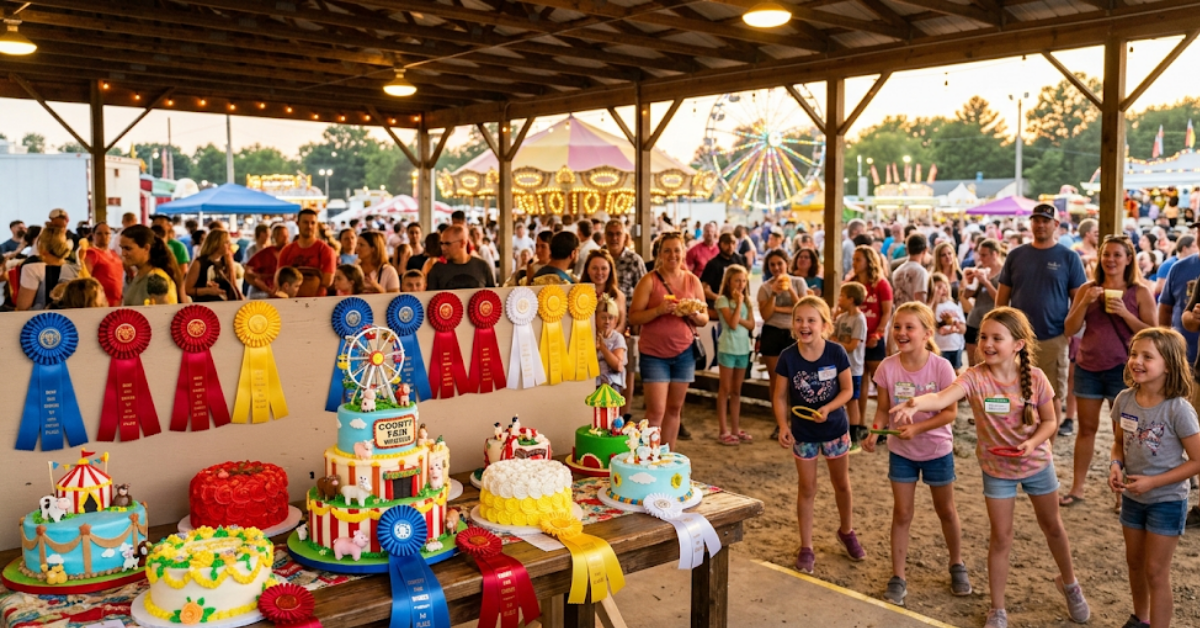
Afternoon often brings specialty events that draw the biggest crowds:
- Costume classes for goats, dogs, or kids
- Decorated cake contests
- Pie eating and watermelon seed spitting
- Lawnmower races and pedal tractor pulls
- Junior baking and craft showdowns
These classes are noisier and faster, but the kids competing care just as much as in any livestock ring.
Evening: Awards and Paperwork
By 6 or 7 PM, the awards ceremony begins. Judges hand out trophies, pose for photos with winners, and shake a lot of small hands.
After the crowd thins, the paperwork starts. Most judges debrief briefly with the superintendent, then walk to their truck well after dark with sore feet and a folder full of carbon copies.
What It Takes to Become a Judge
The job is not glamorous and it does not pay well. So why do it? Most judges will tell you they do it for the kids, the community, and a tradition that shaped them.
The typical path to becoming a county fair judge includes:
- Years of exhibiting in the same category
- Certification through state extension offices or breed associations
- Apprenticing under senior judges at smaller fairs
- Continuing education clinics every few years
- A clean reputation for fairness
Pay is usually a modest stipend of $100 to $300 per day, plus meals and travel reimbursement.
Why That Ribbon Carries So Much Weight
That blue ribbon a kid clutches in the awards photo represents one judge’s full day of focus, fairness, and quiet care. It also represents decades of experience and a willingness to deliver hard feedback with kindness.
Next time you walk past the judging ring at your county fair, slow down for a minute. As we often say at Countyfairgrounds USA, the person with the clipboard and the tired eyes is the reason that fair still works.