livestock shows

How to Show a Goat at the County Fair: A Beginner’s Guide

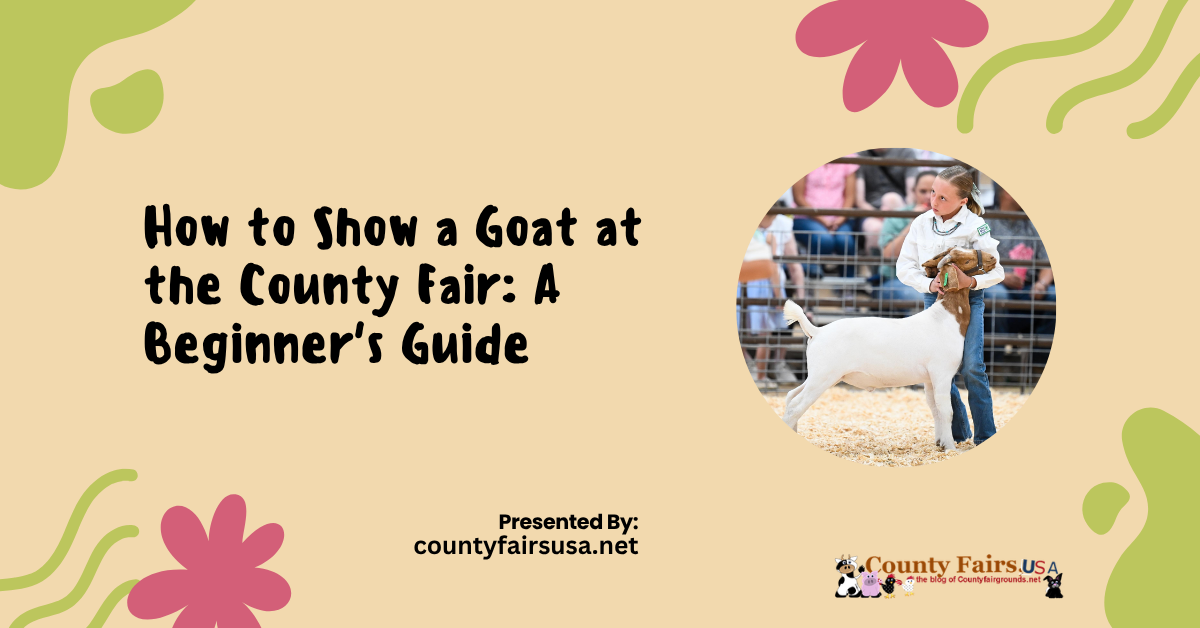
Showing a goat at the county fair is one of the best first livestock projects for young people. Goats are smaller than cattle, easier to handle than pigs, and full of personality. With a few months of steady work, a beginner can walk into the show ring with confidence. If you are new to livestock showing in general, our post on tips for winning a county fair livestock show is a helpful starting point. This guide explains how to show a goat step by step, from choosing your animal and training it to grooming, show day, and what judges look for in the ring. Market Goats vs Dairy Goats Before you start, know which class you will enter. Most county fairs have two main goat divisions, and they are judged in different ways. Class What It Is Judged On Market goat Meat-breed wethers or does raised for sale, often Boer crosses Muscle, structure, finish, and weight Breeding meat goat Meat breed does kept for raising kids Structure, balance, and breed traits Dairy goat Breeds like Nubian, LaMancha, Alpine, Nigerian Dwarf Dairy character, frame, udder, and breed traits Showmanship Judges the exhibitor, not the goat Control, presentation, knowledge, and poise Dairy goat shows often follow standards set by the American Dairy Goat Association, so check your fair book to see which rules apply. Many beginners enter both a breed or market class and a showmanship class. Step 1: Pick the Right Goat Choose a goat that is calm, healthy, and fits your class. For market classes, buy your goat early enough to meet the fair's ownership date, which is often several months before the show. Ask the breeder about the goat's health records and vaccinations. Your goat also needs proper identification. Federal rules require official ID for most goats moving to fairs and exhibitions. The USDA goat identification rules explain scrapie tags and other approved ID methods. Your fair office or extension agent can tell you exactly what your state needs. Step 2: Start Training Early Training is what separates a nervous goat from a calm one in the ring. Start working with your goat as soon as you bring it home, and practice for 15 to 20 minutes every day. Teach Your Goat to Lead Goats are shown with a simple chain collar. Hold the collar under the jaw with one hand and walk at a steady pace. If your goat pulls back, stop, wait, and try again. Never drag the goat. A few days of short [...]
By |2026-10-13T09:23:44+00:00October 10th, 2026|Animal Shows, County Fair, Goats, Livestock|Comments Off on How to Show a Goat at the County Fair: A Beginner’s Guide

What Is a County Fair? A Simple Guide for First-Time Visitors

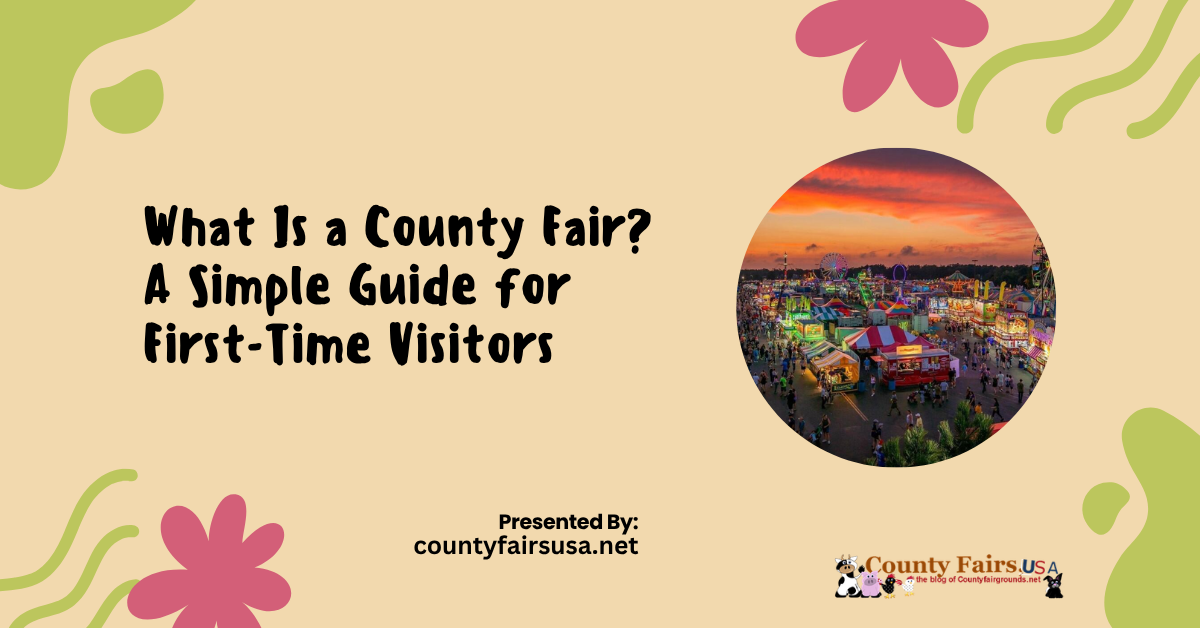
A county fair is a yearly community event held in a single county to celebrate local farming, food, families, and fun. It usually runs for several days in summer or early fall on permanent fairgrounds. You will find livestock shows, baking contests, carnival rides, fair food, live music, and plenty of people you know from town. If you are new to fairs, our guide on what to do at a county fair shows how to fill your day. In this post, we explain the meaning of a county fair, where the idea came from, what happens during fair week, and why these events still matter today. County Fair Meaning in Plain Words The Merriam-Webster definition of county fair describes it as a yearly fair held at a set place in a county to show off local farm products and livestock. That is the heart of it. A county fair is where farmers, ranchers, gardeners, cooks, and young people bring their best work to be seen and judged by the community. Over time, county fairs added entertainment like rides, games, concerts, rodeos, and demolition derbies. Today they mix old farm traditions with modern fun, which is why they appeal to people who live on farms and in cities alike. A Short History of County Fairs in America Fairs have existed for centuries as places to trade goods and meet neighbors. The American county fair as we know it is often traced to Elkanah Watson, a farmer in Pittsfield, Massachusetts. In the early 1800s, he showed his sheep on the town green and later helped form the Berkshire Agricultural Society, which held organized fairs with prizes for the best animals and crops. The IAFE history of fairs covers this story in more detail. The idea spread quickly. By the mid-1800s, agricultural societies across the country were holding yearly fairs to share farming methods, reward good work, and bring rural families together. Read our full post on the evolution of county fairs in the USA to see how they changed over two centuries. What Happens at a County Fair? Every fair is a little different, but most share the same core parts. Part of the Fair What You Will Find Livestock barns Cattle, pigs, sheep, goats, rabbits, and poultry raised by local youth and farmers Show rings Judging of animals for quality, care, and showmanship Exhibit halls Baked goods, canned foods, quilts, crafts, art, photos, flowers, and vegetables Midway Carnival rides, games, and prizes Food stands Corn dogs, funnel cakes, [...]

By |2026-10-13T09:10:25+00:00September 26th, 2026|Agriculture, County Fair, Events|Comments Off on What Is a County Fair? A Simple Guide for First-Time Visitors

What are the most popular county fair attractions?

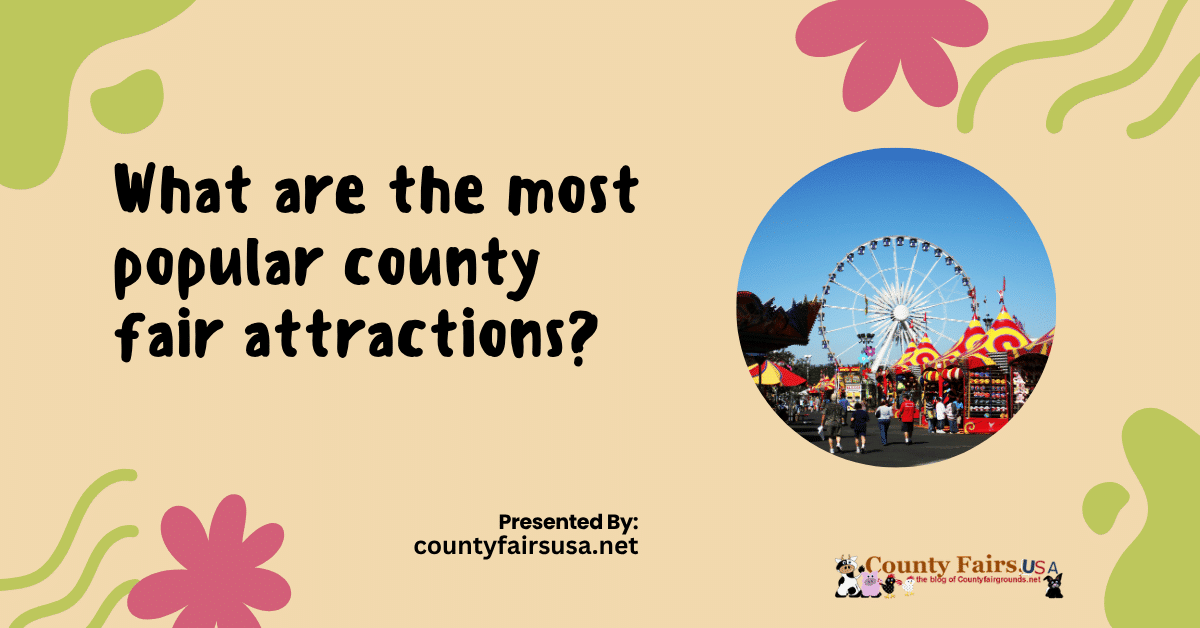
County fairs are more than just local events they’re vibrant celebrations of tradition, food, family, and fun. Across the United States, communities come together during fair season to enjoy a blend of entertainment, agriculture, and small-town spirit. From thrilling rides to pie-eating contests, the charm of a county fair is timeless and appeals to people of all ages. In this article, we explore the most popular county fair attractions that keep people coming back year after year. The Lasting Appeal of County Fairs County fairs have deep roots in American history. Originally created to promote agriculture and local craftsmanship, these events have evolved while still preserving the essence of community involvement. For many, the fair is a nostalgic trip back to childhood. For others, it’s a once-a-year gathering to experience local flavors, music, and fun. Whether you're heading to the fairgrounds for the first time or continuing a family tradition, there's always something new and familiar to enjoy. Top County Fair Attractions That Everyone Loves Let’s take a closer look at the attractions that truly define the county fair experience. 1. Carnival Rides and Midway Games The moment you step onto the fairgrounds, the colorful lights and distant screams from carnival rides create a buzz of excitement. From gravity-defying rides to gentle spins for younger kids, there’s something for every thrill level. Popular rides include: Ferris wheels – great for scenic views and romantic moments Tilt-a-Whirl – a classic that’s been dizzying riders for generations Bumper cars – fun for all ages, especially competitive siblings Drop towers – for the brave-hearted Kiddie rides – mini coasters and merry-go-rounds for the little ones Alongside the rides, the midway is filled with games that test your aim and patience. Ring toss, balloon darts, and basketball hoops draw in crowds with the promise of giant stuffed animal prizes. 2. Fair Food Favorites No fair visit is complete without trying at least one deep-fried delicacy or sugary snack. Food stalls line the walkways offering an endless variety of tempting options. Fan favorites include: Funnel cakes topped with powdered sugar Corn dogs fresh from the fryer Fried Oreos and candy bars Soft pretzels and kettle corn Lemonade shakes and snow cones for cooling down Each region also offers local specialties cheese curds in the Midwest, pulled pork in the South, or seafood rolls in coastal states. In recent years, many fairs have added vegan and gluten-free options to cater to all dietary needs. 3. Petting Zoos and Livestock Shows At the heart [...]

By |2025-06-02T13:48:36+00:00May 25th, 2025|Carnivals, County Fair|0 Comments

The Importance of Livestock Shows at County Fairs

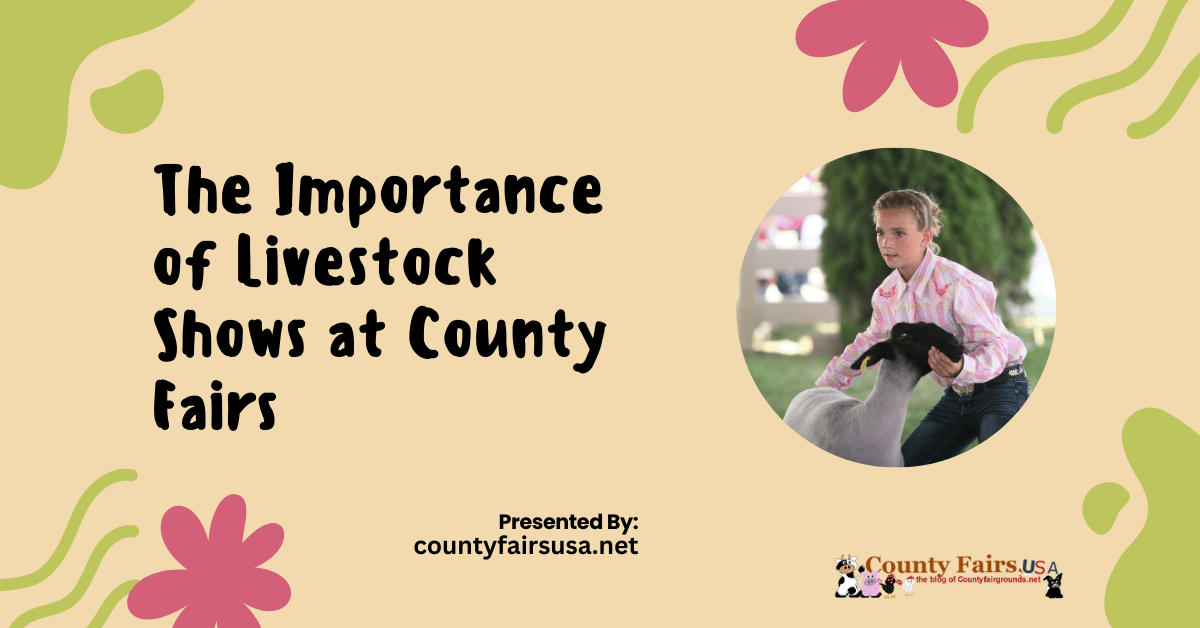
The excited murmur of spectators, the careful grooming of prize animals, and the proud stance of young exhibitors in crisp uniforms – these timeless scenes from livestock shows represent one of America's most significant agricultural traditions.  Importance of Livestock Shows at County Fairs As the centerpiece of county fairs nationwide, livestock exhibitions offer far more than entertainment; they provide essential education, economic stimulus, and character development opportunities that resonate throughout rural communities. These exhibitions represent far more than a simple display of animals; they embody a rich tradition that connects our agricultural past with its future while delivering substantial benefits to participants and communities alike.  From teaching young people essential life skills to strengthening local economies, livestock shows continue to serve a vital purpose in today's rapidly changing world. The Rich Heritage of Livestock Shows in American County Fairs The tradition of livestock exhibitions at county fairs dates back to the early 19th century, when agricultural societies began organizing events to improve farming practices and livestock breeds. What began as practical demonstrations for farmers has evolved into comprehensive educational programs that reach far beyond the agricultural community. Today, approximately 2,000 county fairs take place annually across America, with livestock shows remaining their central attraction. Each year, these events draw millions of visitors and feature hundreds of thousands of animals shown by dedicated exhibitors of all ages. The persistent popularity of these exhibitions speaks to their continued relevance and importance in contemporary society. Educational Value: Cultivating Knowledge Through Hands-On Experience Livestock shows provide an unparalleled educational laboratory that classroom instruction simply cannot replicate. Young exhibitors gain comprehensive knowledge through direct experience: Practical animal science education: Participants learn about genetics, nutrition, veterinary care, and reproductive physiology through hands-on application Record-keeping skills: Maintaining detailed health and financial records teaches practical accounting and documentation skills Industry standards and practices: Shows introduce participants to quality benchmarks and professional evaluation methods For 16-year-old Emily Warren, a five-year participant in her county's 4-H sheep program, the educational benefits have been transformative. "Before I started showing lambs, I knew nothing about livestock production. Now I can calculate feed rations, recognize health issues early, and understand genetic traits when selecting breeding stock. These are things I use every day on our farm." Agricultural educators confirm this educational impact. Dr. Robert Haynes, Extension Specialist at Cornell University, notes that "livestock shows create a practical, tangible connection to agricultural concepts that resonates with young people in ways theoretical learning cannot match." This education extends beyond exhibitors to fair [...]

By |2025-05-10T20:06:07+00:00May 8th, 2025|Agriculture, County Fair, Fair|0 Comments
Go to Top