Livestock

How to Throw Your Own Backyard County Fair

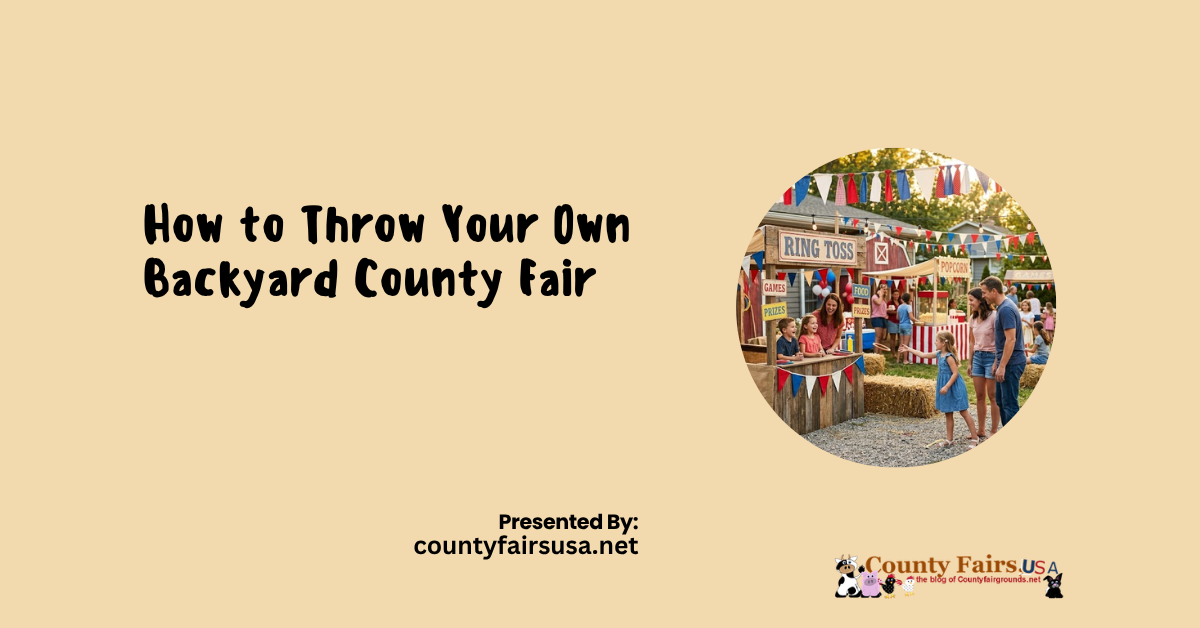
There is something about a county fair that stays with you. The smell of funnel cakes, the squeal of kids at a ring toss, a blue ribbon pinned to a homemade pie. You do not need a fairground or a ticket booth to enjoy any of it. With a little planning, you can throw your own backyard county fair on almost any budget. At County Fairs USA we have covered fairs and fairgrounds for over two decades, and these are the ideas that translate best to a backyard. Why Host a Backyard County Fair? A backyard fair gives you the fun of a real county fair without the crowds, the parking, or the cost of admission for a whole family. It also turns a plain weekend into a day people remember long after the lights come down. People love hosting one because: It keeps kids busy for hours on a small budget It brings neighbors and extended family together in one spot It works for birthdays, holiday weekends, or any Saturday afternoon You control the food, the games, and the schedule Best of all, most of what you need can be borrowed, reused, or built from things already sitting in your garage. Planning Your Backyard Fair Good planning is what separates a fun fair from a stressful one. Start a few weeks out so you have time to gather supplies, line up helpers, and send invites without a last-minute scramble. Pick a Date and Theme Choose a date with mild weather, ideally a weekend morning or late afternoon to dodge the midday heat. A theme ties the whole event together and makes every later decision easier. Popular themes include: Classic county fair with red, white, and blue bunting Western and rodeo with hay bales, cowboy hats, and bandanas Harvest fair with pumpkins, corn stalks, and warm fall colors Set a Budget Decide early how much you want to spend, then split that number across three buckets: food, games and prizes, and decorations. This keeps any one area from eating the whole budget. Most backyard fairs run well under a hundred dollars when you reuse decorations and ask guests to bring a dish to share. Send Invites Handmade tickets give the event an authentic fair feel and double as keepsakes for the kids. Print simple "admit one" tickets and have guests hand them over at the gate. For larger groups, a free online invite works fine. Just be clear about the date, time, and whether guests should bring [...]

By |2026-06-14T12:10:23+00:00June 11th, 2026|County Fair, Livestock, State Fair|Comments Off on How to Throw Your Own Backyard County Fair

Blue-Ribbon Winners: What It Takes to Win at the County Fair

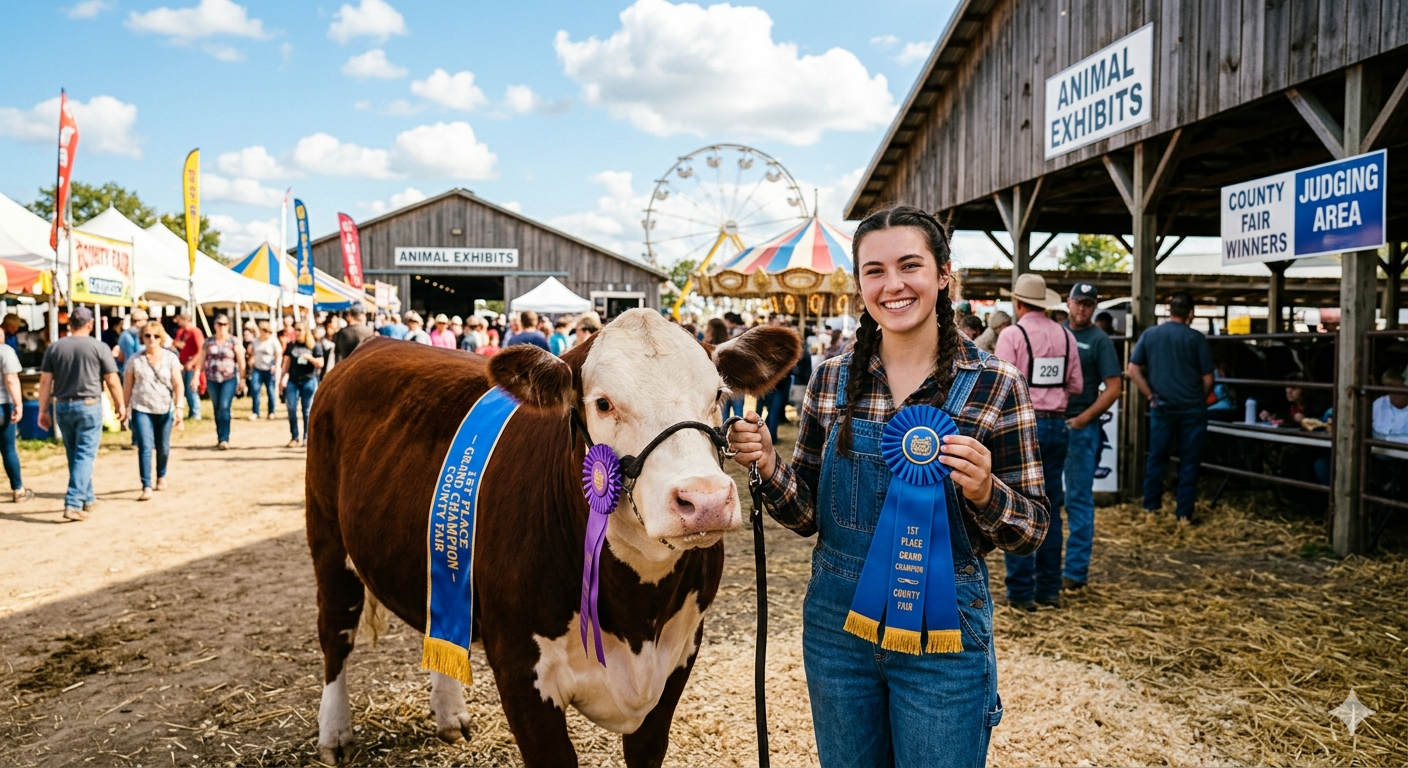
There is something genuinely exciting about walking into the exhibit hall at a county fair and seeing rows of ribbons pinned next to homemade pies, hand-stitched quilts, prize heifers, and jars of canned peaches. That blue ribbon hanging on a winning entry represents months of work, real skill, and a level of community pride that is hard to match anywhere else. At CountyFairsUSA.net, we have been covering county and state fairs, livestock shows, contests, and competitions across America since 1999. We know what blue-ribbon winners look like, and more importantly, what it takes to become one. What a Blue Ribbon Actually Means The blue ribbon has a long history at American fairs, and it carries weight well beyond just finishing first. In the United States, blue ribbons came to signify first place across competitive events including county and state fairs, and in many 4-H and FFA competitions, a blue ribbon is awarded to any project that meets or exceeds all of the judging criteria, not just the single top entry. That distinction matters. At some fairs, multiple competitors in the same category can take home a blue ribbon if their entry genuinely meets the standard. The ribbon is a measure of quality, not just a ranking. That is what makes earning one feel meaningful, whether you are entering a pie, a sheep, or a photograph. The Competition Categories Are Broader Than Most People Think Most fairgoers associate the blue ribbon with baking, but county fairs judge a much wider range of entries. There is genuinely something for almost everyone to enter, regardless of background or skill set. Common competition categories at county fairs include: Baked goods including pies, cakes, breads, cookies, jams, and canned preserves Livestock such as cattle, hogs, sheep, goats, poultry, and rabbits Horticultural exhibits covering vegetables, fruits, flowers, and garden produce Arts and crafts including quilts, photography, needlework, woodworking, and painting 4-H and FFA youth projects covering animals, foods, clothing, and STEM displays BBQ and open cooking competitions, which often draw serious adult competitors Specialty contests like pie eating, hot dog eating, lawnmower racing, and watermelon seed spitting The State Fair of Texas alone offers more than 1,100 pre-fair categories across 12 departments in Creative Arts, and entries come in from all over the country, not just from Texas residents. The Curious Cowgirl Even a first-time entrant has a real shot if they prepare properly. What Judges Are Really Looking For Judges at county fairs do not score entries based on personal taste or [...]

By |2026-03-26T06:18:31+00:00March 12th, 2026|Contests, Crafts, Fair, Livestock|Comments Off on Blue-Ribbon Winners: What It Takes to Win at the County Fair

Cow Pasture Care 101: Insights From County Fair Experts

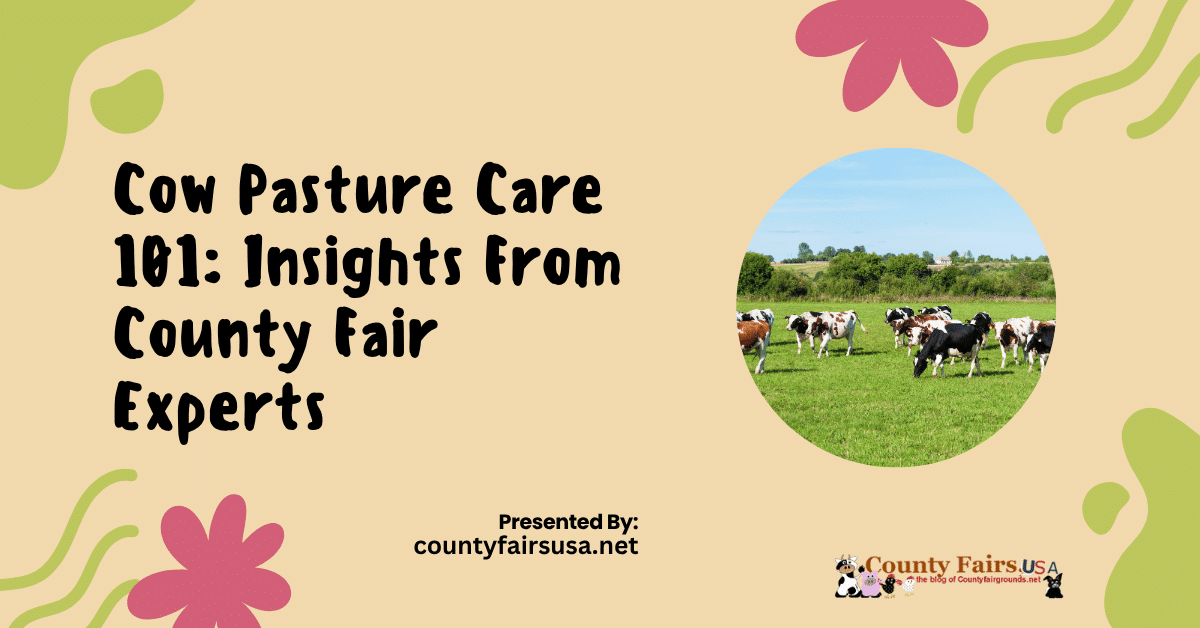
Maintaining a healthy pasture is one of the most important aspects of raising cattle. Whether you're running a small family farm or preparing your prize cow for the next county fair, pasture care plays a key role in the health, appearance, and behavior of your herd. Top Cow Pasture Care 101 Solutions Many county fair experts stress that good pasture practices are often what set apart blue-ribbon animals from the rest. This guide brings together practical advice rooted in real farm experience and county fair traditions. Why Good Pasture Management Makes a Difference Cattle that graze on well-managed pastures are often healthier, calmer, and in better condition than those raised in crowded feedlots. Pasture-fed cattle typically develop stronger immune systems, maintain a better weight balance, and require fewer medical interventions. At county fairs, judges often comment on the overall appearance and muscle tone of animals factors influenced by both genetics and nutrition. Beyond the fairgrounds, the benefits carry over into breeding programs, milk production, and even meat quality. For small-scale and family-run operations, pasture care is not just about feeding it's about stewardship. The Basics of Cow Pasture Health A quality pasture doesn’t happen by accident. It takes planning, maintenance, and seasonal adjustments. Key components of a healthy pasture include: Diverse Forage: A mix of grasses and legumes like fescue, clover, and alfalfa supports nutritional needs. Proper Drainage: Waterlogged soil can lead to hoof diseases and poor forage growth. Space Management: Overcrowded pastures lead to overgrazing and stressed soil. Rotational Grazing: Dividing your pasture into sections and rotating cattle allows grass to recover and reduces parasite loads. Farmers who show cattle at county fairs often implement rotational grazing using portable fencing. This helps maintain forage quality and keeps animals conditioned with daily movement. Tips from County Fair Champions Families who consistently produce winning livestock don’t just focus on grooming and training. Their efforts start from the ground up literally. Soil Health Comes First Before planting anything, they test their soil to identify pH levels and missing nutrients. This allows them to apply the right amount of lime, phosphorus, or potassium needed for forage to thrive. Smart Seed Selection Choosing the right grasses is more than just picking what’s popular. It depends on the region, season, and cattle breed. Some prefer cool-season grasses like ryegrass and orchardgrass, while others add legumes for nitrogen fixation and protein. Fencing for Flexibility Electric fencing systems are commonly used by 4-H and FFA families. They make it easier to control grazing patterns [...]

By |2025-06-13T17:36:35+00:00June 12th, 2025|Cattle, County Fair, Livestock|0 Comments

How Cow Families Are Judged at County Fairs

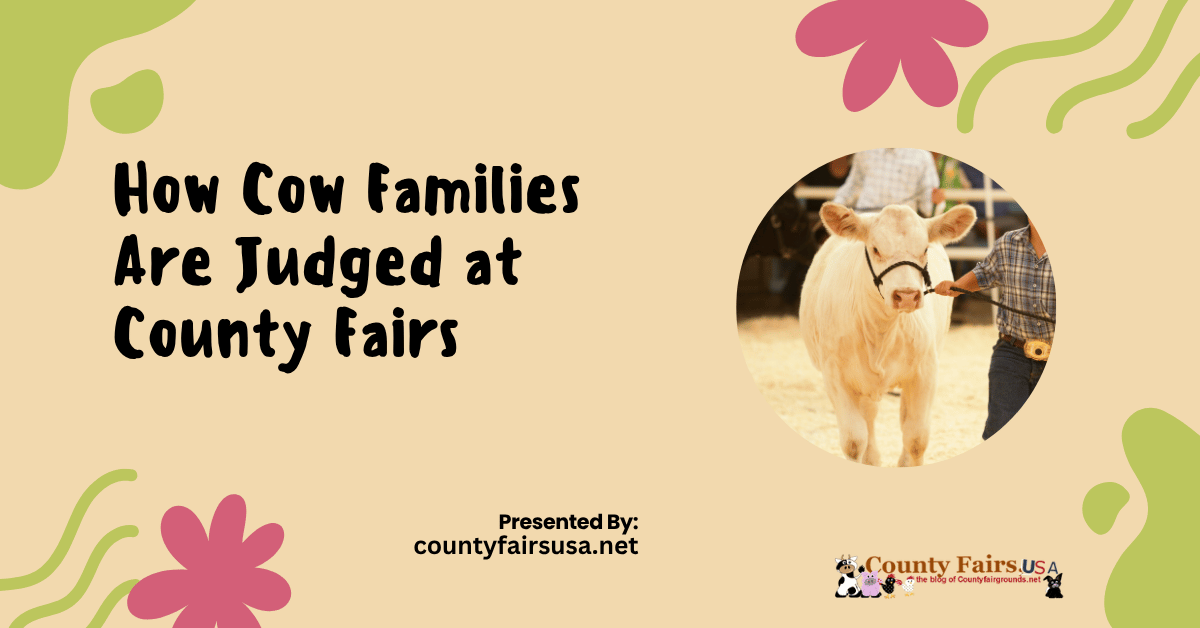
At the heart of every county fair lies a deep respect for agriculture, heritage, and animal husbandry. While the crowds may gather for rides and funnel cakes, real dedication is found in the livestock barns especially during the judging of cow families. Unlike individual cattle shows, cow family classes highlight the strength of genetics across generations. A dam and her daughters aren’t just judged for their appearance, but for the consistency, structure, and traits they share. It’s a display of careful breeding, long-term planning, and day-to-day animal care that few outside the farming world fully appreciate. How Cow Families Are Judged So, how do judges evaluate cow families? What makes one group stand out from another? This guide breaks down the full judging process offering a clear, well-informed look at what goes into selecting the best bovine bloodlines at your local county fair. What Is a Cow Family in Livestock Competitions? A cow family is a group of related female cattle typically a dam (mother cow) and her daughters or granddaughters. Unlike individual competitions, these animals are evaluated together to see how well positive traits are carried across generations. This class is particularly popular among breeders, as it highlights long-term breeding decisions and the success of a consistent genetic line. A strong cow family shows that desirable features are not random, but the result of careful planning and management. Main Criteria Used to Judge Cow Families Judging is based on specific physical, genetic, and behavioral characteristics. It’s not about picking the largest animal or the flashiest one it’s about evaluating the group as a cohesive unit. 1. Structural Soundness Judges begin by evaluating how each animal is built. Structure plays a critical role in overall health and performance. Key points include: Straight top lines (the back should be level) Correct leg angles and strong pasterns Balanced proportions between front and rear ends Smooth walking motion and posture 2. Udder Conformation (for Dairy Breeds) For dairy breeds like Holstein or Jersey cows, udder health is vital. A productive cow must have a strong, well-shaped udder. Traits judges look for: Tight, high udder attachment to the body wall Evenly spaced, symmetrical teats Balanced udder quarters Clean, healthy skin texture 3. Uniformity Across the Group This is perhaps the most important aspect of the cow family class. The cows should resemble one another, showing that they come from a strong maternal line. Uniform traits may include: Similar size and frame Matching coat colors or patterns Shared facial structure or ear [...]

By |2025-06-13T17:30:34+00:00June 10th, 2025|Cattle, Livestock|0 Comments

Environmental Changes and our Livestock

Environmental Changes and Livestock: What You Need to Know Livestock sector contributes to a big percentage of agricultural produce its key in the global food security chain. Environmental changes have had a significant impact on livestock farming thus distracting the food supply chain. Climate change is majorly caused by the emissions from greenhouse gas which leads to the warming of the atmosphere. Ironically, the livestock sector contributes to climate change through its contributions to the emission of green gas.[1] This has had serious implications on livestock sector in the US. Some of the effect associated with environmental changes include; Low livestock production: Environmental changes cause an unpredictable weather patterns which has an impact on livestock sector. This has an overall performance on livestock performance which has an effect on the livestock products. Environmental changes also increase vulnerability of livestock as most of the time the environment becomes harsh for the sustainable of the animals.[1] Increase of temperatures during summer reduce animal production while it causes a slow down during winter. Effects on parasites that affect livestock’s: Environmental changes has caused changes and an increase in parasites that affect domestic animals. An increase in diseases such as bovine respiratory disease have been reported to have increased in the last few years. Impacts of Climate Change on Livestock Farming This has been blamed on environmentally factors.  Some of this parasites affect crops which act as foods for the livestock. This has continued to affect plant and livestock diseases in most places in the US. Reduced quality and quantity of produce: The quality of produce such as feeds is degraded as a result of high atmospheric, increase of carbon dioxide and dry conditions. This however is very determined on factors such as location, species, crops, livestock system among others. This affects the quality of forage and feeds.[3] Extreme weather conditions such as floods may cause roots structure and decrease in total quality and quantity. Unpredictable rainfall: Livestock farming relies heavily on agricultural crops, while the growth of this crops needs reliable water. Climate change has affected rainfall pattern which has led to scarcity of water thus affecting the whole cycle. Livestock requires drinking water, crops for product processes. It is estimated that by 2025, 64% may experience constrained water conditions.[4] Reproduction: Livestock reproduction of both sexes is affected by heat stress. This affects cows and pigs in embryo employment development and low pregnancy rates. Cow fertility is compromised by too much heat or deficits. Lower sperm concentration has also been [...]

By |2024-01-12T12:37:50+00:00May 18th, 2017|Environmental, Livestock|0 Comments
Go to Top