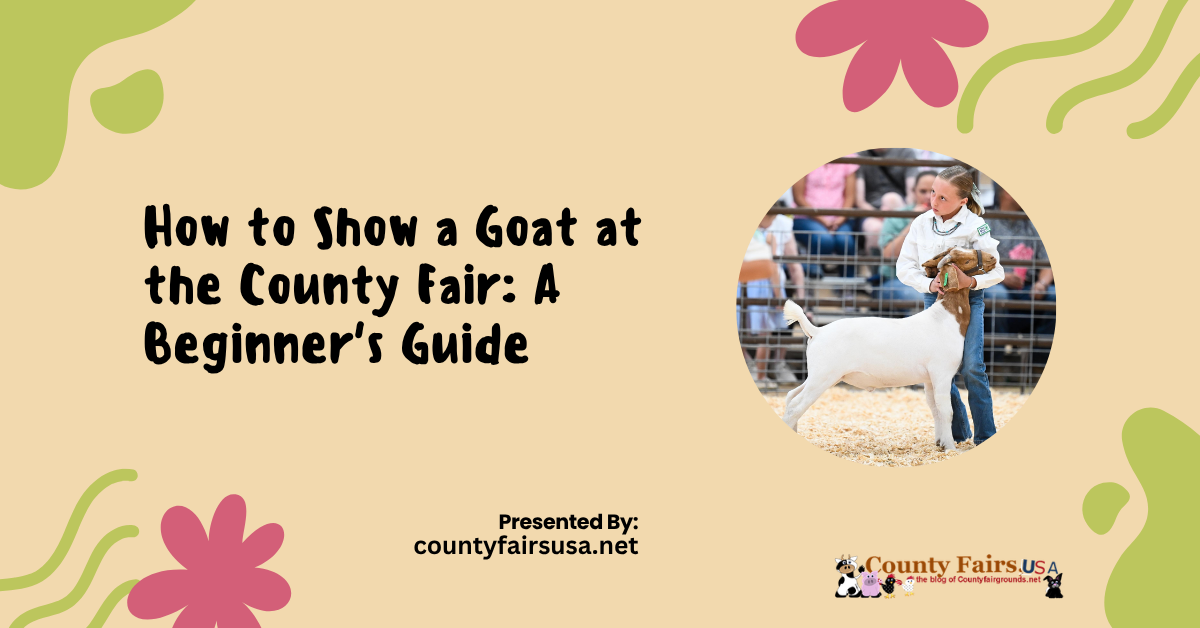
Showing a goat at the county fair is one of the best first livestock projects for young people. Goats are smaller than cattle, easier to handle than pigs, and full of personality. With a few months of steady work, a beginner can walk into the show ring with confidence. If you are new to livestock showing in general, our post on tips for winning a county fair livestock show is a helpful starting point.
This guide explains how to show a goat step by step, from choosing your animal and training it to grooming, show day, and what judges look for in the ring.
Market Goats vs Dairy Goats
Before you start, know which class you will enter. Most county fairs have two main goat divisions, and they are judged in different ways.
| Class | What It Is | Judged On |
|---|---|---|
| Market goat | Meat-breed wethers or does raised for sale, often Boer crosses | Muscle, structure, finish, and weight |
| Breeding meat goat | Meat breed does kept for raising kids | Structure, balance, and breed traits |
| Dairy goat | Breeds like Nubian, LaMancha, Alpine, Nigerian Dwarf | Dairy character, frame, udder, and breed traits |
| Showmanship | Judges the exhibitor, not the goat | Control, presentation, knowledge, and poise |
Dairy goat shows often follow standards set by the American Dairy Goat Association, so check your fair book to see which rules apply. Many beginners enter both a breed or market class and a showmanship class.
Step 1: Pick the Right Goat
Choose a goat that is calm, healthy, and fits your class. For market classes, buy your goat early enough to meet the fair’s ownership date, which is often several months before the show. Ask the breeder about the goat’s health records and vaccinations.
Your goat also needs proper identification. Federal rules require official ID for most goats moving to fairs and exhibitions. The USDA goat identification rules explain scrapie tags and other approved ID methods. Your fair office or extension agent can tell you exactly what your state needs.
Step 2: Start Training Early
Training is what separates a nervous goat from a calm one in the ring. Start working with your goat as soon as you bring it home, and practice for 15 to 20 minutes every day.
Teach Your Goat to Lead
Goats are shown with a simple chain collar. Hold the collar under the jaw with one hand and walk at a steady pace. If your goat pulls back, stop, wait, and try again. Never drag the goat. A few days of short sessions usually do the trick.
Teach Your Goat to Set Up
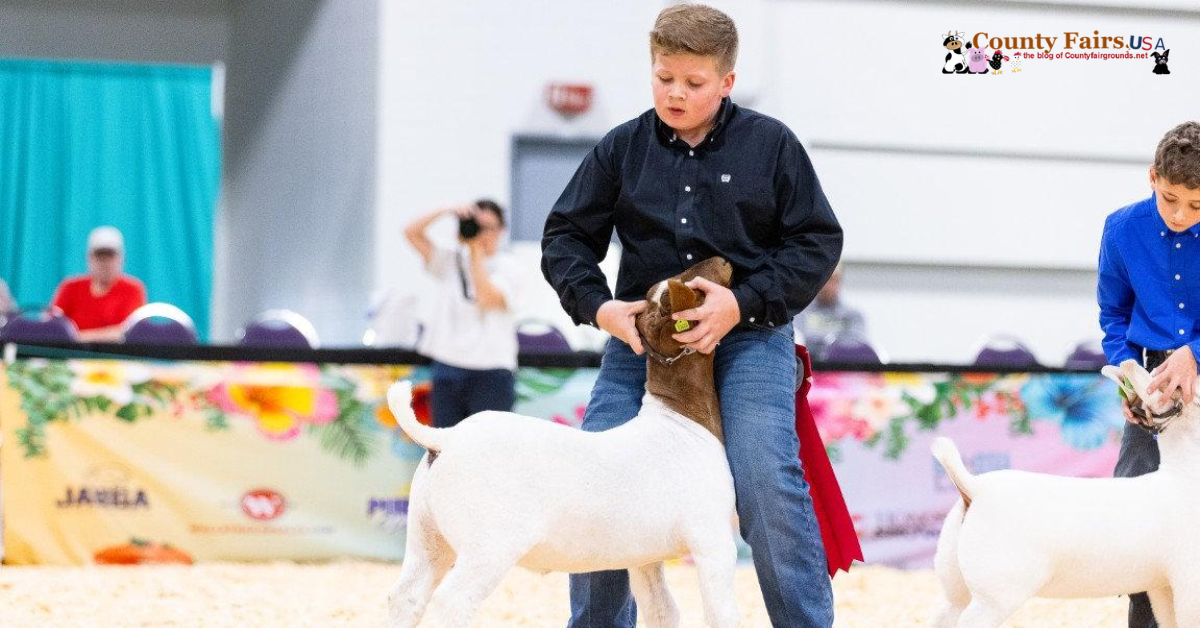
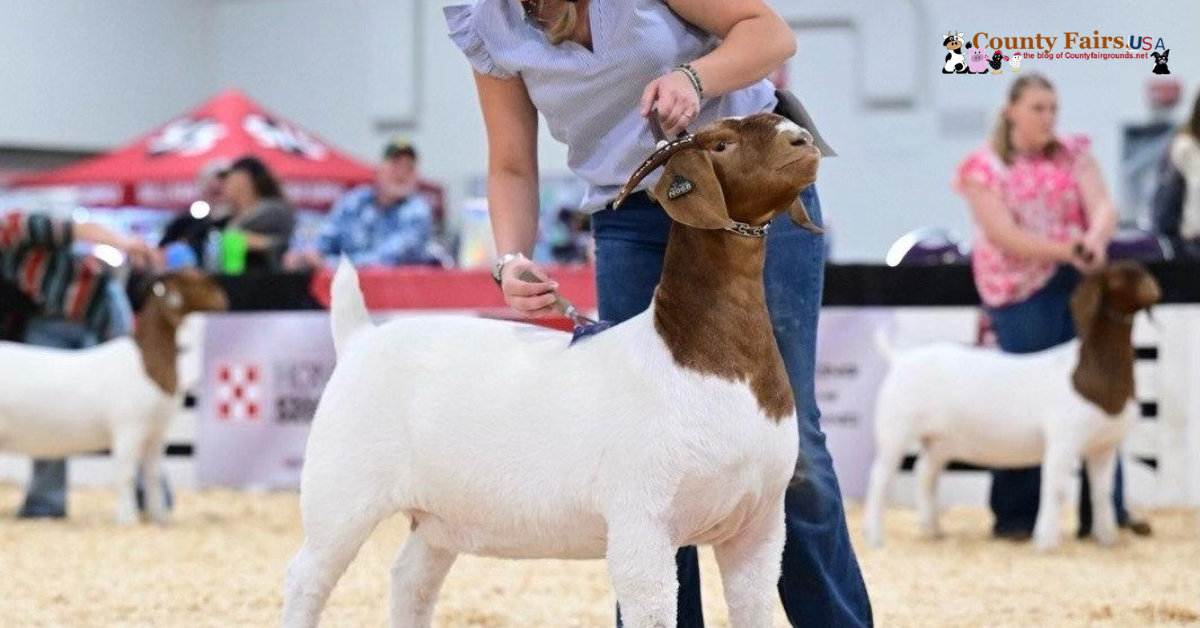
Setting up means placing your goat’s legs so it stands square and balanced. For most goat classes, the front legs should be straight under the shoulders and the back legs set slightly back and square. Move one leg at a time by gently lifting it by the bone, not by pulling the foot.
Teach Your Goat to Brace
Market goats are often braced in the show ring. Bracing means the goat pushes forward against your leg or hand, which tightens its muscles and shows off its build. Practice this a little each day so your goat learns to hold firm when the judge handles it.
Step 3: Keep Your Goat Healthy and Well-Fed
A healthy goat looks better and handles better. Feed a balanced ration suited to your class, with clean water and good hay always available. Market goats need steady growth to reach a good weight and finish by fair time.
- Work with a vet on vaccinations and parasite control.
- Weigh your market goat often to track growth.
- Exercise your goat with daily walks to build muscle.
- Keep pens clean and dry to protect hooves and coat.
Step 4: Groom for Show Day
Grooming starts a few weeks before the fair and finishes just before you enter the ring.
Hooves: Trim hooves about one to two weeks before the show so your goat walks comfortably. Trimming the day before can leave hooves tender.
Washing: Bathe your goat a day or two before the show with a mild livestock shampoo. Rinse well so no soap is left in the coat.
Clipping: Most goats are clipped short a few days before showing so the judge can see muscle and structure. Dairy goats are usually clipped close all over. Follow your fair’s rules and ask an experienced exhibitor for help the first time.
Final touch: On show day, brush the coat, clean the ears and eyes, and wipe off any dust or bedding.
Step 5: What to Do in the Show Ring
The show ring can feel busy, but the steps are simple once you know them.
- Enter the ring walking slowly with your goat on your left side.
- Always keep your eyes on the judge, not on your goat or the crowd.
- Keep the goat between you and the judge at all times.
- Set up your goat quickly when you stop, then hold it steady.
- When the judge handles your goat, brace it calmly and stay still.
- Move to the other side if the judge walks around, so you never block the view.
Leave plenty of space between you and the goat in front of you. Crowding makes goats nervous and makes it hard for the judge to see.
What Do Judges Look For?
In the breed or market class, the judge looks at the goat. In showmanship, the judge looks at you. Both matter.
For market goats, judges want a well-muscled, structurally correct animal that moves freely and has the right finish for its weight. For dairy goats, they look at frame, dairy character, and udder quality on milking does. Our post on a day in the life of a county fair judge gives a peek into how judges think.
In showmanship, the judge checks how well you control and present your goat, how prepared it looks, and how you answer questions. Expect questions like your goat’s breed, age, weight, what you feed it, and parts of the goat. Knowing your animal well can set you apart.
What to Wear When Showing a Goat
Show clothes should be clean, neat, and easy to move in. Most exhibitors wear a collared shirt tucked in, clean jeans, a belt, and closed-toe boots. Many 4-H and FFA groups have their own dress codes, so check the rules. Avoid loose jewelry or anything that can catch on the collar.
Show Box Checklist
Pack a show box a few days before the fair so you are ready to go.
- Chain collar and backup collar
- Brushes, livestock shampoo, and towels
- Clippers and hoof trimmers
- Feed, water buckets, and hay
- First aid kit for animals
- Health papers and ID records
Why Showing Goats Is Worth It
Raising and showing a goat teaches responsibility, patience, and hard work. Young exhibitors learn animal care, record keeping, and how to speak with confidence to adults. Many make lifelong friends in the barns. Programs like 4-H and FFA at county fairs help kids build these skills year after year.
Frequently Asked Questions About Showing Goats
How old do you have to be to show a goat?
Many 4-H programs start at age 8 or 9, and some fairs have younger divisions. Check your local fair book for age rules.
How long does it take to train a goat for show?
Most goats need about two to three months of daily practice to lead and set up well. Starting earlier is always better.
Which side do you show a goat on?
Most exhibitors lead with the goat on their left side, but the key rule is to always keep the goat between you and the judge.
When should I clip my goat before a show?
Clip a few days before the show so the coat looks even and any small nicks have time to settle.
Do goats need health papers for the county fair?
Most fairs require official ID and may ask for health records or a vet check. Rules vary by state, so confirm with your fair office.
Learning how to show a goat takes time, but every practice walk pays off when you step into the ring. Stay calm, keep your eyes on the judge, and enjoy the moment you and your goat worked so hard for.