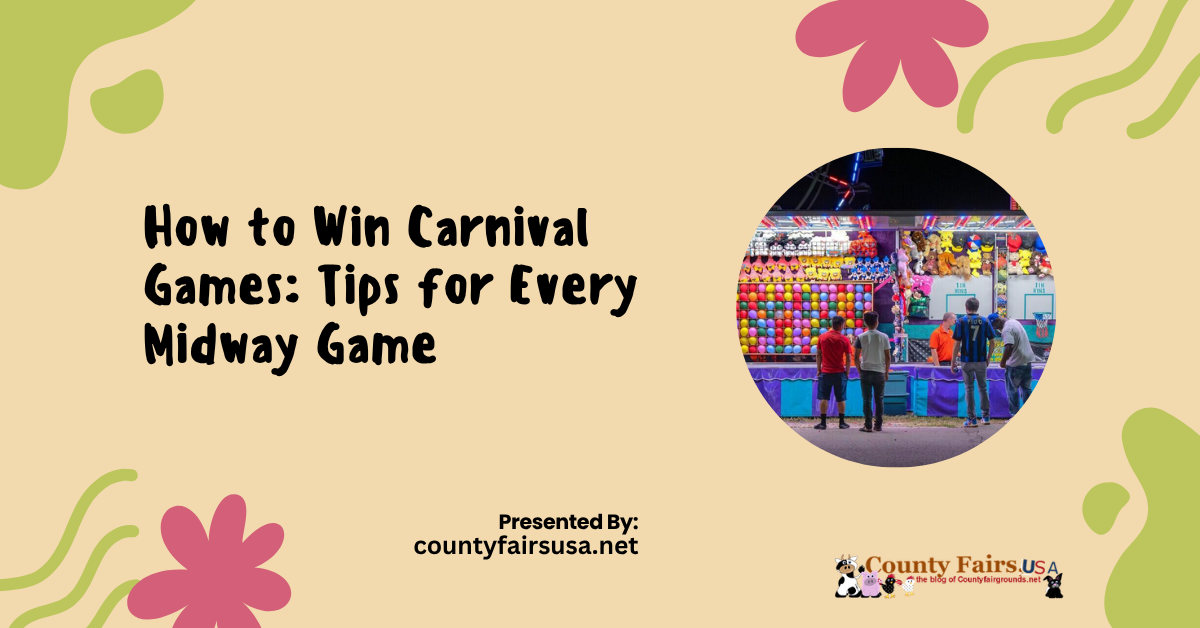
Everyone wants to walk away from the midway with a giant stuffed animal under one arm. Carnival games are built to be tricky, but they are not impossible. With the right technique and a little patience, your odds get a lot better. If you want to understand the setup behind each booth first, our post on how midway games at county fairs work explains the basics.
This guide goes game by game with simple tips, explains why some games feel rigged, and shares how to pick the booths that give you the best shot at a prize.
Are Carnival Games Rigged?
This is the first question most people ask. The honest answer is that most carnival games are hard on purpose, but that is not the same as rigged. Booths make money because more people lose than win. Game makers use small tricks like tight rims, heavy targets, or soft balls to keep the odds in the booth’s favor.
Many states and local fairs have rules that require games of skill to be winnable, and fair boards often check booths before opening. A truly rigged game, where winning is impossible, can get a vendor removed from the fair. The carnival game background page gives more history on how these games became a midway staple.
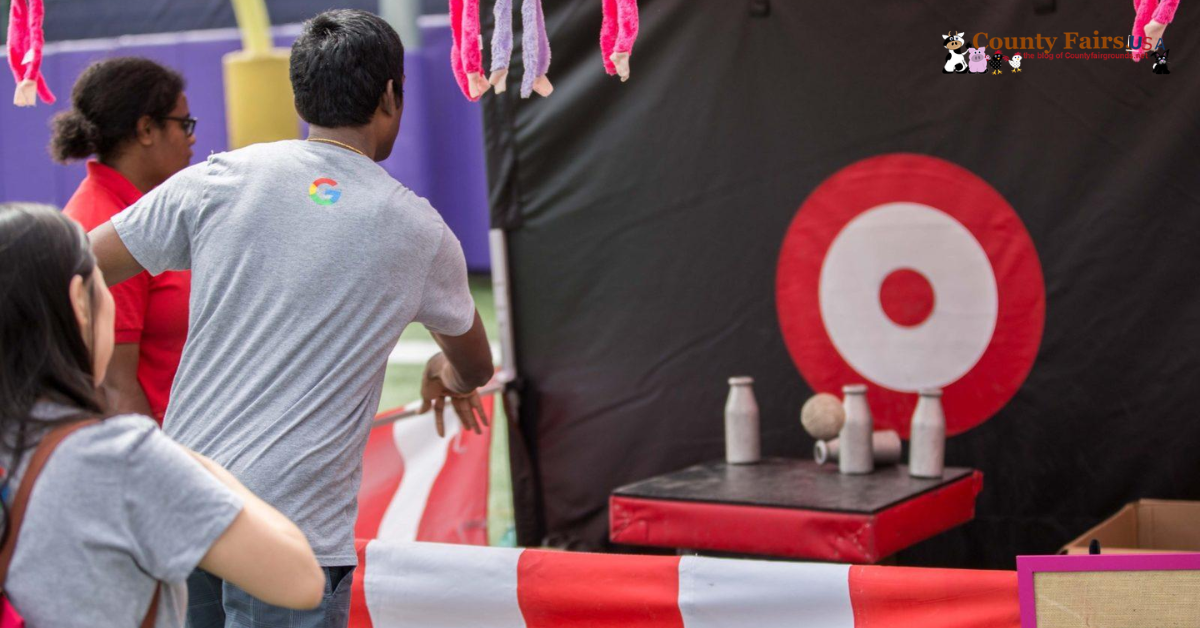
The key is knowing which games reward skill and which mostly rely on luck.
How to win carnival games: Which Are Easiest to Win?
| Game | Skill or Luck | Difficulty |
|---|---|---|
| Duck pond / pick-a-prize | Luck | Easy, everyone wins something small |
| Water gun race | Skill | Fair odds, one winner per round |
| Whac-A-Mole style | Skill | Fair odds against other players |
| Balloon darts | Skill | Medium |
| Basketball shot | Skill | Hard |
| Milk bottle knockdown | Skill | Hard |
| Ring toss | Mostly luck | Very hard |
| Coin toss on plates | Mostly luck | Very hard |
Games where you compete against other players, like water gun races, are often the best bet. The booth pays one prize per round no matter what, so you just need to beat the people next to you, not the game itself.
Game-by-Game Tips to Win Carnival Games
Basketball Shot
Fair basketball hoops are often smaller than standard, and the rim may be slightly oval. Balls are sometimes overinflated so they bounce off hard. To give yourself the best chance:
- Use a high arc so the ball drops straight down into the hoop.
- Aim for a clean swish instead of banking off the backboard or rim.
- Take a practice shot if the booth allows it to feel the bounce.
Balloon Darts
Balloons are sometimes underinflated, and darts can be dull, so a dart may bounce off instead of popping the balloon. Throw with a firm, straight motion rather than a soft lob. Aim for balloons packed tightly together, since a firmer balloon pops more easily than a loose one.
Milk Bottle Knockdown
The goal is to knock all the bottles off a stand with a softball. The bottom bottles are often heavier. Aim for the lower center of the stack where the bottom two bottles meet. Throw as hard and straight as you can. Hitting the top bottle usually leaves the heavy base standing.
Ring Toss
Ring toss is one of the hardest games on the midway because the rings barely fit over the bottle necks. Toss the ring flat and level with a gentle spin, like a Frisbee, and aim for the edge of the cluster where bottles have more room. Expect to try many times before landing one.
Water Gun Race
Pick the gun closest to the center if you can, so your angle to the target is straight. Hold steady, aim for the center of the target hole, and start as soon as the water turns on. Steady beats fast in this one.
Strength Tester (High Striker)
On the classic high striker, ringing the bell is about accuracy more than muscle. Hit the very center of the pad with the hammer coming straight down. A slight miss to the side wastes a lot of force.
Coin or Plate Toss
Coins tend to slide right off slick glass plates. Toss the coin with a soft, flat throw so it lands gently. This game is mostly luck, so only play it for fun with spare change.
General Tips for Winning at Fair Games
Some tips work for almost every booth on the midway.
Watch before you play. Spend a few minutes watching other players. If people are winning, the game is likely fair. If no one wins after many tries, move on.
Ask to see a win. In many games, you can politely ask the attendant to show that the game can be won. Many will gladly demonstrate.
Set a budget. Decide how much you will spend before you start. It is easy to chase a big prize and spend more than it is worth.
Trade up small prizes. Many booths let you trade several small prizes for a bigger one. Play the easier version a few times and trade up.
Play when it is quiet. Weekday afternoons are less crowded, so you can take your time and focus.
How to Pick the Right Booth
Not every booth on the midway offers the same value. Before you spend a single ticket, take a slow walk past the games and compare a few things side by side.
Check the price per try. Some games give you three balls for one price, while others give you one. More tries for the same money means better odds overall.
Look at the prize ladder. Booths that let you win a small prize on your first success and trade up later are friendlier than booths where only a perfect run wins anything.
Pick games that fit your skills. If you played baseball, try the milk bottles. If you shoot hoops on weekends, try the basketball booth. Your own strengths matter more than any trick.
Play with friends. In race-style games, playing against people you know means one of you is guaranteed to win, and you can share the prize.
What About the Prizes?
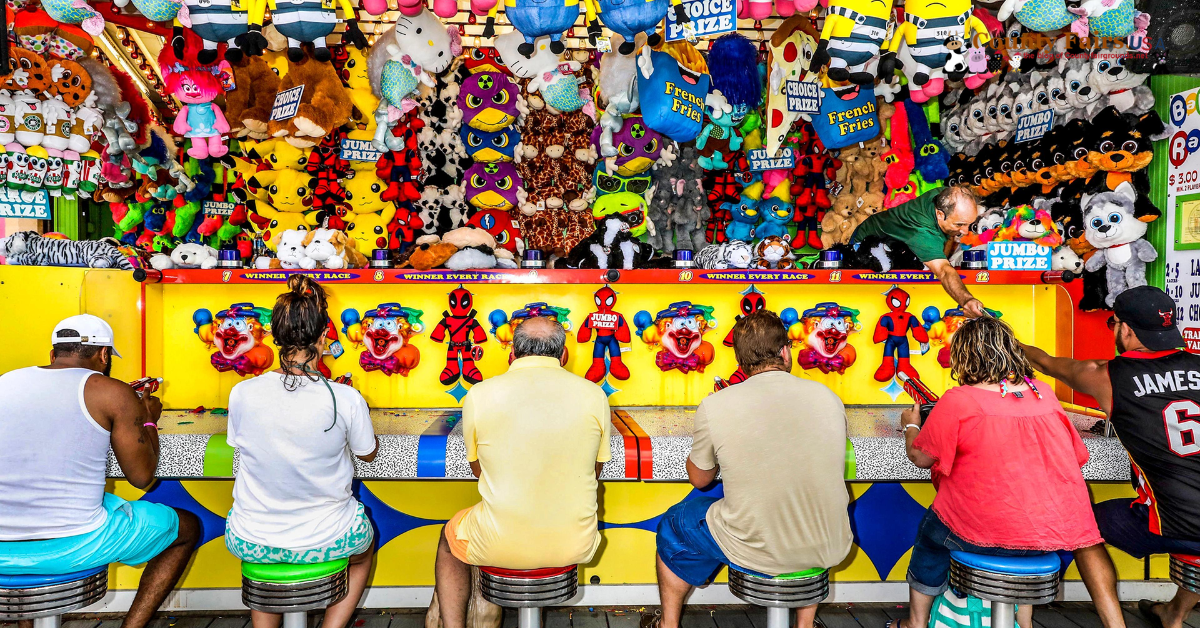
The big plush animals hanging at the top of the booth are usually the hardest to win. Small and medium prizes are much easier. Some booths now offer better adult prizes like phone accessories, sports gear, or snacks. Take a look at our list of the best carnival prizes for adults to see what is out there.
Be realistic about value too. If you spend twenty dollars to win a five-dollar toy, it is still a fun memory, but it helps to know the trade going in.
Practice Carnival Games at Home
If you want to get better before fair season, you can set up simple games in your yard. Ring toss with bottles, beanbag throws, and bucket tosses all build the same aim and touch you need on the midway. Our guide to easy DIY carnival games shows how to build them with household items. It is a fun way for kids to practice and have a mini fair at home.
Signs a Game Might Be Unfair
Most fair booths play by the rules, but it helps to know what to watch for.
- No one wins after a long time, even skilled players.
- The attendant will not show that the game can be won.
- Rules change after you pay or are not posted.
- Prices or prize rules are unclear.
If something feels wrong, walk away and tell the fair office. Fair boards want honest games on their grounds and take complaints seriously.
Frequently Asked Questions About Carnival Games
What is the easiest carnival game to win?
Duck pond games where everyone wins a small prize are the easiest. For skill games, water gun races offer good odds since one person wins every round.
What is the hardest carnival game to win?
Ring toss and coin toss are usually the hardest because they depend mostly on luck.
Are carnival basketball hoops smaller?
Often, yes. Many fair hoops are smaller or slightly oval, and the balls may be overinflated, which makes shots harder.
How do you win the milk bottle game?
Throw hard and aim low at the point where the two bottom bottles meet. Knocking the base out is key.
Can you ask a carnival worker to show you how to win?
Yes. Many attendants will demonstrate a win if you ask nicely, which also shows the game is fair.
Carnival games are part of what makes the fair feel like the fair. Pick the right booths, use these tips, and enjoy the fun of trying. Win or lose, the laughs are worth the ticket.