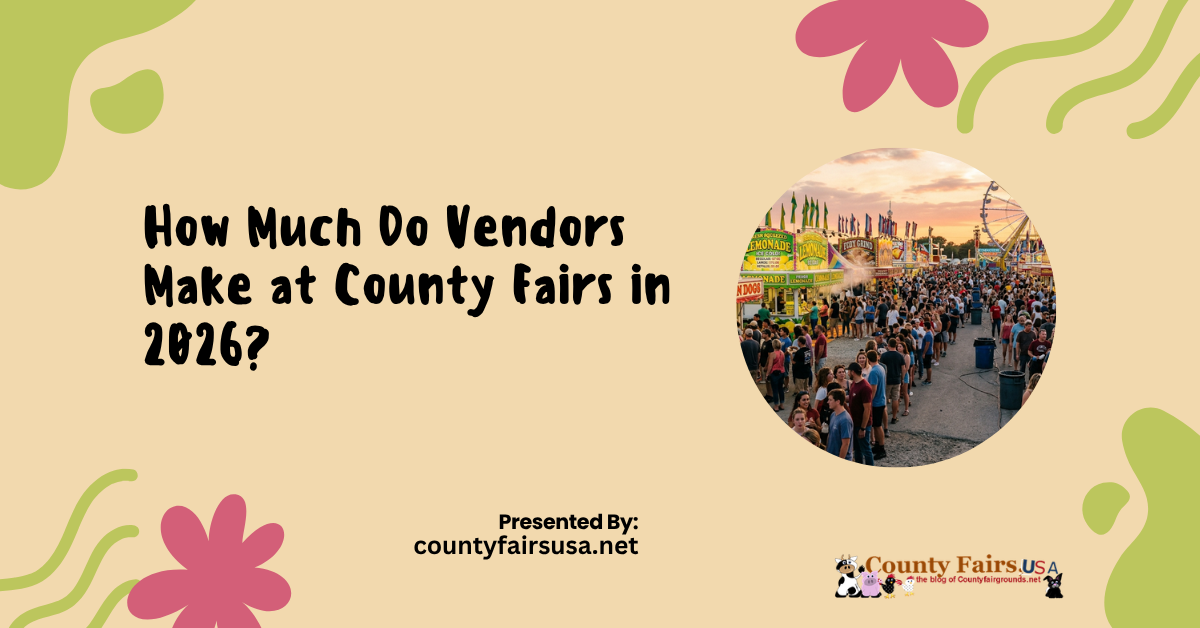
If you have ever stood in a long line at a county fair waiting for a corn dog or fresh-squeezed lemonade, you have probably wondered: how much is that vendor actually making? It is a great question, and the answer depends on more variables than most people expect.
How Much Do Vendors Make at County Fairs
At County Fairs USA, we have been covering county and state fairs across America since 1999. Over those 25+ years, we have walked hundreds of fairgrounds and watched vendors succeed, struggle, and everything in between. Here is what the numbers actually look like in 2026.
The Fair Economy Is Larger Than You Think
County fairs are not a niche market. According to a 2025 IAFE Economic Impact Study based on 2024 data, fairs and fairgrounds across the United States generated $51.9 billion in economic impact and attracted nearly 220 million visitors. That is a massive seasonal economy vendors plug into every summer and fall.
Where you vend and what you sell determines almost everything about your income potential. A vendor at a 3,000-person county fair and a vendor at a 100,000-person state fair are playing very different games.
Types of Vendors and How Each Earns
Not all fair vendors earn the same way. Before looking at numbers, it helps to understand the main categories:
- Food and concession vendors (funnel cake, corn dogs, lemonade, BBQ, kettle corn)
- Craft and handmade goods sellers (jewelry, woodwork, stained glass, pottery)
- Commercial and retail vendors (product demos, home goods, kitchen tools)
- Carnival game and ride operators
- Nonprofit and community organization booths
Each category carries a different earning model, cost structure, and income ceiling. Food vendors are almost always the highest earners on the grounds.
How Much Do Food Vendors Make?
Food is the core of any county fair experience, and food vendors tend to bring in the most revenue. But the range is wide depending on fair size and product type.
A practical rule used by experienced concession vendors: roughly 5% of total fair attendance will buy from any given booth per day. At a fair with 10,000 daily visitors, that is 500 transactions. At a $12 average ticket, that is $6,000 in gross revenue for the day before costs.
Real-world data backs this up. The Minnesota State Fair publishes vendor revenue figures, and the 2024 numbers are striking:
- Sweet Martha’s Cookie Jar (3 locations): $4.9 million over 12 fair days
- Pronto Pups (8 locations): $2.3 million
- Mouth Trap Cheese Curds: $1.6 million
- The Perfect Pickle: $1.27 million
These are top performers at one of America’s biggest fairs, not county fair averages. For a more typical county fair, here is a realistic gross revenue range per day for a single food booth:
- Small county fair (under 5,000 attendance): $800 to $2,500
- Mid-size county fair (10,000 to 30,000 attendance): $2,500 to $8,000
- Large regional or state fair (50,000+ attendance): $8,000 to $25,000+
After food costs (30 to 35% of revenue), booth fees, and labor, most efficient food vendors net between 20% and 35% of gross. A vendor grossing $6,000 over a weekend might take home $1,800 to $2,500.
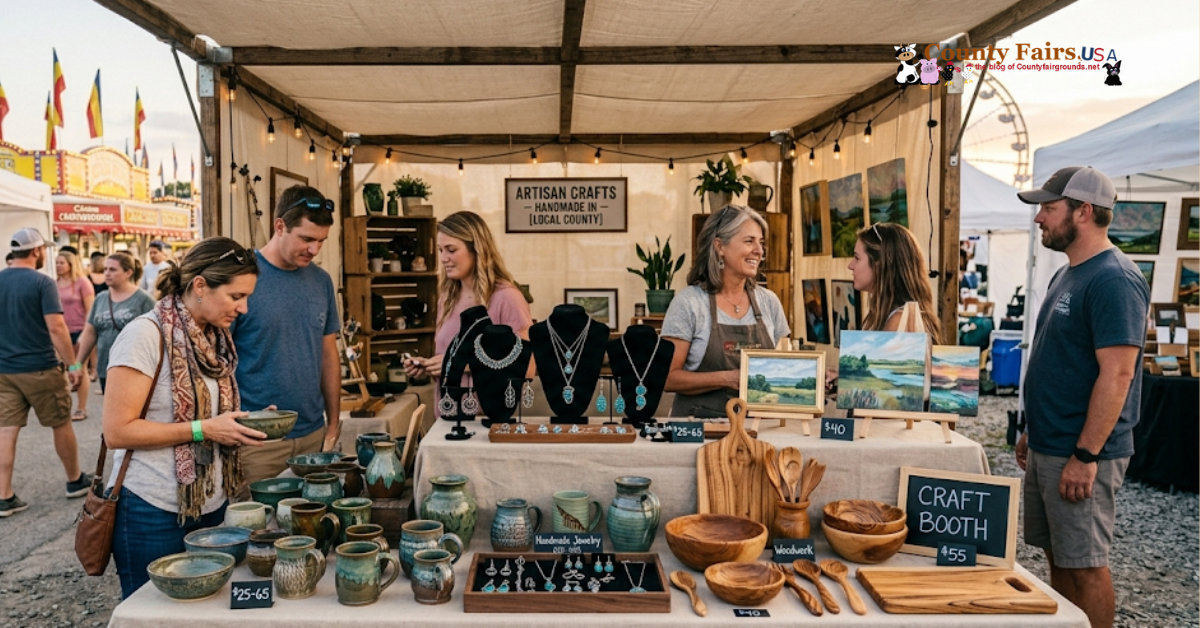
What Craft and Commercial Vendors Earn
Craft vendors work on a different model. Their per-item margin can be higher, but volume is lower and sales swing more unpredictably based on crowd mood and product appeal.
A typical craft vendor at a county fair can expect:
- Small local fair: $500 to $1,500 gross for the event
- Mid-size county fair: $1,500 to $4,000 gross
- Premium handmade items (stained glass, original art, fine woodwork): potentially $3,000 to $7,000 at the right fair
Commercial demo vendors selling higher-ticket products like cookware, outdoor tools, or health products can earn $5,000 to $20,000 at a well-attended fair through direct sales. Their booth fees are also higher, so the break-even math is different.
The Real Costs Vendors Pay
This is where a lot of first-time vendors get caught off guard. Gross revenue looks good on paper. The costs are what determine whether the fair was actually worth it.
Here is what vendors are typically spending in 2026:
- Booth or space rental: $150 to $5,000+ depending on fair size and location
- Permits and licenses: Health permits, business licenses, fire certificates. Usually $50 to $300 depending on the state
- Cost of goods (food vendors): 30 to 35% of gross revenue
- Equipment: Generators, fryers, display setups, tents, signage. A full first-time setup can run $5,000 to $15,000
- Labor: Any helpers or employees come out of your margin
- Travel and lodging: For vendors working multi-state circuits, this adds up fast
- Payment processing: Cards, tap-to-pay, Venmo are essentially required in 2026
At the Maryland State Fair, a 10×10 indoor booth costs $4,000 for the full event. Outdoor spaces start at $2,000. Knowing your exact break-even before you load the trailer is not optional, it is survival.
What Actually Determines How Much You Make
After covering fairs for over two decades at County Fairs USA, the vendors who consistently do well share the same habits. Here is what separates a profitable season from a frustrating one:
Fair size and foot traffic matter more than anything else. Research attendance figures before you apply. A well-placed booth at a 50,000-person fair will almost always outperform a great booth at a 3,000-person fair.
Booth placement inside the fairground is nearly as important. Spots near the main entrance, food court, or entertainment stage see far more traffic than booths tucked into a side row. Veteran vendors lock in their preferred spots and return year after year to hold them.
Beyond placement, a few other things consistently move the needle:
- Product uniqueness. The New York State Fair tells vendors directly: you have the best chance of being accepted if you offer something the fair does not already have. That advice applies everywhere.
- Accepting multiple payment types. Cash-only booths are losing customers in 2026. Cards, Apple Pay, and mobile payments are expected.
- A clean, eye-catching setup. At a fair with 100 booths, your display is your first pitch. A cluttered table with a handwritten sign loses to a bright, well-organized booth every time.
- Tracking results fair by fair. Keep a simple log of gross sales, costs, weather, and estimated attendance for every event. Over a full season, this data tells you exactly which fairs are worth returning to.
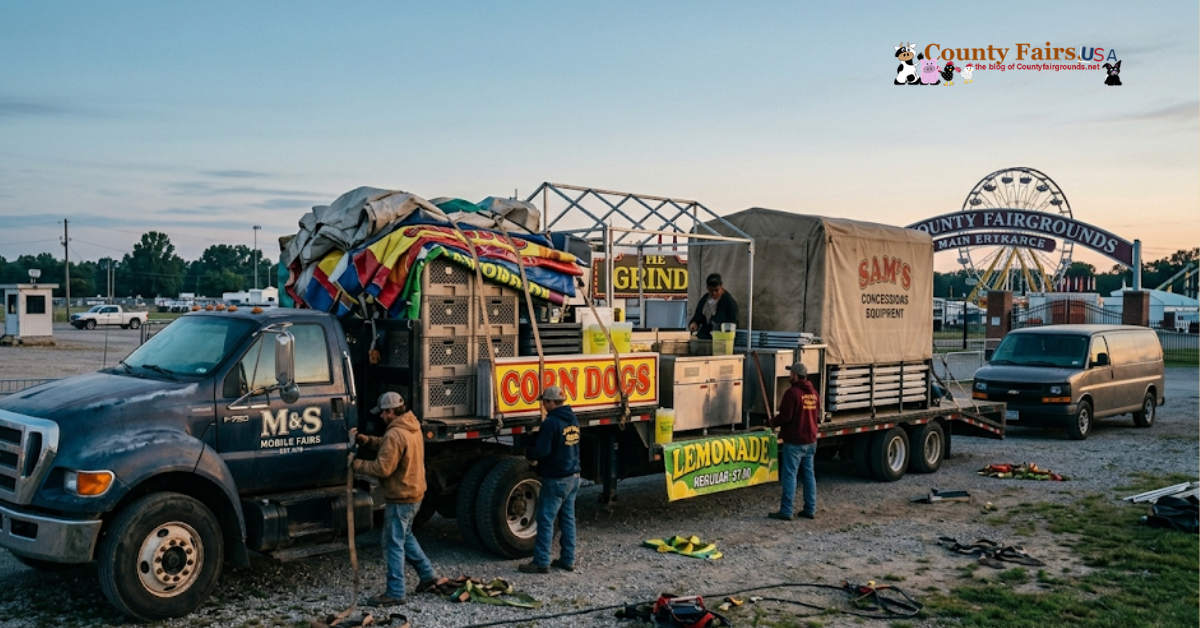
The Season Adds Up Fast
The US fair season runs May through October, with July, August, and September being the busiest months. How many fairs a vendor works determines their annual income more than almost anything else.
A vendor netting $2,000 per fair working 8 local fairs earns $16,000 from the season. That same vendor working a 25-fair circuit earns $50,000. Full-time traveling vendors who work 30 to 40 fairs per year treat this as a real business, because it is one.
The county fair vendor economy is alive and growing in 2026. For vendors who treat it seriously, plan carefully, and show up with a product people actually want, there is real money on the table every summer.
County Fairs USA has covered county fairs, state fairs, rodeos, and festivals across America since 1999. Browse our fairgrounds directory and vendor coverage to find fairs near you.