Demolition Derby Rules Explained: How Fair Derbies Actually Work
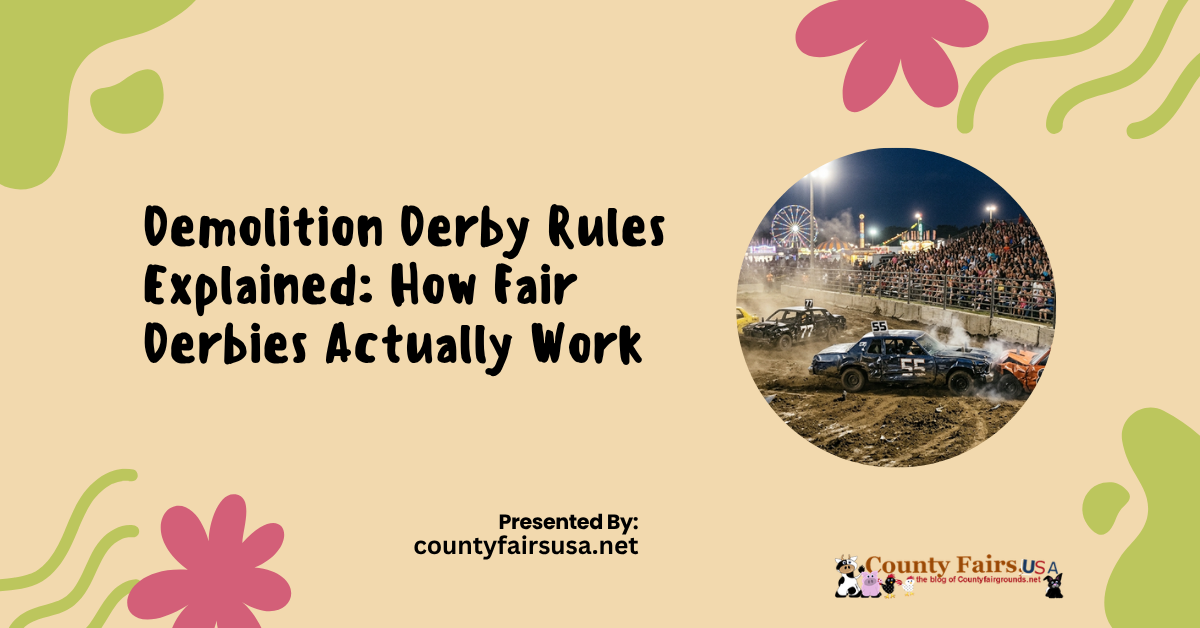
A demolition derby looks like pure chaos from the grandstand, but it runs on a written rulebook. Drivers ram each other in a dirt arena until one car is still moving under its own power, and that driver wins the heat. Every fair writes its own version, yet the safety and fairness rules stay remarkably consistent across the country. Here is how the rules actually work, from the welding shop to the checkered flag. What a Demolition Derby Is at a County Fair The demolition derby traces back to the 1940s stock car scene and became a grandstand staple at American fairs through the 1960s. Today it sits alongside the rodeo and the tractor pull as one of the few events that fills bleachers on a weeknight. A typical fair derby runs in three stages. Cars are split into heats of eight to twelve, heat winners advance, drivers knocked out early get one shot at a consolation round, and the survivors meet in the feature event for the top payout. The Core Rules Every Derby Runs On Strip away the local variations and the same handful of rules appear at almost every fairground in the country. If you learn these five, you can follow any derby in America. Last car moving wins. A car is out when it cannot move under its own power after being counted down by an official. Aggression rule. Most fairs give drivers 60 seconds to make solid contact. Sit and wait too long and you get a flag, then a disqualification. No driver door hits. Intentionally striking the driver's side door is the fastest way to be pulled from an event, and many fairs ban the driver for the season. Fire, fuel, or smoke ends your night. Officials black flag any car leaking fuel, smoking heavily, or showing flame, no argument. Rollovers are usually over. Some fairs allow a car to be righted, but most treat a rollover as an automatic exit for safety reasons. The aggression rule is the one casual spectators miss. Derby drivers are not just trying to wreck cars, they are trying to stay mobile while the 60-second clock keeps forcing them back into contact. Car Preparation Rules Tech inspection happens before a single engine fires, and this is where most drivers get sent home. The rules exist to keep a car from becoming a fire hazard or a weapon. What Must Come Out Every derby requires a full teardown before the car is legal. Officials walk the [...]