AI in County Fairs: How Technology Is Changing the Fair Experience
The smell of funnel cakes and the sound of a strongman bell still pull crowds every summer. But step behind the ticket booth at any modern county fair, and you’ll find something new running in the background: artificial intelligence.
County fairs have always mixed tradition with quiet reinvention. AI is now changing how fairs run, how visitors experience them, and even how judges score a prize hog.
Smarter Ticketing and Shorter Gate Lines
Long lines at the entrance used to be part of the fair. Most fairgrounds now use AI ticketing platforms that handle pricing, fraud checks, and entry scans in real time.
Here’s what AI does at the gate today:
- Dynamic pricing based on weather forecasts and demand
- Crowd prediction models that signal when to open extra lanes
- Fraud detection that flags resold or duplicate digital tickets
- Mobile scanning that cuts entry time to under five seconds per guest
Personalized Experiences Through Apps and Chatbots
The paper map at the entrance is fading out. Most fairs now have an app, and many run on AI that answers questions a friendly staffer would, just faster.
A modern fair app can:
- Build a personalized day plan based on your interests
- Recommend food stalls near your location
- Send live alerts for showtimes, weather, and lost-and-found
- Answer parking, restroom, and ADA questions through a chatbot
Visitors get a smoother day. Fair organizers get useful data on what people actually do once they walk in.
AI in Livestock Judging and Animal Health
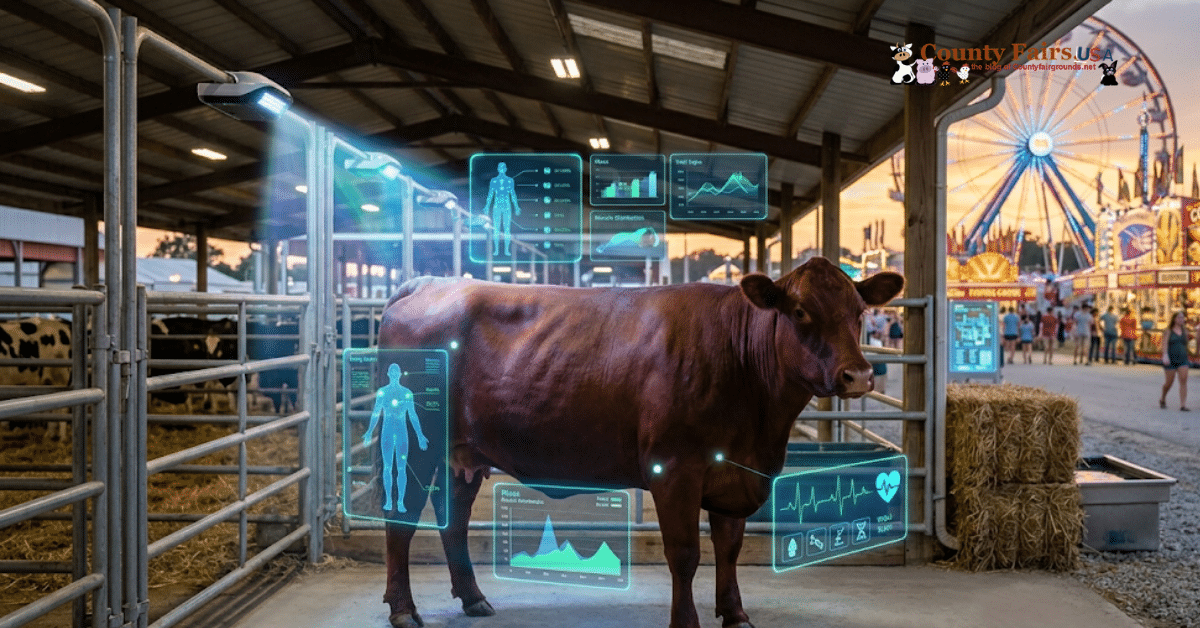
This is where things get interesting for the 4-H and FFA crowd. Computer vision tools can now scan an animal and measure conformation, muscle definition, and posture with precision the human eye can’t match.
A few real applications already in use:
- Cattle weight estimation through 3D imaging instead of scales
- Health screening that flags lameness, fever, or respiratory issues early
- Growth tracking for 4-H projects across the year
- Genetic analysis to help young exhibitors pick better breeding pairs
Most fairs aren’t replacing human judges. They’re giving judges more information to back up decisions, which makes scoring fairer.
Safer Carnival Rides and a Smarter Midway
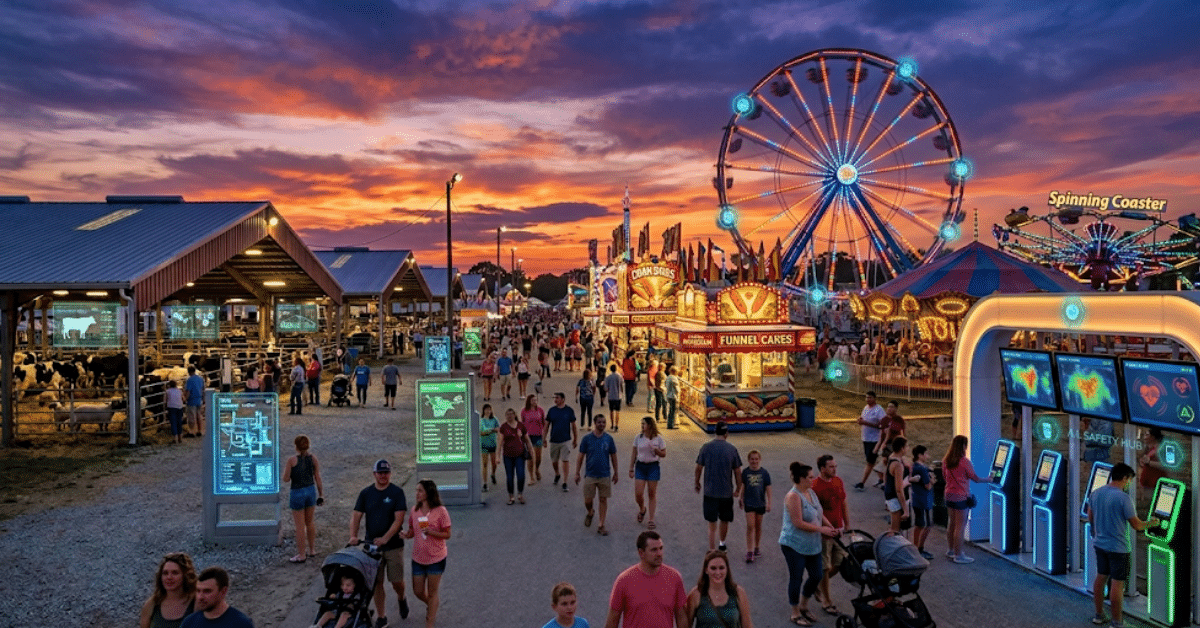
Ride safety is what fair organizers worry about most. Sensors on modern rides feed data to AI systems that watch for vibration patterns and motor stress, flagging issues before a ride breaks down.
Beyond rides, AI cameras on the midway help with other safety jobs:
- Spotting unattended bags or suspicious behavior
- Locating lost children faster through opt-in family tagging
- Tracking crowd density to redirect foot traffic from packed areas
- Monitoring rider behavior on coasters for unsafe positions
The midway still feels the same. The difference is what happens in the operator’s office two buildings over.
Smarter Food Vendors and Less Waste
Ask any concession vendor what their biggest headache is, and they’ll say ordering the right amount of stock. Too little and you sell out by 3 PM. Too much and the freezer is full of corn dogs on Sunday night.
AI demand forecasting is fixing this. Vendors plug in past sales, weather forecasts, and attendance projections, and the system tells them how many funnel cakes to prep on Saturday afternoon.
Other places AI shows up in fair food:
- Voice-ordering kiosks that handle peak rush hours
- Menu pricing tools that adjust for slow versus busy days
- Image recognition for faster checkout at large food courts
- Allergen flagging so guests with dietary needs can filter options
Marketing and Attendance Growth
Getting people to show up is half the battle for any fair board, especially in smaller counties. AI marketing tools help organizers reach the right people without blowing the budget on a single ad campaign.
Common uses include:
- AI-generated social media posts, reels, and graphics for daily promotion
- Targeted ads based on zip codes, age groups, and past attendance
- Sentiment analysis of comments to figure out what worked and what flopped
- Email personalization for families, seniors, and young adults
Smaller fairs that could never afford a marketing agency can now run campaigns that look polished and perform well.
Behind the Scenes for Fair Organizers
Most of the AI at a county fair is invisible to visitors. It runs in the background months before the gates open.
Tasks that used to take weeks now take hours:
- Volunteer scheduling across hundreds of shifts
- Sponsorship matching based on past partnerships
- Grant application drafting through AI writing tools
- Budget forecasting that compares actuals to projections live
- Vendor application sorting and approval workflows
Smaller fair boards, often run by a handful of volunteers, get the biggest benefit. As Countyfairgrounds has covered for years, fair boards live and die by their behind-the-scenes work.
The AI Pushback: Where Tradition Still Wins
Not everyone is happy about AI at the fair. The San Juan County Fair faced real backlash when its 2025 poster contest winner turned out to be AI-generated artwork. Local artists felt the fair was meant to celebrate human craftsmanship, not algorithms.
This pushback is healthy. Most fair boards now draw a clear line: AI is welcome in operations, ticketing, and safety, but the art tent, the pie contest, and the music stage stay human.
Where County Fairs Are Headed Next
A few things worth watching on the horizon:
- Augmented reality fair guides that overlay info through your phone camera
- Drones managing overflow parking and traffic flow
- AI-judged side contests like best-decorated booth or photography exhibits
- Real-time translation for non-English-speaking visitors
- Predictive weather tools that help reschedule events hours earlier
None of this replaces biting into a fresh elephant ear or watching your kid win a stuffed animal at the ring toss.
Tradition Stays, Tools Get Better
County fairs have survived world wars, the rise of the internet, and a global pandemic. AI is the next tool in a long line of changes that fair boards have absorbed without losing what makes the fair feel like the fair.
The ride operator still calls out “keep your hands and feet inside.” The 4-H kid still washes her steer at 6 AM. The judge still tastes the blue ribbon pie. AI just helps the people running the show do their jobs better, so everyone else can focus on the funnel cake.