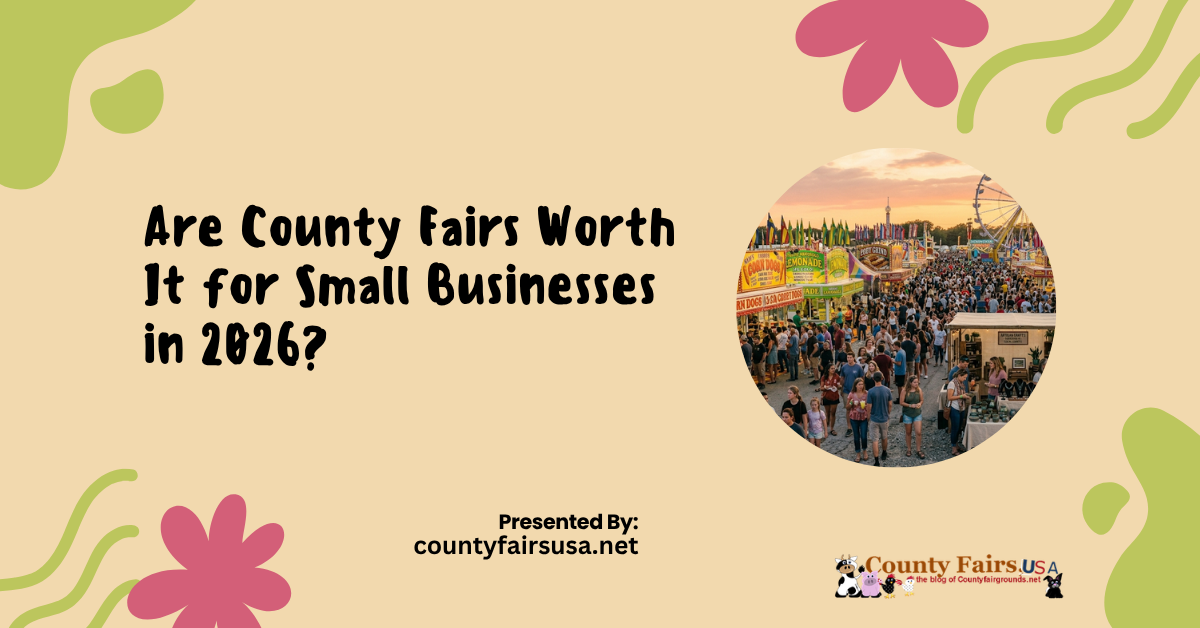
Every summer, thousands of small business owners face the same question: is paying for a county fair booth actually worth the money, the prep work, and the long days on your feet? The honest answer is not a simple yes or no.
Are County Fairs Worth It for Small Businesses
At County Fairs USA, we have been covering county and state fairs across America since 1999. Over those 25+ years, we have watched small businesses thrive at fairgrounds and also watched first-timers pack up after a slow weekend wondering what went wrong. The difference almost always comes down to preparation, product fit, and realistic expectations, not luck.
The Opportunity Is Real
County fairs are not a small-time channel. According to a 2025 IAFE Economic Impact Study based on 2024 data, fairs and fairgrounds across the United States generated $51.9 billion in economic impact and attracted nearly 220 million visitors. That is a massive, built-in audience showing up with money in their pockets and a mindset to spend.
What makes fairs different from digital advertising is the nature of the interaction. Instead of competing for attention online, vendors get to talk face-to-face, tell their story, and create experiences customers actually remember. If you talk to small business owners who vend regularly, most will tell you that county fair week is one of the biggest income weeks of their entire year.
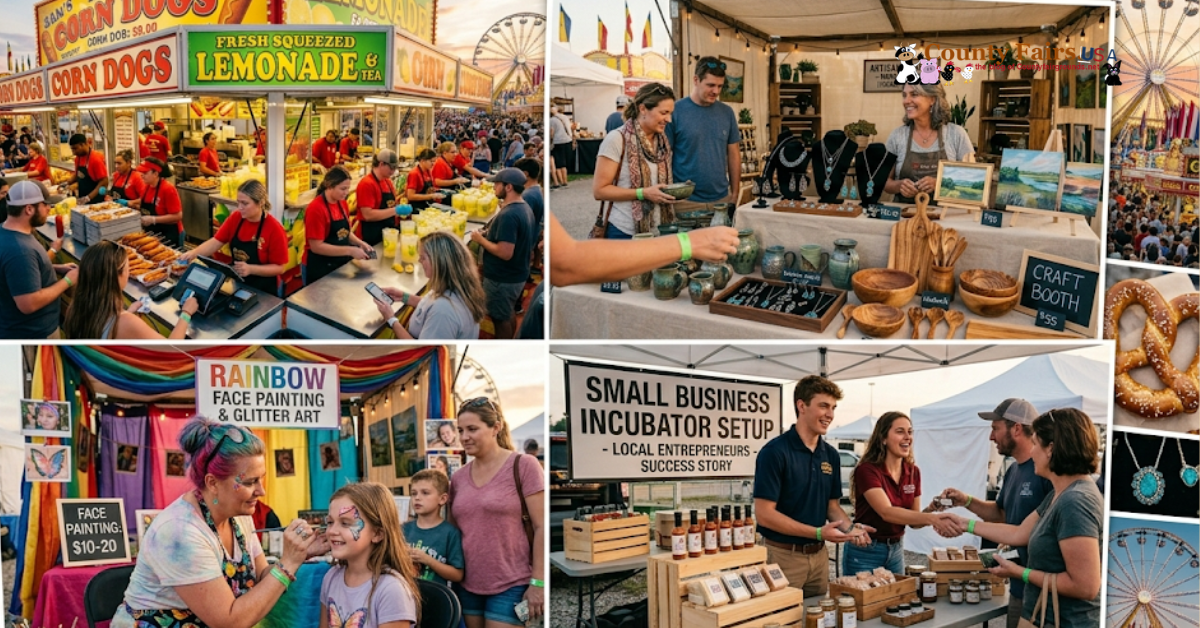
Not every business is a natural fit for a fair booth. The businesses that consistently perform well sell something visual, consumable, or hands-on that people can experience on the spot.
Here are the business types that tend to do best:
- Food and beverage vendors: Kettle corn, fresh lemonade, BBQ, funnel cake. These sell on smell and impulse, the perfect combination for a fairground environment.
- Handmade and artisan goods: Jewelry, stained glass, woodwork, pottery, and candles. Fair crowds actively look for one-of-a-kind products and are willing to pay a fair price for them.
- Service demo businesses: Face painters, caricature artists, and massage therapists can demonstrate their work in real time, which builds trust instantly with a live audience.
- Local food brands testing products: A county fair is one of the most affordable ways to get real consumer feedback before committing to wider distribution.
- Home service businesses generating leads: Landscapers, HVAC companies, and contractors can collect local leads directly from their target service area in a single weekend.
On the flip side, businesses that rely on long sales cycles, complex explanations, or purely digital products tend to struggle at fairs. If your product takes 20 minutes to pitch, a fairground walkway is not your best venue.
The Costs Every Small Business Needs to Know
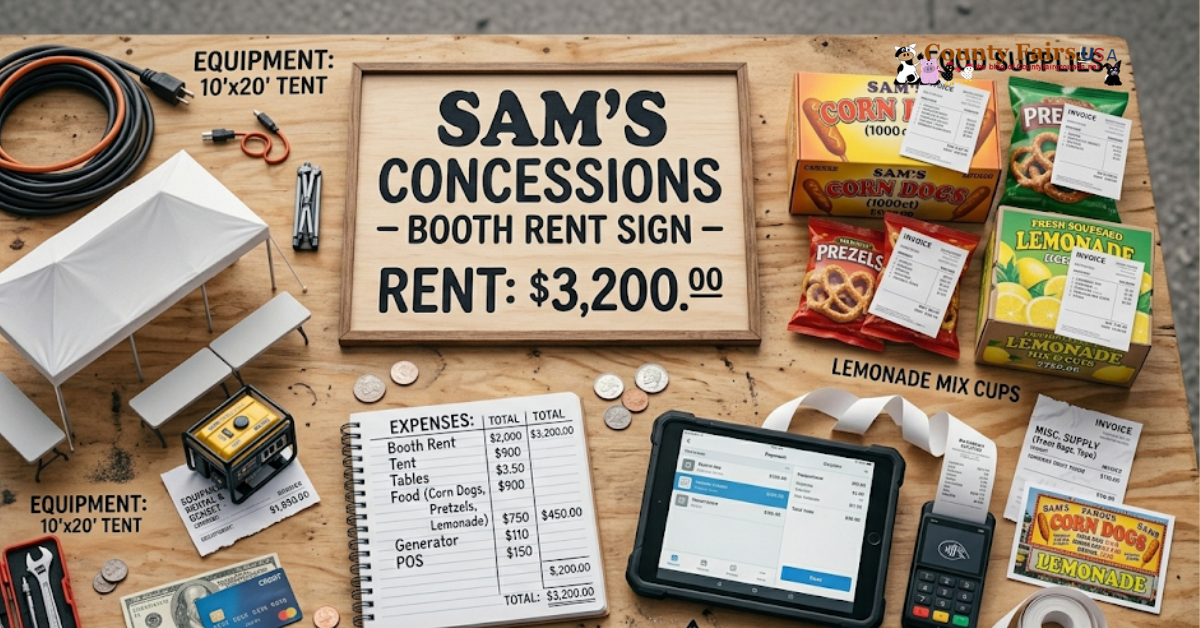
This is where many first-time vendors get caught off guard. The booth fee is just the starting point. Going in without a clear picture of total costs is how businesses end up losing money on a fair that looked profitable on paper.
Here is what you should budget for before committing:
- Booth or space rental: Typically $150 to $800 at a county fair, and up to $2,000 to $5,000 at larger state fairs
- Permits and licenses: Health department permits, business licenses, and fire safety certificates, usually $50 to $300 depending on your state
- Cost of goods: Food vendors should expect to spend 30 to 35% of gross revenue on ingredients
- Equipment and display setup: Tents, tables, signage, and generators. A first-time setup can run $3,000 to $8,000 upfront
- Labor: Any helpers or employees come directly out of your margin
- Travel and lodging: Fuel and hotel costs add up fast for fairs outside your immediate area
- Payment processing: Cards, Apple Pay, and mobile payments are expected in 2026. Cash-only booths are actively losing sales to competitors who accept everything
A useful benchmark from the craft fair world: successful vendors typically aim to generate revenue at least ten times their booth fee to ensure real profitability. If your booth costs $400, you need at least $4,000 in gross sales before you start covering other costs.
What the Return on Investment Actually Looks Like
The ROI from a county fair comes in two forms, and only counting one of them gives you an incomplete picture.
The first is immediate revenue. A food vendor at a mid-size county fair with 15,000 daily visitors can realistically generate $3,000 to $8,000 in gross sales per day. After food costs, booth fees, and labor, net profit often lands between 20% and 30% of gross. That is real money for a weekend of work.
The second form is long-term brand building. Customers who discover your business at a fair often become your most loyal buyers, because the relationship started with a real human interaction. A simple booth conversation can turn into years of repeat business, referrals, and word-of-mouth that no paid ad can replicate.
When a County Fair Is NOT Worth It
Being honest about when fairs do not make sense is just as important as making the case for when they do. There are real situations where a small business should pass on a fair entirely.
Watch for these warning signs before you sign up:
- Fair attendance is under 3,000 and your booth fee is over $300
- Your product has no visual appeal or impulse-buy factor
- You cannot staff the booth properly for the full event hours
- You have no way to accept card or mobile payments
- Your product requires a lengthy explanation to sell
- The fair’s typical crowd does not match your target customer profile
- You have not calculated your exact break-even number in advance
The New York State Fair tells prospective vendors directly: the most successful booths have a limited range of offerings they can prepare and deliver quickly. If a fair is already full of booths selling the same product as you, your earning potential drops sharply even at a well-attended event.
How to Make a County Fair Worth Every Dollar
The vendors who consistently walk away profitable treat their fair participation like a real business decision. Planning and execution separate the people who say “that was a great fair” from the ones who say “never again.”
Here is what actually works:
- Research attendance numbers before applying. Ask organizers for previous year figures. “Thousands of people come” is not a number you can plan around.
- Apply early. Popular county fairs fill vendor spaces months in advance. Submit your application in winter for a summer fair.
- Request a strong booth location. Spots near the main entrance, food court, or entertainment stage get dramatically more foot traffic than side rows.
- Keep your offering focused. One well-executed product almost always outperforms a cluttered table with too many options.
- Accept every payment type. Cash, cards, Venmo, Apple Pay. In 2026, losing a sale because you are cash-only is an avoidable mistake.
- Use the fair to build your following. Collect emails, hand out cards, and ask customers to follow your social media. The fair ends, but the relationship does not have to.
- Track results fair by fair. Log gross revenue, costs, weather, and estimated attendance for every event. Over a season, this data shows you which fairs are worth returning to and which ones to drop.
So, Is It Worth It?
County fairs are worth it for small businesses in 2026, but only if the product fits, the costs are understood up front, and the business owner shows up prepared. They are not a guaranteed money-maker, and they are not the right channel for every type of business.
What fairs offer is rare: a concentrated audience that came specifically to spend money, in a setting where a real conversation can turn a stranger into a loyal customer. For the right business, a county fair can be one of the best sales and marketing decisions of the entire year.
County Fairs USA has been covering county fairs, state fairs, rodeos, and festivals across America since 1999. Browse our fairgrounds directory and vendor guides to find the right fair for your business.