County fairs look simple from the outside. You show up, eat some fair food, watch a few shows, and head home. But first-time visitors almost always leave feeling like they missed something, overspent, or wore the wrong shoes.
What Do Most First-Time County Fair Visitors Miss?
At County Fairs USA, we have been covering county and state fairs across America since 1999. After 25+ years watching first-timers navigate fairgrounds from Texas to Washington State, the same patterns repeat every single season. Here is what to avoid and how to actually enjoy your first county fair.
Arriving Without Checking the Schedule
Most first-timers show up with no idea what is happening when. County fairs pack a huge amount of programming into a short window: livestock competitions, rodeo events, grandstand concerts, specialty acts, pie contests, and tractor pulls all run on overlapping schedules.
Walking in without a plan means missing things you would have wanted to see. Check the fair’s official website or County Fairs USA before you go, download the daily schedule, pick three or four priorities, and build your day around them.
Paying Gate Price Without Looking for Deals
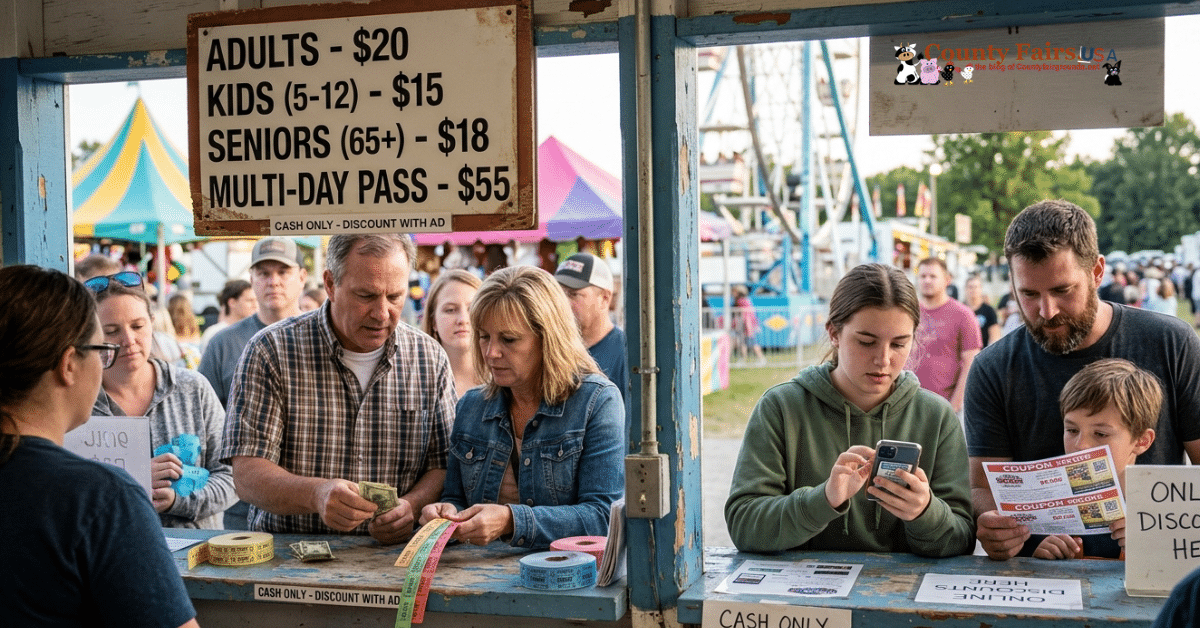
Walk-up gate prices at county fairs are almost always the most expensive way to get in. Most fairs offer multiple ways to save that first-timers simply never know to look for.
Common discount opportunities worth checking before you go:
- Early bird online tickets purchased in advance
- Family Day or Kids Day where children get in free or at a reduced rate
- Senior Day and Military Day admission pricing
- Grocery store and bank partner promotions (the State Fair of Texas regularly partners with local organizations for discounted entry)
- Weekday vs. weekend pricing at larger fairs
- Season passes if you plan to visit more than once
Wearing the Wrong Shoes
This sounds minor until you are limping through hour four of a hot fairground in sandals. County fairgrounds involve miles of walking across uneven ground, grass, gravel, and packed dirt. The State Fair of Texas alone covers 277 acres. Even a modest county fair will have you on your feet for most of the day.
Wear closed-toe, comfortable shoes you have already broken in before fair day. Sandals are fine for a casual afternoon, not for a full day at the fair with kids in tow.
Eating Everything at the First Booth You See
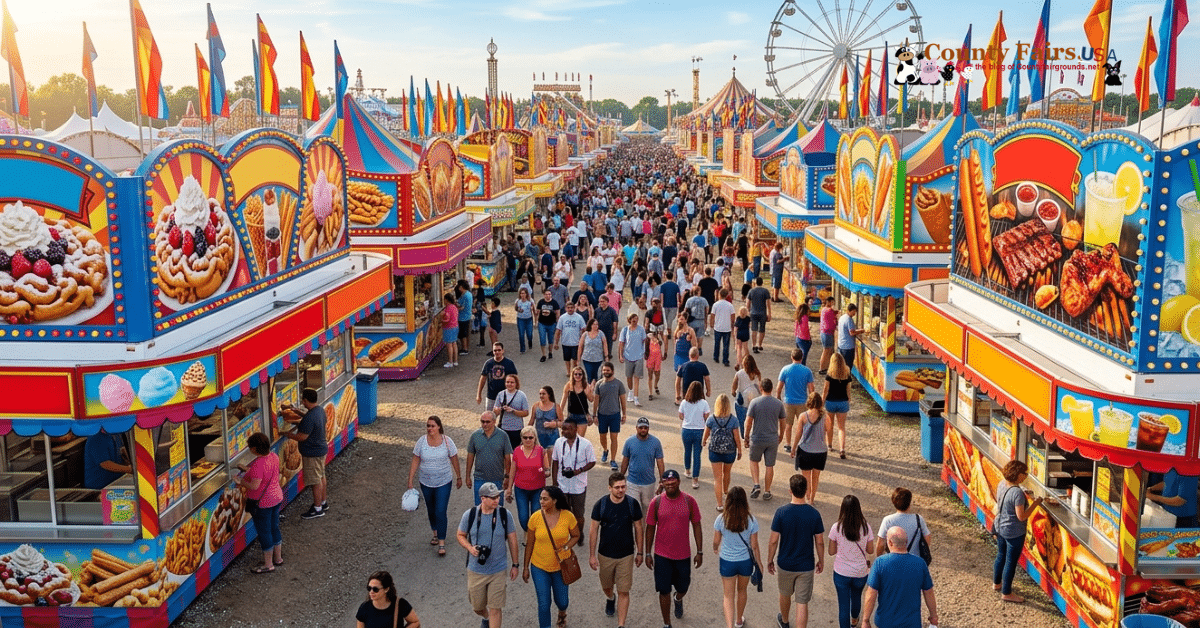
This is one of the most universal first-timer mistakes. You spot a funnel cake stand near the entrance, the smell hits you, and fifteen minutes in you are already full. Then you find the BBQ pit, the fresh-squeezed lemonade, and the kettle corn two hours later with no room left.
Walk the full fairground first before ordering anything. A 15 to 20 minute loop to see what is available will completely change what you end up eating and how much you spend on food.
Bringing Only Cash or Only a Card
Payment at county fairs is inconsistent. Some vendors are cash only. Others take cards exclusively. The carnival midway may use a separate wristband or token system entirely. First-timers who show up with only one payment method get caught out multiple times throughout the day.
Bring both. Have at least $40 to $60 in cash and a card with room on it. Check in advance whether the fair uses a cashless wristband system for rides, as several larger fairs have moved fully to that model in recent years.
Skipping the Livestock and Agricultural Exhibits
A lot of first-time visitors head straight for the midway and skip the livestock barns entirely. This is one of the biggest misses at any county fair.
The livestock and agricultural exhibits are what make a county fair genuinely different from any other event. Cattle, hogs, sheep, poultry, rabbits, and horses are shown by families and youth participants who have put months of preparation into their animals. At County Fairs USA, we have covered these competitions for over 25 years and they consistently rank among the most memorable parts of the fair, especially for families with kids who have never seen farm animals up close. Spend at least 30 minutes walking the barns. It costs nothing and is often what people remember most.
Missing the Free Entertainment
Most first-timers do not realize how much entertainment is included with fair admission. County fairs run a full schedule of acts that visitors walk right past because they never checked the program.
Here is what first-timers commonly miss by skipping the daily schedule:
- Grandstand headliner concerts, sometimes included with admission, sometimes ticketed separately
- Rodeo performances including bull riding, barrel racing, and mutton bustin for kids
- Specialty performers like jugglers, hypnotists, stiltwalkers, caricature artists, and magicians
- Crowd participation events: pie-eating contests, lawnmower pulls, hot dog eating competitions
- 4-H and FFA youth demonstrations, livestock judging, and awards ceremonies
County Fairs USA has covered specialty acts from human cannonballs to sword swallowers to country music headliners. Most run on a tight schedule. Miss the window and you miss the show.
Overspending on Carnival Games
Carnival games are designed to be fun and they are also designed to be profitable. First-time visitors with kids routinely spend far more than planned chasing prizes that cost a fraction of that price at any dollar store.
The fix is simple: set a firm per-person budget before you reach the midway. Decide the number before you see the giant stuffed animals, not after. Enjoy the games for what they are and do not expect to walk away with a grand prize.
Ignoring the Weather and Leaving Too Early
Fair season runs from late spring through early fall across most of the US, covering unpredictable weather windows, especially in states like Colorado, Texas, and Oklahoma. First-timers often show up underdressed for afternoon heat or without a layer for the temperature drop after sunset.
Check the forecast for your specific fair day, bring a light layer for the evening, and treat sunscreen as non-negotiable at any outdoor fair in July or August. And stay later than you think you need to. Evening hours at a county fair are a completely different experience: cooler temperatures, grandstand concerts, rodeo finals, and the full midway lit up after dark. Most first-timers leave at 3pm and miss the best part of the day entirely.
What Experienced Visitors Always Bring
Beyond the mistakes above, here is what seasoned fair visitors carry that first-timers rarely think to pack:
- Comfortable, already broken-in closed-toe shoes
- A small folding chair or stadium cushion for grandstand seating
- Sunscreen and a wide-brim hat or baseball cap
- A portable phone charger since fairgrounds drain batteries fast
- A reusable water bottle (many fairs have free refill stations)
- Both cash and a card in a small crossbody bag or backpack
Go In Prepared, Come Home Happy
County fairs reward people who show up prepared. The visitors who enjoy them most check the schedule ahead of time, pace themselves on food, stay curious enough to wander through the livestock barns, and stay late enough to see the midway after dark.
Every fair is different, which is why County Fairs USA has been connecting visitors with county fair listings, schedules, and event coverage since 1999. Browse our fairgrounds directory before your next visit and go in knowing what to expect.