Sustainability at County Fairs: Are Fairs Going Green?
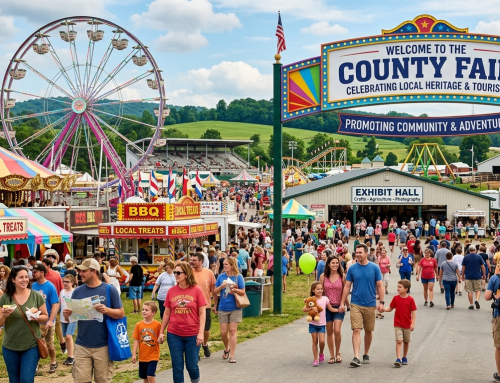
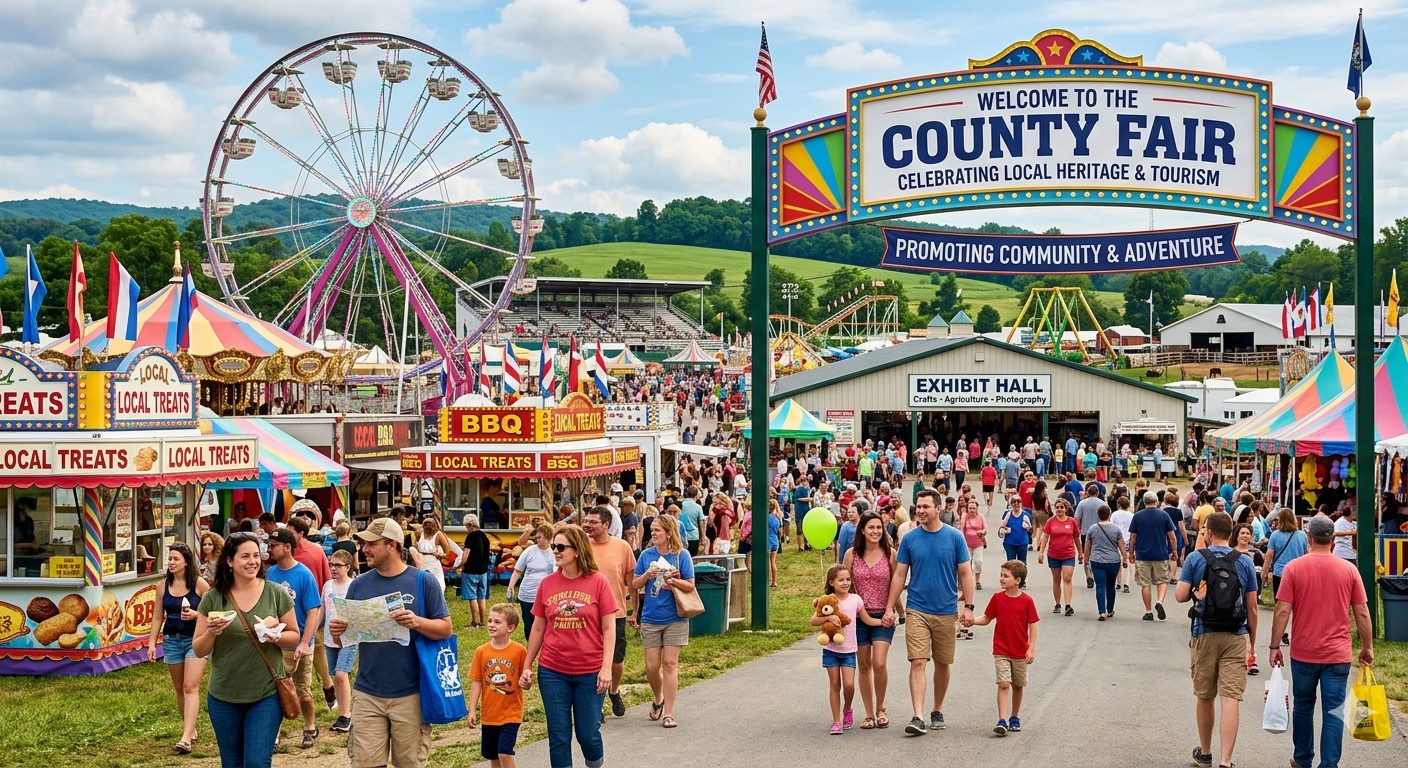
Think about what a county fair actually involves. Thousands of visitors over several days, hundreds of food vendors running fryers all day, diesel generators humming behind every booth, and mountains of single-use cups and packaging piling up by the hour. It is a lot. At CountyFairsUSA.net, we have been covering county and state fairs across America since 1999, and one of the most notable shifts we have observed in recent years is how seriously many fairgrounds are taking their environmental footprint. Sustainability at county fairs is no longer a fringe conversation. It is becoming part of how the best fairs operate.
The Environmental Reality of Running a County Fair
A multi-day fair that draws tens of thousands of visitors creates significant waste and energy demands. Food waste, plastic packaging, fuel consumption, and water usage all add up fast, especially when you are feeding a small city for a week straight.
The good news is that awareness has grown considerably. Fairs across the country are now implementing green programs that include solar power, waste diversion, water conservation, and energy-efficient products, and many are partnering with public agencies and private companies to support sustainable practices at fairgrounds. CA The question is no longer whether fairs should go green. It is how fast they can get there.
Waste Reduction: Where Most Fairs Start
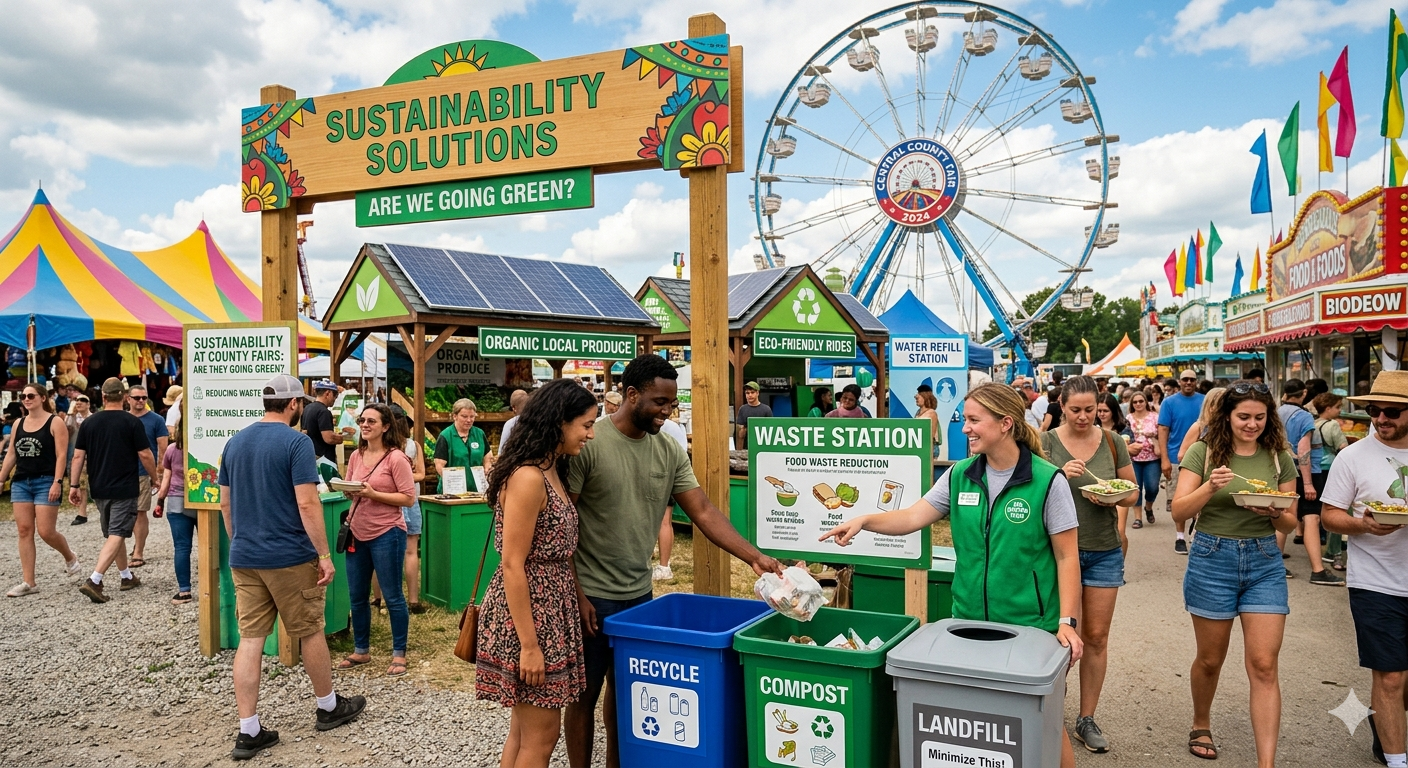
Food waste and single-use plastics are the most visible sustainability problems at any large fair, and they are also where the most progress is being made. Fairs that are serious about going green tend to start here because the impact is immediate and visible to attendees.
The Marin County Fair in California has built one of the most aggressive zero-waste programs in the country, collecting more than 28 tons of recycling and 80 tons of compost in a single fair season, and achieving a 92% waste diversion rate over more than a decade. Marin County Fair They have also banned single-use plastic bottles entirely from vendor sales and installed water refilling stations throughout the fairgrounds.
Common waste reduction steps fairs are taking right now include:
- Replacing single-use plastic cups and utensils with compostable or reusable alternatives
- Setting up clearly marked recycling and composting stations throughout the fairgrounds
- Requiring food vendors to use eco-friendly packaging as part of their vendor agreements
- Partnering with food banks and shelters to donate unsold food at the end of each fair day
- Collecting used cooking oil from food vendors and converting it into biodiesel
The Alameda County Fairgrounds in California works with a local company to recycle used cooking oil from food vendors into biodiesel, diverting waste from landfills and water systems while supporting a cleaner fuel supply. Alameda County Fairgrounds
Green Energy on the Fairgrounds
Power is one of the biggest sustainability challenges for county fairs. Temporary events rely heavily on diesel generators, which are noisy, expensive, and produce significant emissions. Permanent fairgrounds have more options, and many are starting to take advantage of them.
The Marin County Fair has installed a vertical wind turbine that generates around 1,800 kilowatt hours annually to power exterior lighting, making it the first wind turbine installed at a California fairground. Their on-site solar array combined with participation in a 100% carbon-free energy program means the fairground operates on clean energy year-round. Marin County Fair
At Alameda County Fairgrounds, building lights throughout the grounds are being replaced with LED fixtures and photocell systems, which use programmable timers and dimmers to reduce energy consumption significantly. Alameda County Fairgrounds
Green energy steps being adopted across fairgrounds include:
- Installing solar panels on permanent fairground structures like barns, exhibit halls, and rooftops
- Replacing traditional lighting with LED systems across midways, livestock areas, and parking lots
- Using biodiesel or hybrid generators for temporary power during fair week
- Conducting off-season energy audits to find and fix inefficiencies before the next fair
Agriculture’s Built-In Connection to Sustainability
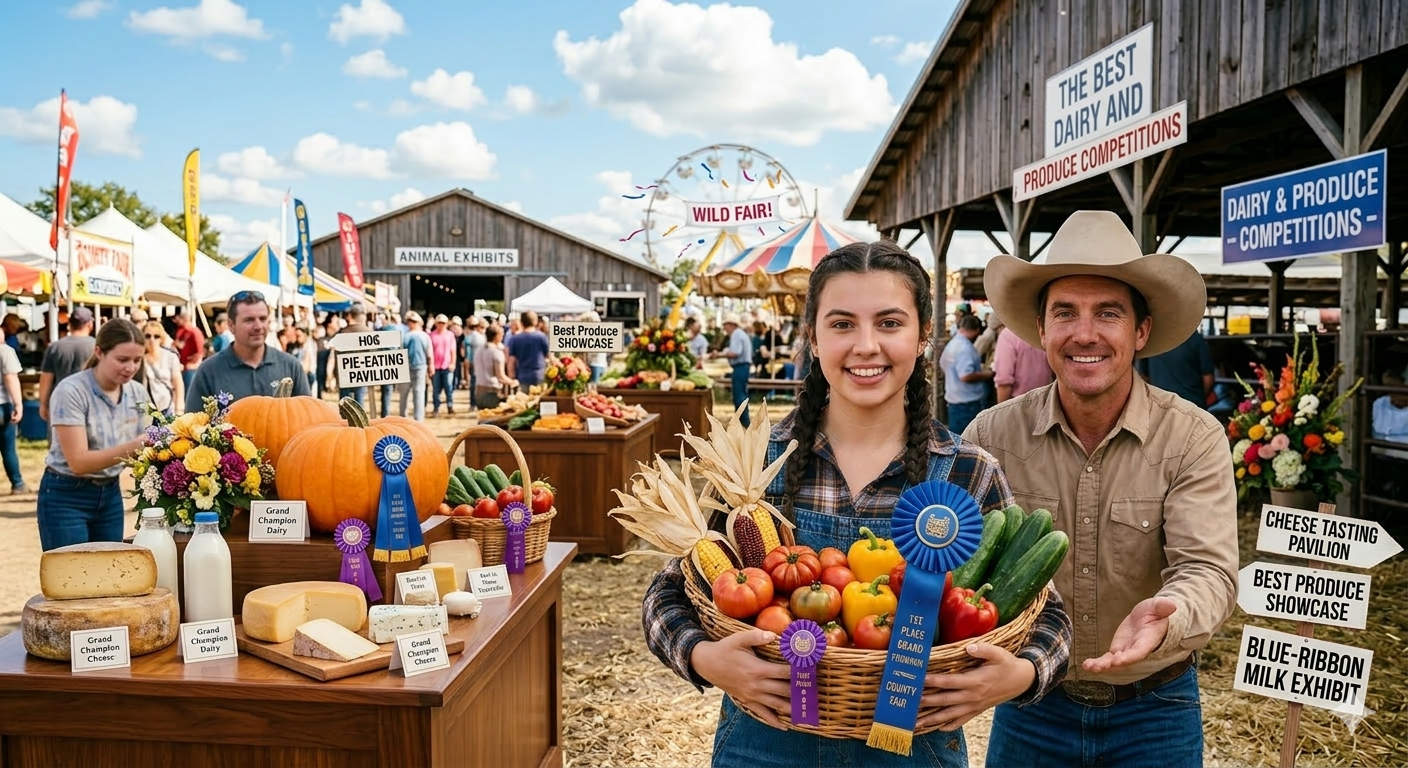
County fairs have always had a natural relationship with environmental stewardship, even if it was not always framed that way. The livestock shows, crop competitions, and 4-H exhibits that have been part of fairs for over a century are fundamentally about understanding the land and caring for animals responsibly.
At CountyFairsUSA.net, we cover livestock, agriculture, and farm categories across dozens of state and county fairs. What we see at these exhibits is genuine education around soil health, responsible animal husbandry, and sustainable food production. For many urban and suburban visitors, a county fair is the closest they will come to seeing these practices in person.
This agricultural foundation gives county fairs a credibility advantage when it comes to sustainability conversations. A fair that hosts a livestock show, a crop competition, and a demonstration on composting is connecting the dots between traditional farming values and modern environmental responsibility in a way that feels authentic.
The Challenges Are Real
It would be misleading to suggest that all county fairs are making strong sustainability progress. Many are not, and there are legitimate reasons why.
Smaller rural fairs operate on extremely tight budgets. Compostable packaging often costs two to three times more than standard plastic. Older fairground infrastructure was not built with solar arrays or water recapture systems in mind. And because most fairs only run for a few days each year, it can be hard to justify major capital investments in green infrastructure for an event that lasts less than a week.
The Western Montana Fair has taken a community-driven approach to close this gap, recruiting volunteer Green Teams to help manage waste sorting and composting during fair week. In 2024, they diverted 82% of waste from their local landfill, with 73% going to compost and 9% to recycling, a 9% improvement over the prior year. Missoula Compost LLC Their goal for 2025 is to reach 90% diversion. It is a model that shows what community involvement can accomplish even without a large budget.
So, Are County Fairs Going Green?
The honest answer is yes, but unevenly. Larger and better-funded fairs, particularly in California, the Pacific Northwest, and parts of the Midwest, are making real and measurable progress. Smaller rural fairs are moving more slowly, often held back by budget and infrastructure constraints rather than lack of will.
What is clear is that the direction has shifted. County fairs are community events, and when communities start prioritizing sustainability, their fairs tend to follow. At CountyFairsUSA.net and CountyFairgrounds.net, we track events across all 50 states, including state fairs, rodeos, festivals, and the seasonal events covered through our sister sites Halloween Events USA and Christmas USA Holiday. The fairgrounds hosting these events year-round have the most to gain from going green, and increasingly, they know it.