Most people who walk through the fairground gates see the funnel cakes, the carnival rides, and the live music. What they do not see is the six to twelve months of planning, permit filing, volunteer coordinating, and budget managing that made all of it possible.
How County Fairs Are Organized Behind the Scenes?
At County Fairs USA, we have been covering county and state fairs across America since 1999. After 25 years watching this industry up close, we can tell you that a well-run county fair is one of the most complex community events in existence. Here is what actually goes on behind the scenes.
Who Actually Runs a County Fair
Most county fairs are not run by government agencies or private event companies. They are run by a county fair board, typically a nonprofit agricultural association made up of elected or appointed community volunteers who serve unpaid, year-round terms and attend monthly meetings.
Many boards also employ a paid Fair Manager who handles daily operations and vendor coordination. The Deschutes County Fair Board in Oregon, for example, oversees a 320-acre facility year-round and meets monthly to conduct business, appointed directly by the Board of County Commissioners.
The Planning Timeline Starts Much Earlier Than You Think
Most fairgoers assume county fairs are planned a few months in advance. In reality, planning for a summer or fall fair typically begins the previous October or November, making it a full twelve-month operation.
Here is how that timeline generally breaks down:
- October/November: Board reviews the previous year’s results and sets goals and a working budget for the next fair
- December/January: Entertainment contracts begin and vendor applications open for the upcoming season
- February/March: Vendor selections are finalized and permit applications are submitted to health departments and local authorities
- April/May: Marketing ramps up, volunteer recruitment begins, and logistics like ground layouts are locked in
- 6 to 8 weeks out: Final fairground walk-throughs, ride inspections scheduled, staff and volunteer shifts distributed
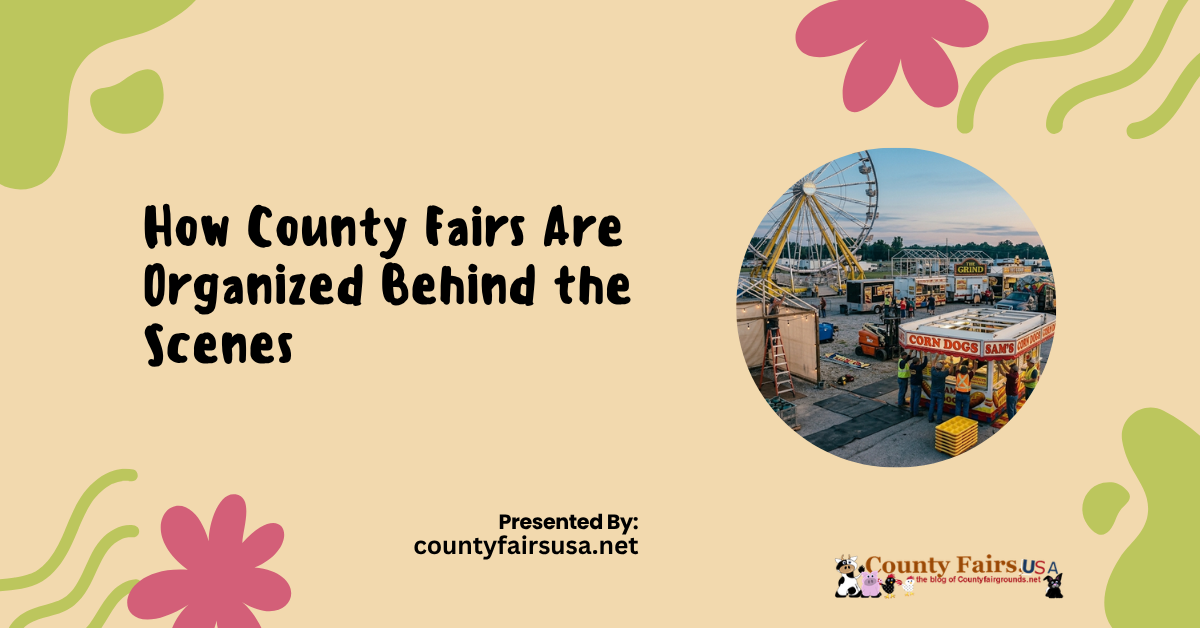
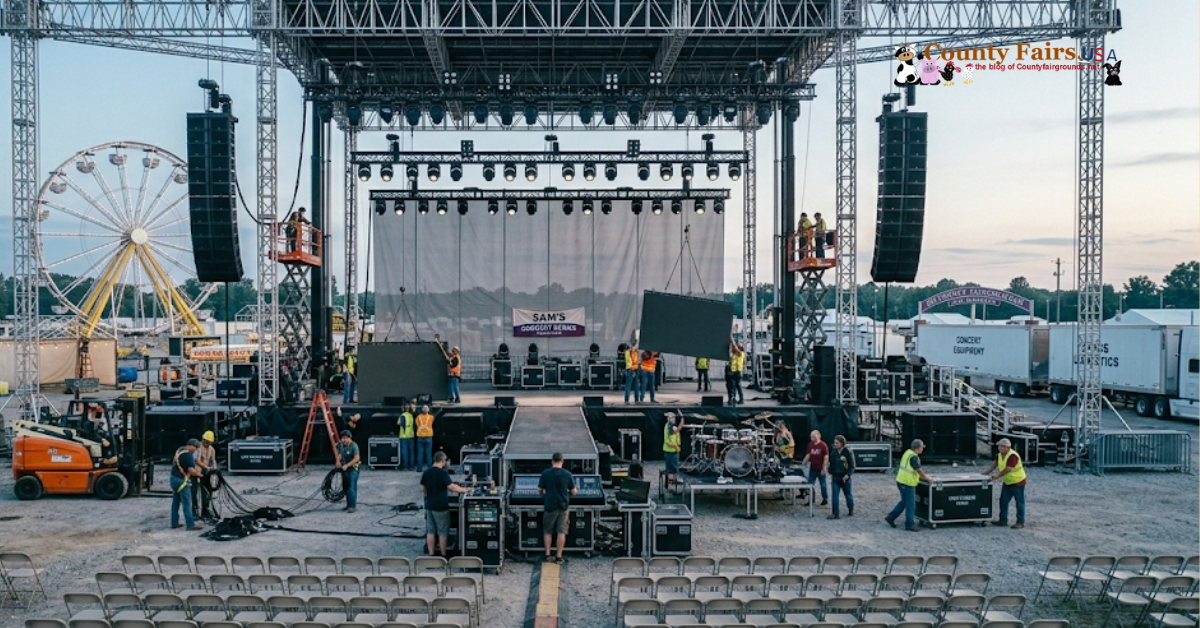
- 1 to 2 weeks out: Setup begins, vendor tents go up, rides are assembled and electrical connections tested
- Fair week: Daily operations, crowd management, and real-time problem solving
- Post-fair: Financial reporting, feedback collection, and the board debrief that starts the next cycle
How Vendors Are Selected and Placed
Vendor selection is far more competitive than most people assume. Popular county fairs receive significantly more applications than they have space for, and most use a juried selection process, meaning organizers actively curate the vendor mix for quality, variety, and uniqueness rather than simply filling spots on a first-come basis.
The Colorado State Fair states clearly that their vendor selection is juried and that they look for clean, professional booth displays and strong product appeal. Booth placement inside the fairgrounds is equally deliberate, with food vendors positioned near high-traffic areas and craft vendors grouped in dedicated market zones. Here is what fair organizers typically evaluate in applications:
- Product uniqueness, specifically whether the fair is already saturated with the same item
- Booth display quality and visual appeal
- Health and safety permits, especially for food vendors
- Proof of liability insurance
- Prior fair experience and references from other events
Booking Entertainment Is a Long Lead Process
Entertainment is one of the biggest budget line items and one of the earliest decisions a fair board makes. Headliner concerts, rodeo acts, and specialty performers are typically booked six to twelve months in advance.
At County Fairs USA, we have covered the full range of acts that county fairs bring in, from country music headliners to specialty performers like jugglers, hypnotists, stiltwalkers, and human cannonballs. Each booking involves a contract, a technical rider for sound and staging, hospitality requirements, and insurance certificates. Smaller community fairs often rely on local talent and 4-H demonstrations to fill their entertainment schedule at a fraction of the cost.
Permits, Safety, and Compliance
Running a county fair involves a significant layer of permits and regulatory compliance that most fairgoers never think about. Fair coordinators work closely with state and local officials to secure proper licenses before a single vendor tent goes up.
Here is what typically needs to be in place before gates open:
- Health department permits for all food vendors
- State-certified ride inspections for every piece of carnival equipment
- Fire safety certificates for tents and enclosed vendor structures
- Alcohol licensing if beer or wine is served on the grounds
- Noise ordinance compliance for concerts and amplified sound
- ADA accessibility compliance for fairground layout and pathways
- Emergency response plan coordinated with local police, fire, and medical services
Volunteers: The People Who Make It Run
One long-serving Jefferson County Fair board member put it plainly: the entire fair is based on volunteers. Without them, the economics of a county fair simply do not work. Paid staff alone cannot cover ticket booths, animal barns, exhibit halls, parking areas, and entertainment support at any reasonable cost.
At the Bedford County Fair in Pennsylvania, the event runs on 300 volunteers, at least 35 committees, and 90 sponsors. At the Arlington County Fair, volunteers are placed in specific roles including competitive exhibits, entertainment support, vendor setup and breakdown, and outdoor logistics. All volunteers must complete an orientation before being placed. 4-H members and FFA youth organizations are deeply embedded in this structure at most agricultural county fairs, managing livestock areas and running educational displays.
How County Fairs Are Funded
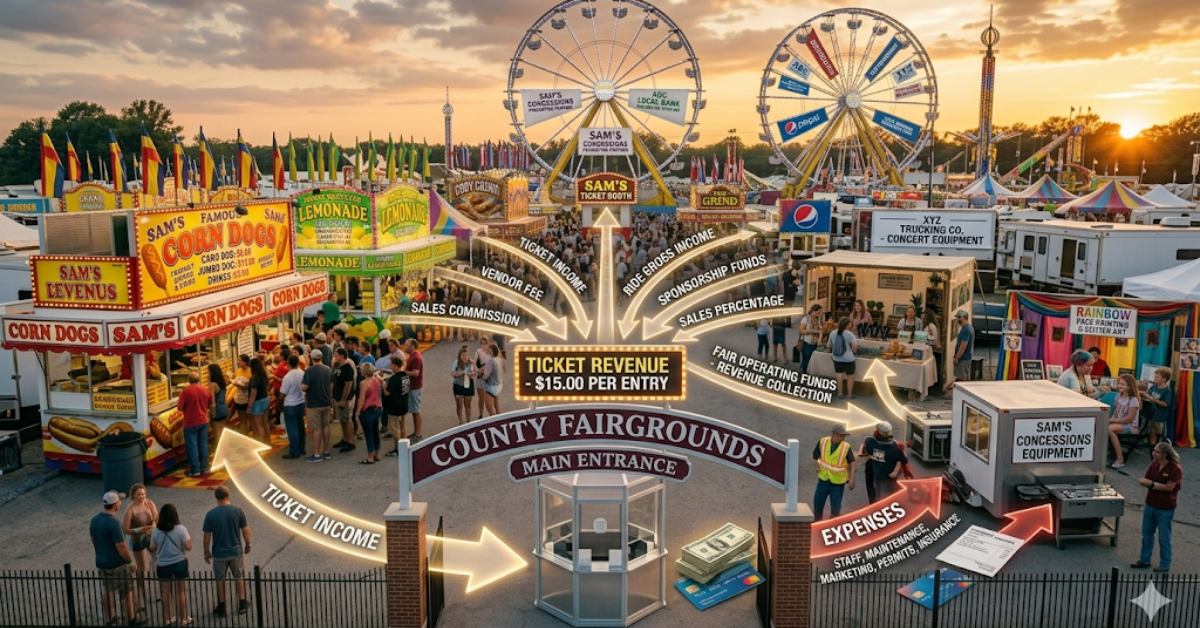
Managing the budget is one of the most stressful parts of running a county fair. A single rainy weekend can put the event in the red, and many fairs operate on thin margins even in good conditions.
Revenue typically comes from a mix of sources:
- Gate admission fees from daily and season ticket sales
- Vendor booth rental fees and sales commissions (the Colorado State Fair charges food vendors a guarantee plus 25% commission on all sales)
- Carnival commissions, usually 20 to 25% of ride and game revenue
- Sponsorships from local banks, businesses, and regional brands
- Parking fees and on-site program advertising
- Agricultural grants from state or county government programs
What Fair Week Actually Looks Like for Organizers
Once the gates open, the planning phase ends and real-time operations begin. Fair managers are simultaneously handling vendor issues, crowd flow, weather changes, equipment failures, and schedule adjustments without the crowd ever noticing.
Key operational roles running throughout fair week typically include:
- A grounds supervisor managing maintenance, cleanliness, and setup issues
- A vendor coordinator handling check-ins, disputes, and space conflicts
- An entertainment coordinator managing stage schedules and performer logistics
- Security and crowd management personnel stationed throughout the grounds
- On-site medical and first aid staff available during all operating hours
The Effort Behind Every Fair Day
The next time you are waiting in line for a corn dog at a county fair, it is worth a moment to consider what went into making that possible. A volunteer board meeting monthly since last fall. A fair manager working through a permit checklist across multiple agencies. Hundreds of community members who showed up before the gates opened and will still be there after they close.
That is what it takes to run a county fair, and County Fairs USA has been covering this work since 1999. Browse our fairgrounds directory and state fair coverage to find events near you.