Most people walk through the fairground gates thinking about corn dogs and carnival rides. Very few stop to wonder what it actually cost to put all of that together. The answer is more than most would guess.
What Does It Really Cost to Run a County Fair?
At CountyFairsUSA.net, we have been covering county and state fairs across America since 1999. One county fair board president described it plainly: the fair is really like a small business, and it costs a lot of money to pay for insurance, water, sewer, electric, maintenance, and grounds upgrades before a single guest walks through the gate.
The Range: Small Fair vs. Large Fair
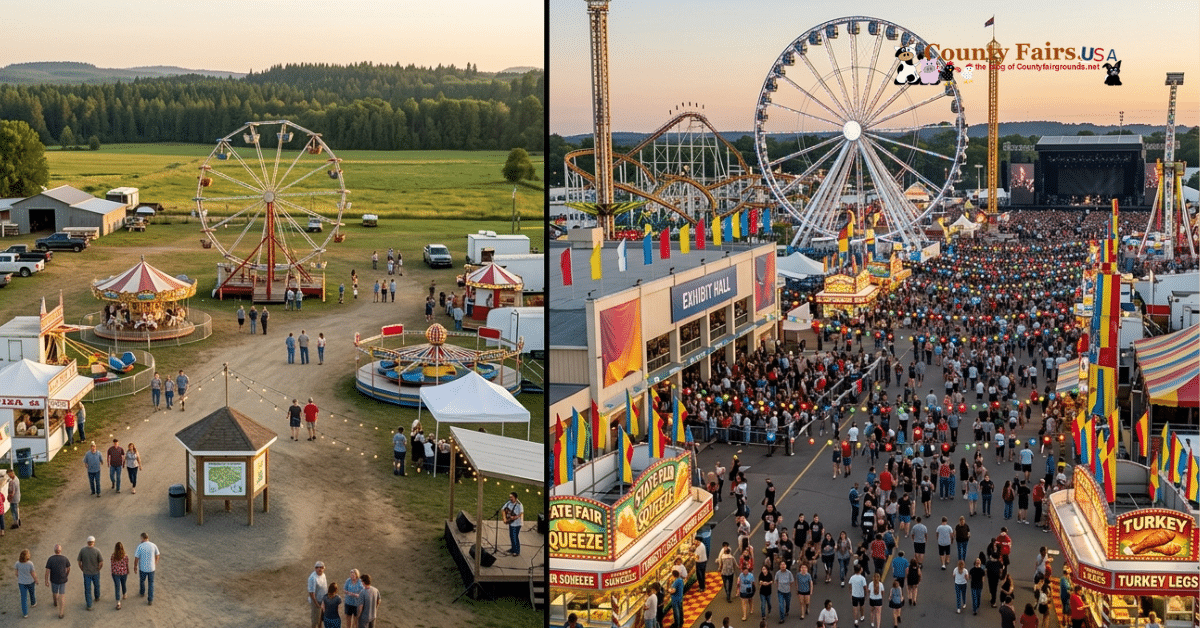
There is no single number that answers this question because the range is genuinely wide. A small rural county fair running three or four days operates on a very different budget than a ten-day state fair drawing hundreds of thousands of visitors.
A small community county fair might operate on a total budget of $50,000 to $150,000. A mid-size county fair can cost $300,000 to $800,000 to produce. Major fairs like the State Fair of Texas or the Minnesota State Fair run multi-million dollar operations. According to a 2025 IAFE Economic Impact Study, US fairs collectively generated $51.9 billion in economic impact in 2024, which gives a sense of the total scale these individual events feed into.
Entertainment: The Biggest Line Item
Entertainment is almost always the largest single expense a county fair board faces, and bookings happen six to twelve months in advance. At CountyFairsUSA.net, we have covered the full range of acts that county fairs bring in, from country music headliners to specialty performers including jugglers, hypnotists, stiltwalkers, sword swallowers, and human cannonballs.
The Bureau County Fair in Illinois paid approximately $75,000 for a single headliner concert. Their board president kept the tradition going despite the cost because that act was what brought people to the fair. Here is a realistic entertainment cost range by type:
- Regional headliner concerts: $15,000 to $75,000 per show
- National headliner acts: $100,000 to $500,000 or more
- Specialty performers (hypnotists, stiltwalkers, animal shows, human cannonballs): $1,500 to $10,000 per act per day
- Rodeo production (stock contractors, rodeo clowns, announcers): $10,000 to $50,000 depending on scale
- Sound and staging equipment rental: $5,000 to $30,000 for a multi-day event
Smaller fairs control this expense by relying on local talent, tractor pulls, 4-H demonstrations, and community competitions instead of booking outside acts.
Carnival and Ride Contracts
Most county fairs do not own their rides. They contract with carnival companies who bring in the midway, set it up, and operate it during the fair. The typical arrangement gives the fair a commission of 20 to 25% of the carnival’s gross revenue in exchange for exclusive operating rights on the fairgrounds.
The carnival operator covers transportation, setup, teardown, ride insurance, and their own staff. The fair bears very little direct cost for the midway, though they do share revenue in exchange for the arrangement.
Grounds, Facilities, and Infrastructure
Running a fairground costs money every single day, not just during fair week. Utilities, building insurance, staff salaries, and maintenance continue year-round regardless of whether events are happening.
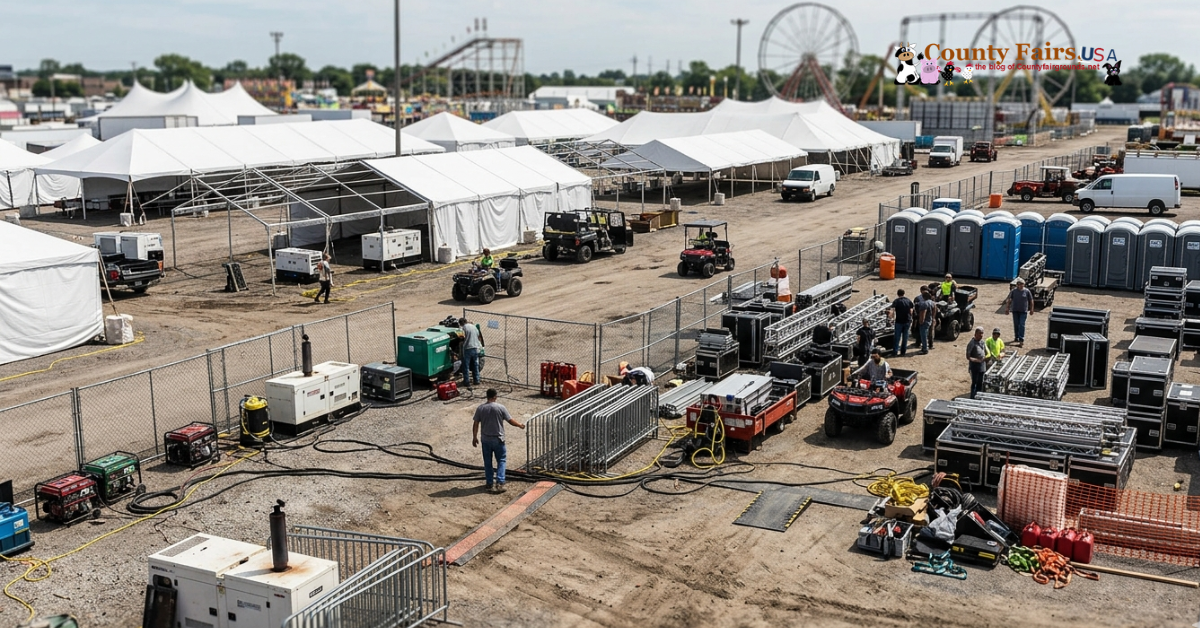
The Boonville-Oneida County Fair board describes their fixed costs as covering insurance, water, sewer, electric, maintenance, and ongoing building upgrades. On top of those, they budget separately for shows, livestock events, and entertainment each year. Typical grounds and infrastructure expenses during fair week include:
- Temporary structures: tents, staging, bleachers, and crowd fencing
- Electrical setup and generator rentals for vendors and entertainment areas
- Portable restroom rentals and sanitation services across multiple fair days
- Trash collection and post-fair cleanup across the entire grounds
- Parking management, traffic control equipment, and shuttle coordination
- Security fencing and barrier setup around the fairground perimeter
The Coshocton County Fair in Ohio has received over $135,000 in grants in recent years just for paving, building upgrades, and ADA improvements to their grounds, which shows how significant the facility cost burden can be even for a mid-size fair.
Insurance and Compliance Costs
Every county fair operates inside a layer of insurance requirements and compliance costs that first-time organizers consistently underestimate. The Coshocton County Fair pays approximately $7,000 annually just for insurance on their fairground buildings, separate from any event-specific coverage.
General liability insurance for the event itself typically runs $5,000 to $25,000 depending on fair size. Beyond general liability, compliance costs add up across multiple categories:
- State-certified ride safety inspection fees before carnival equipment can open
- Health department permit fees for food vendor oversight and certification
- Alcohol licensing if beer or wine is sold on the grounds
- Fire safety inspection certificates for tents and enclosed vendor structures
- ADA compliance upgrades to fairground pathways and facilities when required
- Emergency response coordination with local police, fire, and medical services
Staffing and Volunteer Management
Most county fairs run on a mix of paid staff and volunteers. Paid positions typically include a Fair Manager, grounds crew, security personnel, and ticket booth staff. Volunteers fill the rest.
Even volunteer labor carries real costs. Coordination, training sessions, orientation meetings, and volunteer support including meals, shirts, and recognition events all add up. A fair managing 200 to 300 volunteers might spend $5,000 to $15,000 supporting that workforce. The Bedford County Fair in Pennsylvania coordinates 300 volunteers, 35 committees, and 90 sponsors each year, which represents a significant management effort regardless of whether those volunteers are paid.
Marketing and Prize Costs
Getting people through the gate is essential to covering every other cost on this list. The Bureau County Fair board president noted that attendance numbers are the single biggest factor in whether the fair can afford its entertainment and extras at all. Their $5 per person gate fee exists specifically because that money funds the shows.
Fair marketing budgets typically cover printed posters and fair programs distributed across the county, digital advertising on Facebook, Instagram, and Google targeting local audiences, radio spots and local newspaper advertising in the weeks before opening day, and social media management during the fair itself. Competition prize money adds another layer, covering cash awards for livestock and agricultural winners, ribbons and trophies across all competitive categories, and youth division prizes through 4-H and FFA programs.
How Fairs Cover These Costs
Most county fairs operate on tight margins, and a single rainy weekend can push the whole event into the red. At the Bureau County Fair, vendor and building rental fees alone cover about 30% of total fair expenses. The rest comes from gate admission, carnival commissions, sponsorships, parking fees, and in some states, agricultural grants.
Ohio distributed more than $10 million to 93 fairs and festivals statewide in a recent grant cycle, with each organization receiving at least $100,000. The University of Minnesota Extension found that each dollar invested in a county fair generates $4.43 in economic activity, which is the return that justifies continued public and private investment in keeping these events running.
The organizations that cover their costs successfully are the ones that plan early, diversify their revenue, and manage their entertainment budget with real discipline. CountyFairsUSA.net has covered this financial balancing act across hundreds of fairs over 25+ years. Browse our fairgrounds directory and fair business coverage to learn more.