Environmental

The Best Dairy and Produce Competitions at County Fairs

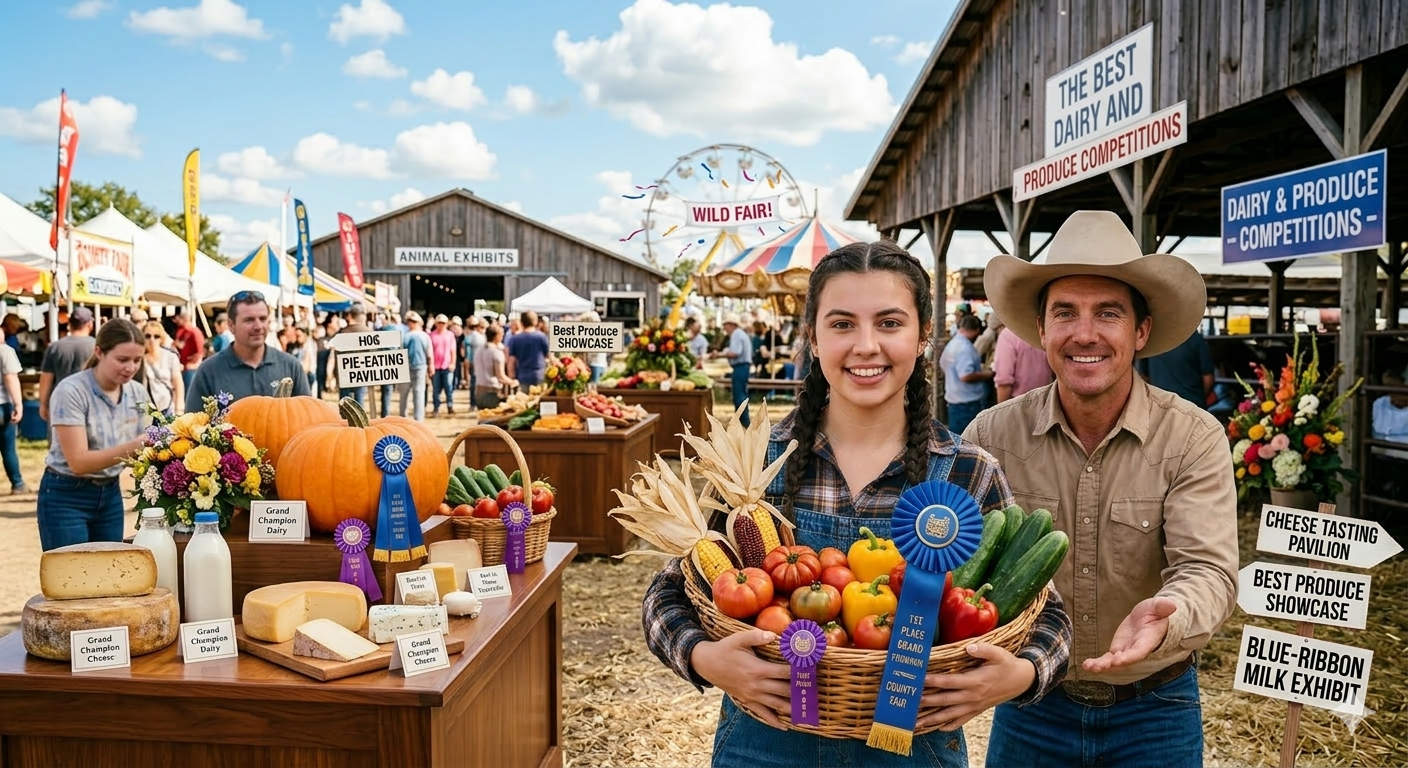
Walk into the agricultural exhibit hall at any major county fair and you immediately understand what the whole event was originally built around. Rows of perfect tomatoes on white paper plates. Jars of honey catching the light. Best Dairy and Produce Competitions at County Fairs Braided garlic hanging from display boards. Long before county fairs had carnival rides and headliner concerts, they had these competitions. The best dairy and produce competitions at county fairs are not side events. They are the heart of the tradition, and at CountyFairsUSA.net, we have been covering them across the country since 1999. Why These Competitions Are the Soul of the Fair County fairs were created in early 19th century America specifically to showcase the quality of local agricultural output. Farmers brought their best crops and dairy products to compare against their neighbors, learn from one another, and earn recognition for their work. Today these competitions serve a dual role. They recognize genuine farming excellence while giving urban and suburban visitors a direct connection to where their food actually comes from. Watching a trained judge assess a wheel of handmade cheese or a single perfect ear of corn is a reminder that real skill and sustained effort go into every item at a farmers market or grocery store. Dairy Competitions: Butter, Cheese and More Dairy competitions at county and state fairs cover a much wider range than most fairgoers realize. It is not just about which cow produced the most milk. From butter quality and artisan cheese to ice cream and cultured dairy, these contests draw serious competitors who have spent months preparing their entries. The Los Angeles International Dairy Competition at the LA County Fair uses a 100-point scoring system that evaluates entries on flavor, texture, appearance, bacteria content, finish, salt level, and melting quality depending on the product category. Fairplex That level of scrutiny reflects how seriously these contests are taken at major fairs across the country. Common dairy competition categories found at county and state fairs: Butter quality judging open to both commercial dairy farms and home producers Artisan and farmstead cheese competitions evaluated on texture, rind development, flavor, and aging consistency Fluid milk and cream quality contests for working dairy farmers Dairy goat competitions that combine live animal showing with milk quality judging Ice cream, yogurt, and cottage cheese categories at larger state fair dairy programs Honey and beeswax competitions, frequently grouped alongside dairy in the exhibit hall Butter sculpture contests, a visual tradition with well over 100 [...]

By |2026-03-26T06:10:31+00:00March 14th, 2026|Agriculture, County Fair, Fair, Food|Comments Off on The Best Dairy and Produce Competitions at County Fairs

Sustainability at County Fairs: Are They Going Green?

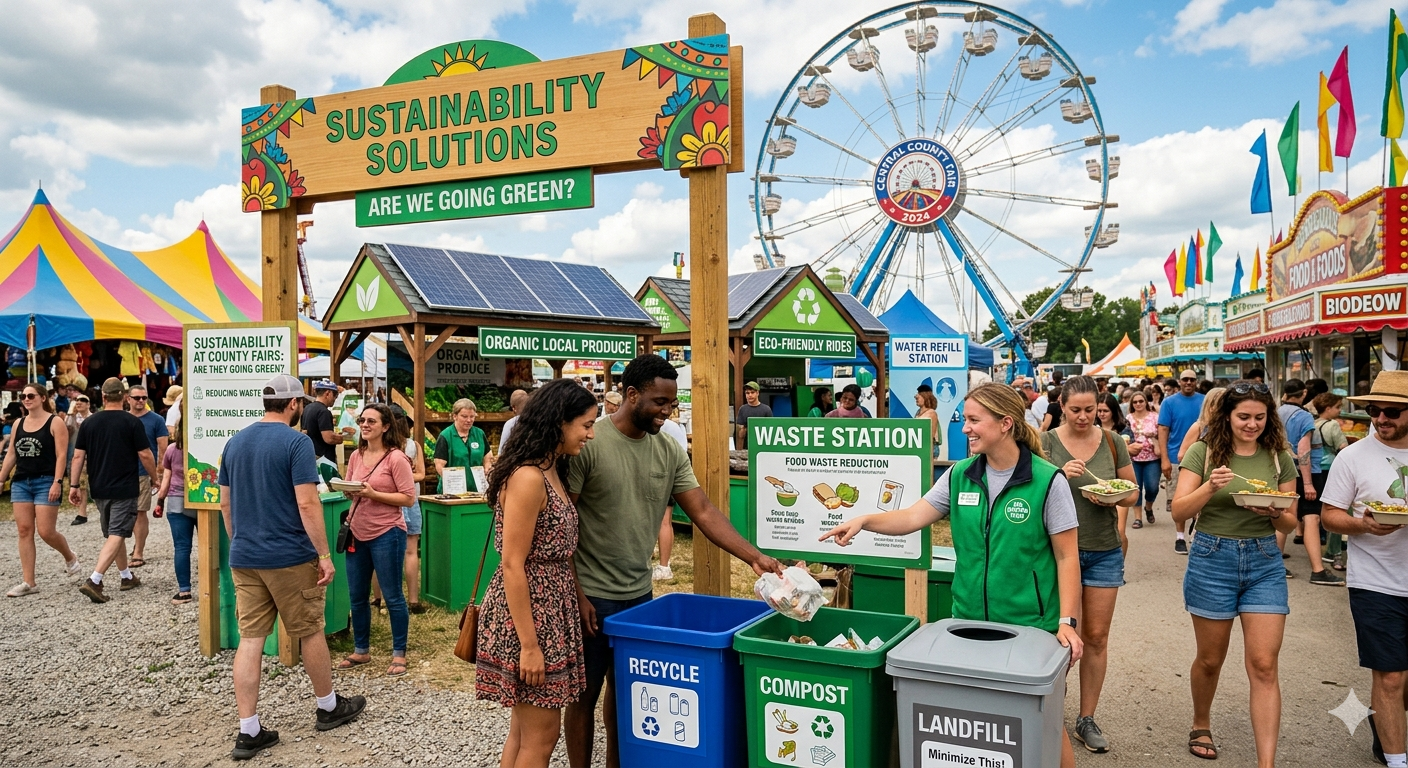
Sustainability at County Fairs: Are Fairs Going Green? Think about what a county fair actually involves. Thousands of visitors over several days, hundreds of food vendors running fryers all day, diesel generators humming behind every booth, and mountains of single-use cups and packaging piling up by the hour. It is a lot. At CountyFairsUSA.net, we have been covering county and state fairs across America since 1999, and one of the most notable shifts we have observed in recent years is how seriously many fairgrounds are taking their environmental footprint. Sustainability at county fairs is no longer a fringe conversation. It is becoming part of how the best fairs operate. The Environmental Reality of Running a County Fair A multi-day fair that draws tens of thousands of visitors creates significant waste and energy demands. Food waste, plastic packaging, fuel consumption, and water usage all add up fast, especially when you are feeding a small city for a week straight. The good news is that awareness has grown considerably. Fairs across the country are now implementing green programs that include solar power, waste diversion, water conservation, and energy-efficient products, and many are partnering with public agencies and private companies to support sustainable practices at fairgrounds. CA The question is no longer whether fairs should go green. It is how fast they can get there. Waste Reduction: Where Most Fairs Start Food waste and single-use plastics are the most visible sustainability problems at any large fair, and they are also where the most progress is being made. Fairs that are serious about going green tend to start here because the impact is immediate and visible to attendees. The Marin County Fair in California has built one of the most aggressive zero-waste programs in the country, collecting more than 28 tons of recycling and 80 tons of compost in a single fair season, and achieving a 92% waste diversion rate over more than a decade. Marin County Fair They have also banned single-use plastic bottles entirely from vendor sales and installed water refilling stations throughout the fairgrounds. Common waste reduction steps fairs are taking right now include: Replacing single-use plastic cups and utensils with compostable or reusable alternatives Setting up clearly marked recycling and composting stations throughout the fairgrounds Requiring food vendors to use eco-friendly packaging as part of their vendor agreements Partnering with food banks and shelters to donate unsold food at the end of each fair day Collecting used cooking oil from food vendors and converting it into biodiesel [...]

By |2026-03-26T06:19:51+00:00March 10th, 2026|Agriculture, Environmental, Events, Fair|Comments Off on Sustainability at County Fairs: Are They Going Green?

How County Fairs Support Local Farmers & Artisans

Beneath the cheerful canopies and vibrant displays of a typical American county fair lies a powerful economic engine that sustains local agriculture and craftsmanship. These annual gatherings numbering over 2,000 across the United States draw more than 150 million visitors yearly, creating vital marketplaces where small producers connect directly with consumers.  County Fairs Support Local Farmers & Artisans While many associate fairs primarily with entertainment, their historical purpose and continued significance revolve around showcasing and supporting local farmers and artisans.  This guide explores the multifaceted ways these community celebrations strengthen local economies, preserve cultural traditions, and create sustainable pathways for small-scale producers to thrive in an increasingly globalized marketplace. The Historical Connection Between County Fairs and Local Agriculture County fairs trace their origins to early 19th century America, when communities would gather to display livestock, produce, and homemaking skills. The first recognized American agricultural fair took place in Pittsfield, Massachusetts in 1811, organized by Elkanah Watson to improve farming practices through competition and education. What began as simple livestock exhibitions gradually expanded to include: Agricultural demonstrations and competitions Home economics displays Entertainment and carnival attractions Community celebrations of local culture Throughout their evolution, county fairs have maintained their core mission of supporting agricultural communities. The Dutchess County Fair in New York, for instance, has operated since 1842 and continues to highlight local farming achievements while drawing over 300,000 visitors annually. "County fairs represent one of America's longest-standing traditions of public support for local food systems," notes Dr. Sarah Jenkins, agricultural historian at Cornell University. "They create spaces where rural production receives recognition and celebration, something increasingly important in our globalized food economy." Economic Benefits for Local Farmers For many small-scale agricultural producers, county fairs deliver substantial economic advantages that extend well beyond the event itself. Direct Sales Opportunities County fairs provide concentrated marketplace access, allowing farmers to reach thousands of potential customers in a short timeframe. According to a 2023 survey by the International Association of Fairs and Expositions, agricultural vendors report average gross sales of $3,500-$7,000 during a typical county fair week representing significant revenue for small farm operations. For James Wilson, a fourth-generation apple grower from Pennsylvania, fair participation accounts for nearly 15% of his annual income. "We make connections at the county fair that turn into year-round customers," Wilson explains. "People remember tasting our apples at the fair and seek out our stand at farmers' markets afterward." Marketing and Exposure Benefits County fairs function as powerful marketing channels, particularly for producers with limited advertising [...]

By |2025-05-10T20:04:34+00:00May 8th, 2025|Agriculture|0 Comments

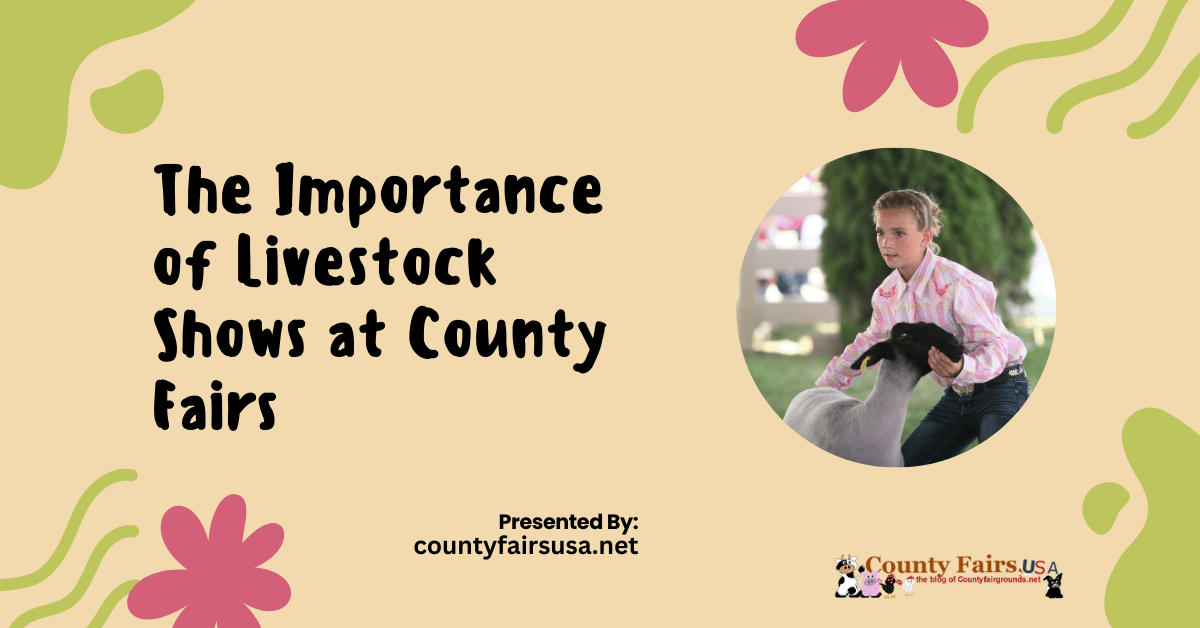
The Importance of Livestock Shows at County Fairs

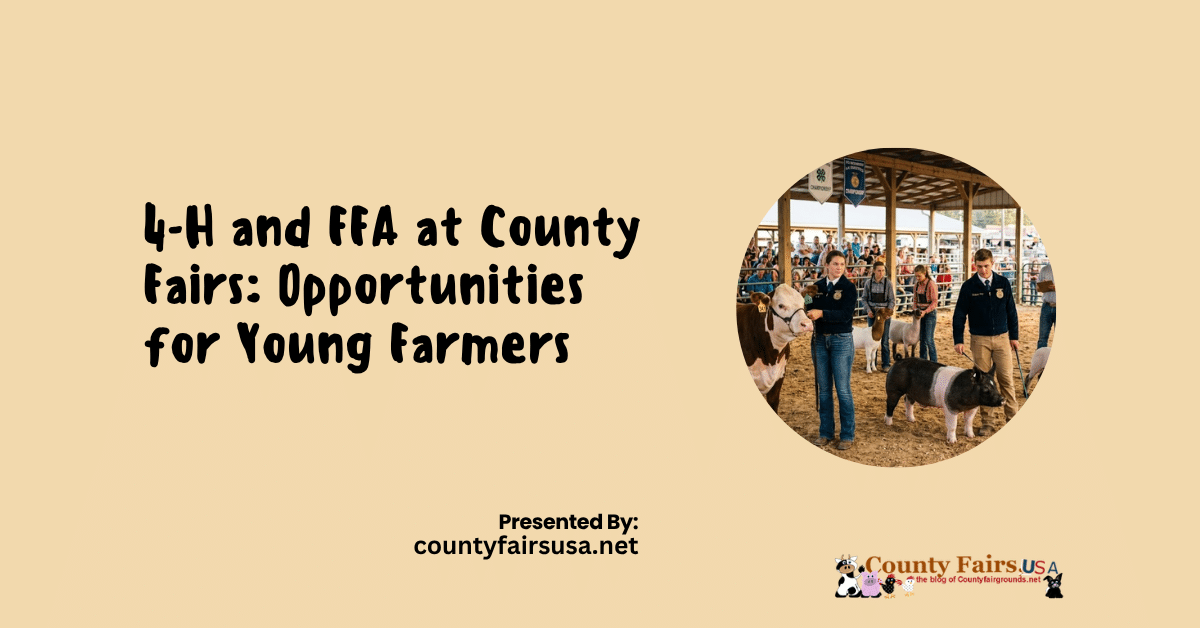
The excited murmur of spectators, the careful grooming of prize animals, and the proud stance of young exhibitors in crisp uniforms – these timeless scenes from livestock shows represent one of America's most significant agricultural traditions.  Importance of Livestock Shows at County Fairs As the centerpiece of county fairs nationwide, livestock exhibitions offer far more than entertainment; they provide essential education, economic stimulus, and character development opportunities that resonate throughout rural communities. These exhibitions represent far more than a simple display of animals; they embody a rich tradition that connects our agricultural past with its future while delivering substantial benefits to participants and communities alike.  From teaching young people essential life skills to strengthening local economies, livestock shows continue to serve a vital purpose in today's rapidly changing world. The Rich Heritage of Livestock Shows in American County Fairs The tradition of livestock exhibitions at county fairs dates back to the early 19th century, when agricultural societies began organizing events to improve farming practices and livestock breeds. What began as practical demonstrations for farmers has evolved into comprehensive educational programs that reach far beyond the agricultural community. Today, approximately 2,000 county fairs take place annually across America, with livestock shows remaining their central attraction. Each year, these events draw millions of visitors and feature hundreds of thousands of animals shown by dedicated exhibitors of all ages. The persistent popularity of these exhibitions speaks to their continued relevance and importance in contemporary society. Educational Value: Cultivating Knowledge Through Hands-On Experience Livestock shows provide an unparalleled educational laboratory that classroom instruction simply cannot replicate. Young exhibitors gain comprehensive knowledge through direct experience: Practical animal science education: Participants learn about genetics, nutrition, veterinary care, and reproductive physiology through hands-on application Record-keeping skills: Maintaining detailed health and financial records teaches practical accounting and documentation skills Industry standards and practices: Shows introduce participants to quality benchmarks and professional evaluation methods For 16-year-old Emily Warren, a five-year participant in her county's 4-H sheep program, the educational benefits have been transformative. "Before I started showing lambs, I knew nothing about livestock production. Now I can calculate feed rations, recognize health issues early, and understand genetic traits when selecting breeding stock. These are things I use every day on our farm." Agricultural educators confirm this educational impact. Dr. Robert Haynes, Extension Specialist at Cornell University, notes that "livestock shows create a practical, tangible connection to agricultural concepts that resonates with young people in ways theoretical learning cannot match." This education extends beyond exhibitors to fair [...]

By |2025-05-10T20:06:07+00:00May 8th, 2025|Agriculture, County Fair, Fair|0 Comments

It’s Time to Meet the Future of Meat

Real, Cultured, or Printed? Nowadays we’re accomplishing miracles in the laboratory. It started, of course, with successful cloning, but we’ve moved on to teasing immature stem cells into making all sorts of tissues, such as skin for burn victims, miniature versions of human organs (called organoids) to learn to treat disease, and actual functional organs for lab animals that fulfill the function of a natural organ. More interesting is something that was accomplished back in early 2015. Scientists at Massachusetts General Hospital grew a complete rat forelimb in a petri dish . Fingers/claws, skin, bones, nerves, blood vessels, and muscles all in the right place and functional. In theory, it could be attached to a subject and tested to see if nerve and blood vessels connections were reliable, and if the bones and connective tissue were durable. There is no reason that they shouldn’t be. Meat in a Lab Muscles, of course, are also referred to as meat, and would be fairly undifferentiated from a naturally occurring meat in texture or flavor. What would be the primary difference about meat made in a sterile laboratory? No animals would be slaughtered; there would be no parasites; there would be no fecal contamination; and, most importantly, there would be no antibiotics or growth hormones necessary. There would be no vast tracts of land necessary, dedicated for the use of our current herds of animals. There would be no concurrent crops necessary to feed all these animals as they grew to a size appropriate for the abattoir, and then the local meat market. There would be no need of veterinarian care for herds to treat diseases. It would eliminate animal suffering,because meat would not be sourced from animals at all.  In other words, by just about every popular definition, it would be completely Vegan meat. Of course there are always doubters; those who think meat is bad and artificial meat would be inadequate for some other reason.  It’s very much like people that protest Genetically Modified Organism (GMO) foods—it makes no sense–since everything in our diet is a GMO.  There is virtually nothing in our diet that has not been changed. Franken-Food Everybody loves corn for instance, but 8,700 years ago in Mexico it was known as teosinte, with just a few grains per stalk that would have easily fit on top of a 25¢ coin.  We crossbred many teosinte with more grains than other plants, and eventually came up with the “cob” that was dense with grain.  Yet no [...]

By |2024-02-29T08:01:41+00:00June 27th, 2017|Food, 3-D Pinting, Chicken, Corn, Environmental, Meat, Poultry|0 Comments

Hydroponics

Hydroponics is - the process of growing plants in sand, gravel, or liquid, with added nutrients but without soil. In agriculture hydroponics has been remarkably crucial in assisting to lower the usage of pesticides and herbicides. This has translated in more fertile soils and has reduced the chemical burden on farms. Genetically engineered crops such as Bt Maize and Bt Cotton are pest-resistant. Better still other genetically modified crops that are drought-resistant have been produced. Such research has been hugely crucial in a world whose need for food has been increasing exponentially. New pesticides and remote sensing have played essential parts in reducing the amount of harmful chemicals that enter the ecosystem, and allowed farmers to meet the ever increasing needs of the planet. However, fungi and insects are developing resistance even to newest pesticides. Potential Benefits of Genetic Engineering In addition, even the best of modern pesticides still enter the food chains and harm humans and animals alike. For instance, in Holland, farmers have had to switch from soil-growing plants to hydroponics because of the accumulation of toxic salts that come from pesticides and fertilizers. The promise of genetic engineering technologies has been in developing pest-resistant crops which do not need pesticides and can grow without the need of irrigation (Eliot, et al 611). Genetic engineers have stated out rightly that there is a lot of hope such diseases can be treated either the insertion of corrected genes or modification of defective genes. Eventually, this hope of totally eliminating genetic ailments and also the treatment of non-genetic diseases is to a large extent attached to breakthroughs in gene therapy (Hammond, 165-166). Another benefit of hydroponics is in the ability to screen for genetic defects in unborn babies. These screenings are essential for parents and medical staff in preparing for the arrival of a child who may have specific needs. A possible potential benefit of genetic engineering that has been awaited with much eagerness is that a fetus that has genetic defects can be treated using genetic therapy before they are born. Revolutionizing Agriculture and Medicine Current there is a lot of research that is going on with regard to the use of gene therapy for embryos before they are implanted into the mother through in-vitro fertilization (Robert, 93-94). Agriculture is one of the fields which have experienced diverse benefits of hydroponics through rDNA technology. This has translated in improved genetic fitness of many plant species. Some of the common benefits in agriculture are increase in [...]

By |2024-01-12T12:15:35+00:00May 29th, 2017|Agriculture, Genetics, Hydroponics|0 Comments

Environmental Changes and our Livestock

Environmental Changes and Livestock: What You Need to Know Livestock sector contributes to a big percentage of agricultural produce its key in the global food security chain. Environmental changes have had a significant impact on livestock farming thus distracting the food supply chain. Climate change is majorly caused by the emissions from greenhouse gas which leads to the warming of the atmosphere. Ironically, the livestock sector contributes to climate change through its contributions to the emission of green gas.[1] This has had serious implications on livestock sector in the US. Some of the effect associated with environmental changes include; Low livestock production: Environmental changes cause an unpredictable weather patterns which has an impact on livestock sector. This has an overall performance on livestock performance which has an effect on the livestock products. Environmental changes also increase vulnerability of livestock as most of the time the environment becomes harsh for the sustainable of the animals.[1] Increase of temperatures during summer reduce animal production while it causes a slow down during winter. Effects on parasites that affect livestock’s: Environmental changes has caused changes and an increase in parasites that affect domestic animals. An increase in diseases such as bovine respiratory disease have been reported to have increased in the last few years. Impacts of Climate Change on Livestock Farming This has been blamed on environmentally factors.  Some of this parasites affect crops which act as foods for the livestock. This has continued to affect plant and livestock diseases in most places in the US. Reduced quality and quantity of produce: The quality of produce such as feeds is degraded as a result of high atmospheric, increase of carbon dioxide and dry conditions. This however is very determined on factors such as location, species, crops, livestock system among others. This affects the quality of forage and feeds.[3] Extreme weather conditions such as floods may cause roots structure and decrease in total quality and quantity. Unpredictable rainfall: Livestock farming relies heavily on agricultural crops, while the growth of this crops needs reliable water. Climate change has affected rainfall pattern which has led to scarcity of water thus affecting the whole cycle. Livestock requires drinking water, crops for product processes. It is estimated that by 2025, 64% may experience constrained water conditions.[4] Reproduction: Livestock reproduction of both sexes is affected by heat stress. This affects cows and pigs in embryo employment development and low pregnancy rates. Cow fertility is compromised by too much heat or deficits. Lower sperm concentration has also been [...]

By |2024-01-12T12:37:50+00:00May 18th, 2017|Environmental, Livestock|0 Comments

on Recycling

  Introduction - on Recycling The Recycling Opportunity System has set up a statewide system for managing solid waste that was called the most comprehensive in the nation. Where does the material go next? The destination depends on the particular item in question, but the process of collecting and re-manufacturing recyclable materials is only part of recycling. Therefore, before using a recycled product, look for the recycle label on the products you buy. What exactly is Recycling? Recycling is a process of bringing waste materials into reusable objects to prevent waste of potentially useful materials. After turning a recyclable product into a raw form, they can be used to create a new, different products. Why recycle?  Not only are natural resources limited, but on recycling efforts will reduce additional waste products that may cause harm to human, resources, and nature. Is recycling important? There are various good reasons for adding recycling to our daily life, and this may result from a personal level to a global advantage. Recycling waste products get you more adapted to the way you use and dispose of stuff. It is apparent that people who involve themselves in this insist on buying unwanted things from a supermarket, they think of disposing of those products after use before even buying them. By applying this method, people end up as a result, saving an amount of money while also saving the planet. Some Individuals, governing bodies and other companies also take pride in limiting their waste products as they can help to reduce world environmental damages and make the earth a better place on which to live. It is a direct contribution everyone should emulate. What Can I Recycle? When you think on recycling at times, you think only about recycling materials. However, in reality, almost anything is recyclable. Below some of the common recyclable things are listed. Cars Instead of sending your car to the junkyard or selling it, you can donate it to a charitable organization. Not only will you keep the vehicle out of the landfill, but you will also receive a tax deduction for doing so. Clothes Clothes are one of the easiest materials to recycle as so many charitable organizations will accept them such as Goodwill, Veteran's Support Groups, and most churches. Also, you can sell them at a consignment shop if they are still in good shape and style. Food Start a compost heap in your backyard, then Instead of throwing old food in the trash; throw it on the [...]

By |2024-01-12T13:44:04+00:00August 1st, 2016|Environmental, Food|0 Comments
Go to Top