A junior livestock auction is the culminating event of a county fair where youth exhibitors sell the market animals they raised over several months to local buyers, businesses, and community supporters. These sales build directly on the why livestock shows matter, helping young agriculturalists recover feed expenses, fund future projects, and save money for college.
In this article: What Happens at a Junior Livestock Auction, Terminal Sales vs. Premium Sales, Who Participates in a County Fair Livestock Auction, How Bidding and Pricing Work, Step-by-Step Guide to Auction Day, Essential Pre-Sale Checklist for Exhibitors and Families, Frequently Asked Questions, Getting Involved in Your Local County Fair Sale
Key Takeaways
- Youth entrepreneurship: A junior livestock auction rewards months of daily animal care, budgeting, and record-keeping by connecting young exhibitors directly with community buyers.
- Sale formats vary: Fairs typically run either terminal auctions where animals go to harvest or premium sales where bidders pay for recognition while youth keep ownership.
- Multiple ways to support: Community members can place live bids, form buying groups, or contribute flat-dollar add-ons to support youth without purchasing an entire animal.
- Guaranteed floor prices: Most auctions establish a base packer floor price so exhibitors receive fair market value even when local bidding is quiet.
- Gratitude matters: Sending a handwritten thank-you letter after the sale strengthens community ties and encourages buyers to return the following year.
What Happens at a Junior Livestock Auction
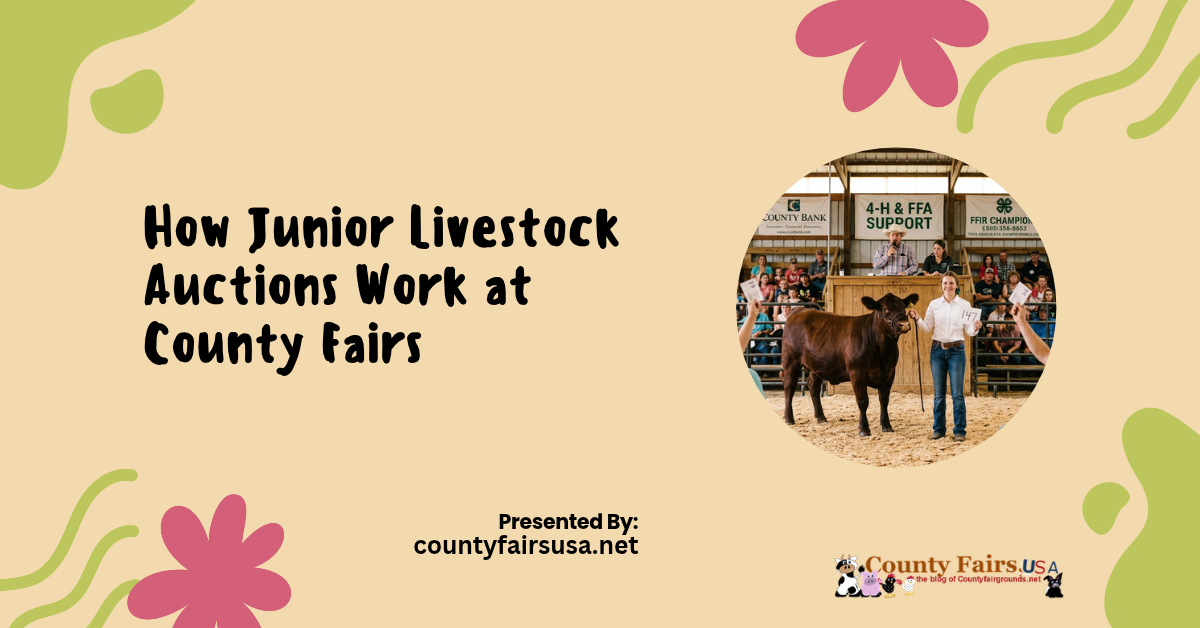
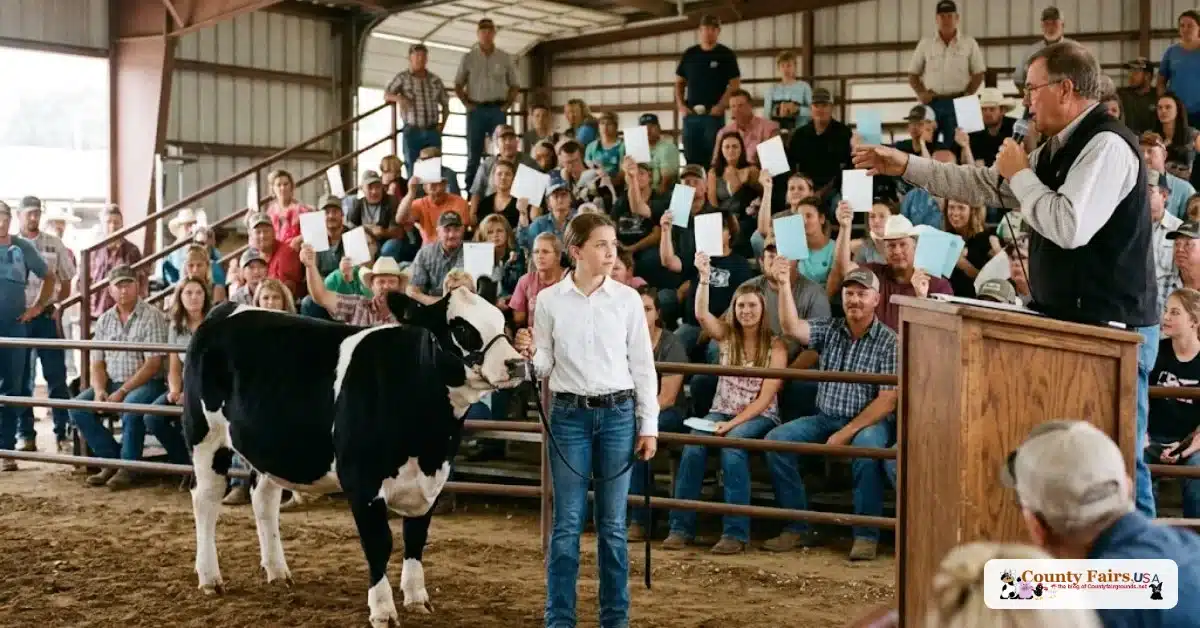
A junior livestock auction brings the agricultural education side of a county fair into the show ring for a fast-paced public sale. After spending months feeding, grooming, and training their animals, young people walk their projects before a crowd of neighbors, business owners, and family friends. An auctioneer chants rapid bids while ringmen scan the bleachers to catch every raised hand or nodded head.
Before the gavel falls, every market animal must meet strict weight and health requirements during fair week check-in. Steers, hogs, lambs, and meat goats are weighed on certified scales to confirm they fall within established market windows. Poultry pens and market rabbits also undergo inspections to verify they are healthy, clean, and ready for sale.
You will notice that these events feel very different from commercial cattle or hog markets. While commercial barns trade animals strictly on wholesale meat value, a county fair livestock auction blends market pricing with community philanthropy. Bidders frequently pay well above standard agricultural rates because they want to invest in local youth and reward hard work.
The energy inside the barn builds steadily from the opening gavel until the final animal leaves the ring. Grand champion and reserve champion animals typically sell first, drawing enthusiastic applause and competitive bidding from major sponsors. Even so, the heart of the sale lies in the dozens of regular class animals that follow, giving every qualifying youth a moment in the spotlight.
Terminal Sales vs. Premium Sales
Not every fair handles animal ownership the same way once the auctioneer shouts sold. Depending on local traditions, facility capacity, and state regulations, your county fair will operate either a terminal auction or a premium sale. Understanding the difference helps both buyers and families know exactly what happens to the animal after the gavel drops.
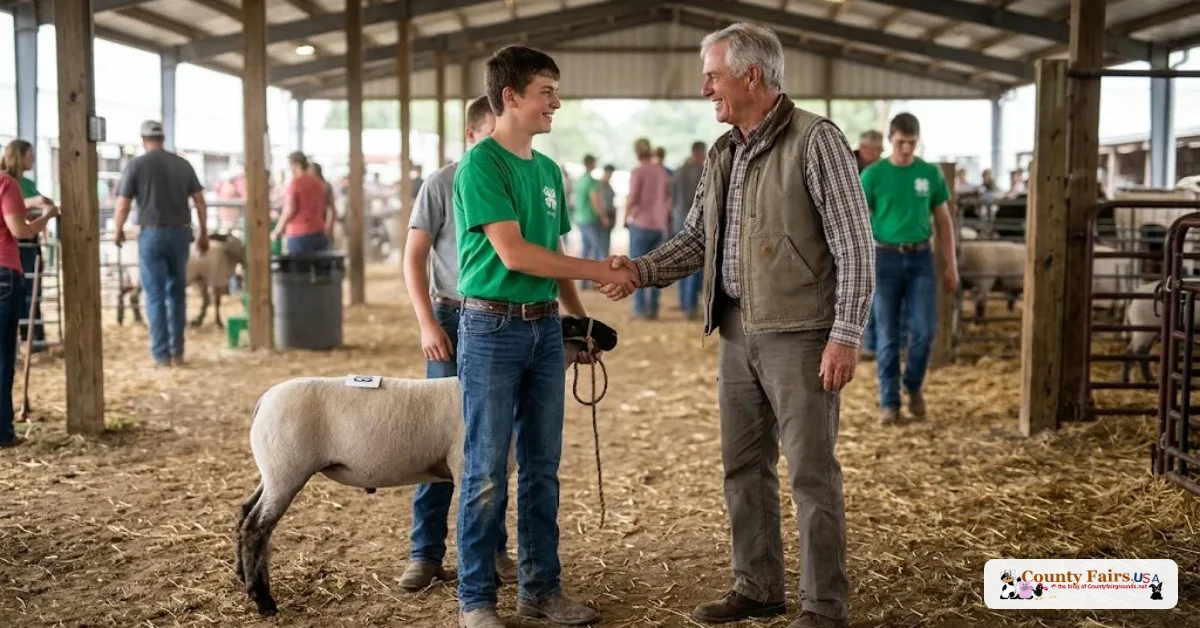
In a terminal sale, the buyer takes legal ownership of the animal at the conclusion of the bidding. The fair committee arranges transportation from the fairgrounds to a state or federally inspected processing plant. Buyers then decide whether to keep the processed meat for their own freezers, donate it to a local food pantry, or send the animal to a commercial packer for resale.
A premium sale works differently because the youth exhibitor retains ownership of the animal throughout the auction. Instead of buying the livestock itself, bidders compete to award a cash bonus, known as a premium, to recognize the young person’s achievement. After the sale ends, the exhibitor takes the animal home, markets it privately, or enters it into a later state or regional show.
| Sale Feature | Terminal Livestock Auction | Premium Livestock Sale |
|---|---|---|
| Animal Ownership | Transfers to the winning buyer at the fall of the gavel. | Remains with the youth exhibitor after the auction ends. |
| What the Buyer Pays For | The full market value of the animal plus any charitable premium. | A cash bonus rewarding the exhibitor’s hard work and placement. |
| Post-Fair Destination | Sent directly to a slaughterhouse, custom processor, or packer. | Returns home with the youth for private sale or future shows. |
| Meat Processing Option | Buyers can fill their freezer or donate meat to local charities. | Buyers do not receive meat unless arranged separately outside the ring. |
| Exhibitor Payout | Total sale price minus fair commission and checkoff fees. | Premium bid amount plus any separate private market sale proceeds. |
Some counties use a hybrid model that combines elements of both systems. Under a hybrid format, grand champions are required to go to harvest, while other exhibitors can choose between sending their animal to market or taking it home. Reviewing the official fair book early in the season ensures there are no surprises on sale day.
Who Participates in a County Fair Livestock Auction
A successful junior livestock auction relies on several distinct groups working together inside the sale barn. Every participant plays a clear role in keeping the event fair, transparent, and welcoming for newcomers.
4-H and FFA Exhibitors
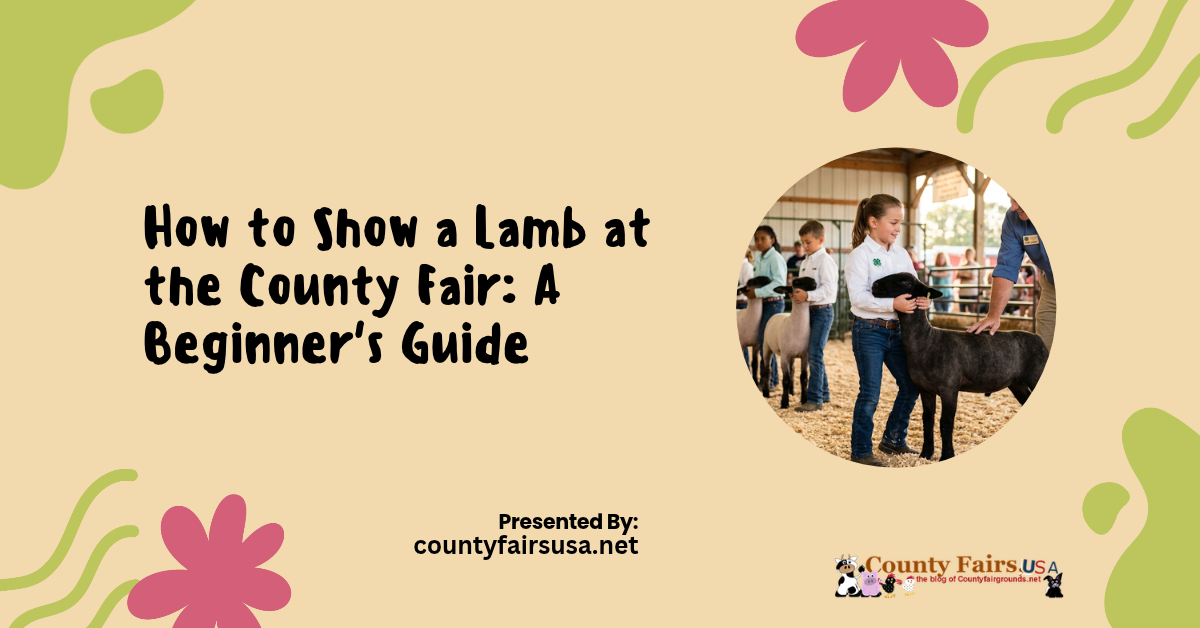
The stars of the ring are the 4-H and FFA exhibitors who spent months preparing their projects for fair week. Most participants range from eight to nineteen years old, learning practical lessons in animal husbandry, financial record-keeping, and public speaking. You can explore more about how 4-H and FFA programs shape these young leaders long before they step onto the auction shavings.
Auction Buyers and Buying Groups
A buyer at a youth auction can be an individual resident, a family, a farm cooperative, or a regional corporation. Many local companies participate year after year as a visible way to support rural youth and connect with customers. When prices climb higher than one person can afford alone, several neighbors often pool their money into a buying group to split the cost and share the meat.
Auctioneers, Ringmen, and Sale Clerks
Professional auctioneers volunteer or contract with the fair board to keep bidding brisk and engaging. Ringmen stand along the arena perimeter, repeating bids aloud and pointing out bidders so the auctioneer never misses an offer. Behind the scenes, sale clerks record buyer numbers, final prices, and processing instructions on official invoices.
Fair Superintendents and Volunteers
Agricultural extension agents, FFA advisors, and adult barn superintendents organize the sale order and keep animals moving smoothly through the holding pens. Many fairs rely on guidance like the Ohio State auction guide to help parents and youth work through paperwork and barn logistics. These volunteers check ear tags, verify weights, and ensure every young person enters the ring at the right moment.
How Bidding and Pricing Work
Pricing at a junior livestock auction can confuse first-time spectators because auctions calculate bids in two different ways. Depending on the species and local rules, the auctioneer will ask for bids either by the pound or by the head. Knowing which method your fair uses prevents costly math mistakes when you raise your bidder card.
Per-pound bidding is most common for large species like market steers, hogs, lambs, and goats. If a 260-pound market hog sells for 4 dollars per pound, the buyer pays 1,040 dollars total. Per-head bidding is standard for smaller projects like meat pens of chickens, turkeys, or rabbits, where a bid of 300 dollars covers the entire pen regardless of exact weight.
To protect young people from taking a severe financial loss, sale committees establish a packer floor price before the auction begins. This floor price reflects the current commercial wholesale value of the animal based on daily livestock market reports. If live bidding stops near commercial levels, a partnered livestock packer steps in to buy the animal at that guaranteed base rate.
When a buyer wants to support an exhibitor without purchasing the animal, they can contribute an add-on instead. An add-on is a flat dollar amount, such as 25 dollars, 50 dollars, or 100 dollars, added directly onto a specific exhibitor’s sale check. Because multiple supporters can submit add-ons for the same young person, these contributions make it easy for anyone to participate on a modest budget.
Typical final sale prices vary widely by region, local economy, and animal species. Across the United States, a market hog might bring anywhere from 600 dollars to over 2,500 dollars, while a market steer often ranges from 2,500 dollars to more than 8,000 dollars. Understanding county fair economics shows how those dollars circulate right back into local feed stores, veterinarians, and youth savings accounts.
Step-by-Step Guide to Auction Day
Sale day moves quickly once the opening announcements wrap up, so knowing the sequence of events keeps stress low for everyone involved. Both new buyers and first-time exhibitors follow a predictable path from morning preparation to final settlement.
- Register for a bidder number: Prospective buyers visit the sale office before the auction starts to provide contact details and receive a numbered bidding paddle.
- Review the official sale catalog: Buyers and families pick up a printed sale bill listing the order of animals, exhibitor names, weights, and show placings.
- Prepare and groom the animal: Exhibitors wash, brush, and fit their livestock early in the morning so every animal looks clean and well-presented in the ring.
- Line up in the holding alleys: Barn volunteers call exhibitors by sale lot number to wait quietly in the staging chute just outside the arena gate.
- Enter the ring and present the project: The exhibitor walks their animal calmly around the arena, keeping eye contact with the auctioneer and ringmen while bidding unfolds.
- Confirm the winning bid and destination: Once the gavel falls, a clerk brings a confirmation slip to the winning buyer to record processing choices or resale instructions.
- Settle invoices at the sale office: Buyers pay their balance by check, cash, or card before leaving the fairgrounds, while the fair committee deducts small checkoff and commission fees before mailing youth checks.
Essential Pre-Sale Checklist for Exhibitors and Families
Success at a county fair livestock auction starts weeks before the sale ring opens. Exhibitors who market their projects early consistently attract stronger bidding support than those who wait until sale morning. Use this checklist during the final month before your fair to stay organized:
- Send personal buyer invitations: Mail or hand-deliver postcards to local businesses, family friends, and past supporters explaining your project and listing the exact date and time of the sale.
- Double-check animal weights: Weigh your livestock weekly at home so you can adjust feed rations and hit the fair’s target market weight window without penalty.
- Complete required quality assurance training: Finish your youth livestock quality assurance certification and submit all drug-use disclosure forms before fair check-in.
- Sharpen your showmanship skills: Practice walking and setting up your animal daily, using winning livestock show tips to make a strong impression on both judges and buyers.
- Prepare clean sale-day attire: Pack a pressed collared shirt, clean jeans, and sturdy boots so you look professional when your photo is taken with your buyer.
- Gather thank-you stationery early: Buy stamps, envelopes, and blank cards before fair week begins so you can write notes while memories of the sale are still fresh.
Frequently Asked Questions
Who actually buys the animals at a junior livestock auction?
Local business owners, agricultural suppliers, banks, restaurants, neighbors, and family friends buy most animals at a junior livestock auction. Many buyers form cooperative groups to split costs, while commercial livestock packers purchase animals at base market value when buyers choose not to keep the meat for personal freezers or food pantry donations.
What is an add-on at a livestock auction?
An add-on is a flat-dollar financial contribution given directly to a youth exhibitor without bidding on or buying their animal. Community members, relatives, and businesses submit add-on forms at the sale office, allowing supporters with smaller budgets to boost a young person’s sale check alongside the primary winning bidder.
How much do kids make at county fair livestock auctions?
Earnings vary widely by region, species, and local community support. After deducting feed costs, purchase prices, and small fair commissions, many exhibitors net between a few hundred dollars and several thousand dollars per project. Grand champions often command higher prices, while standard market entries typically cover expenses and generate modest savings.
What is a premium sale?
A premium sale is an auction format where bidders pay a cash bonus to reward a youth exhibitor’s work while the exhibitor keeps ownership of the animal. Unlike terminal auctions where livestock goes straight to harvest, premium sales allow young people to take their animals home for private sale or future shows.
How should exhibitors thank auction buyers?
Exhibitors should send a handwritten thank-you letter within two weeks of the sale. A strong note thanks the buyer by name, mentions how the funds will support future projects or education, and includes a framed photo of the exhibitor and animal taken on sale day. Personal visits to local businesses also leave lasting impressions.
Getting Involved in Your Local County Fair Sale
Whether you want to fill your freezer with locally raised meat or simply encourage hardworking young people in your community, attending your local junior livestock auction is an easy way to make a direct impact. Check your county fair’s schedule this season, review a helpful resource like the Oregon State buyer’s guide before arriving at the barn, and register for a bidder card at the sale office. Even a modest add-on or a shared bid with neighbors shows why how local businesses profit while helping the next generation of agricultural leaders thrive.