Learning how to show a rabbit starts with selecting a healthy animal, checking its ear tattoo, and practicing proper table posing before fair week. You will present your rabbit on a carpeted judging table, answer basic care questions, and participate in rabbit showmanship while following rules set for 4-H and FFA programs.
In this article: Key Takeaways, Choosing the Right Show Rabbit for Your First Fair, Understanding ARBA Rules and the Standard of Perfection, Step-by-Step Guide on How to Show a Rabbit on the Table, Mastering Rabbit Showmanship and Judge Questions, Fair Day Packing Checklist and Barn Care, Frequently Asked Questions, Booking Your Fair Entry and Practice Sessions
Key Takeaways
- Breed Standards Matter: Judges evaluate your show rabbit against the official ARBAStandard of Perfection, focusing on body type, fur quality, and overall condition rather than friendliness alone.
- Permanent Identification Is Required: Nearly every county fair requires a legible ear tattoo in the rabbit’s left ear before check-in day so officials can verify ownership and breed records.
- Posing Takes Daily Practice: Learning how to show a rabbit effectively requires ten minutes of daily table practice so your animal stays calm and holds its natural breed pose.
- Showmanship Tests Your Knowledge: During rabbit showmanship, the rabbit judge evaluates your handling skills, grooming habits, and ability to check for common health disqualifications.
- Preparation Prevents Fair Stress: Packing a dedicated grooming kit, water crocks, and cooling supplies keeps your rabbit comfortable in warm summer livestock barns.
Choosing the Right Show Rabbit for Your First Fair
Picking the right animal sets the foundation for a successful 4-H rabbit project. Beginners often assume any pet bunny can enter a county fair, yet fair classes are divided into specific purebred, market, and pet divisions.
If you plan to compete in youth breed classes, you need a purebred rabbit that matches recognized breed traits. Smaller breeds are generally easier for younger exhibitors to carry and control on the judging table. Larger breeds require stronger wrists and more physical stamina during long showmanship rounds.
| Breed Category | Popular Beginner Breeds | Typical Adult Weight | Handling Difficulty | Best Fair Division |
|---|---|---|---|---|
| Compact Fancy | Netherland Dwarf, Holland Lop, Mini Rex | 2 to 4.5 pounds | Easy to Moderate | Youth Breed and Showmanship |
| Medium Commercial | New Zealand, Californian, Satin | 8 to 12 pounds | Moderate to Challenging | Market Meat Pen and Breed |
| Wool Breeds | English Angora, Jersey Wooly | 3 to 7.5 pounds | Moderate (High Grooming) | Wool and Specialty Breed |
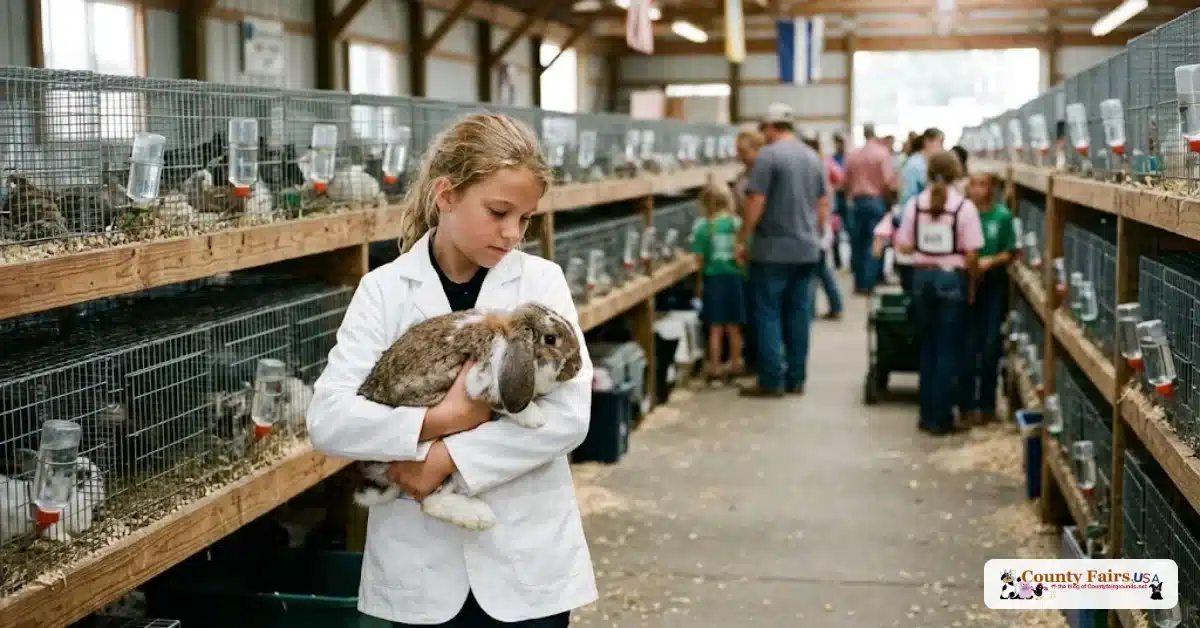
When shopping for a show rabbit, look for bright eyes, clean ears, and a smooth coat without bare patches. Purchase your animal from a reputable local breeder at least two to three months before fair entry deadlines. Prices for a quality beginner show rabbit typically range from $30 to $100, though costs vary by region and pedigree availability.
Avoid buying a rabbit from a pet store if you intend to enter standard breed classes. Pet store rabbits rarely come with pedigree records and often carry disqualifying faults like mismatched eye colors or crooked teeth. Knowing what sets competition animals apart from petting zoo animals helps you invest in the right stock from day one.
Understanding ARBA Rules and the Standard of Perfection
Most county fairs across the United States follow guidelines established by the American Rabbit Breeders Association, known as ARBA. This organization publishes the Standard of Perfection, a detailed rulebook describing the ideal body shape, weight, fur texture, and color pattern for every recognized rabbit breed.
A rabbit judge uses this book as a mental blueprint when comparing animals on the table. Each breed carries a specific point scale. For example, meat breeds like Californians earn most of their points for firm hindquarters and loin thickness, while Mini Rex rabbits are judged heavily on plush, dense fur.
Before entering your rabbit, check for common disqualifications that will immediately remove an animal from class placement:
- Malocclusion: Overgrown or misaligned front teeth, often called buck teeth or wolf teeth, prevent proper chewing and result in automatic disqualification.
- Ear Canker or Mites: Crusty buildup inside the ear canal signals ear mites, which is a contagious health fault.
- Missing or Illegible Ear Tattoo: Every competing rabbit must have a permanent ear tattoo in its left ear. The right ear is reserved for registration numbers.
- Sore Hocks: Open sores or severe calluses on the bottoms of the back feet disqualify an animal from competition.
- Incorrect Weight: Junior and senior rabbits must fall within strict minimum and maximum weight limits listed for their specific breed and age class.
If you are raising meat pens for auction, review the official ARBA market rabbit guide early in the season. Market classes require three rabbits of the same breed and variety, uniform in weight, and typically under 70 days old.
Step-by-Step Guide on How to Show a Rabbit on the Table
Learning how to show a rabbit in the ring comes down to calm handling and proper presentation. Judges watch how you carry your rabbit from the holding coop to the table, how you position its feet, and how you wait during evaluation.
Follow these steps to present your rabbit cleanly during a breed class:
- Carry Your Rabbit Securely: Tuck the rabbit’s head under your left arm with its body supported along your forearm. Place your right hand firmly over its hindquarters so it cannot kick or jump.
- Place the Rabbit Gently on the Carpet: Set your rabbit down facing toward your left or directly toward the judge, depending on local ring instructions. Keep one hand lightly on its shoulders until it settles.
- Set the Front Feet: Gently lift the front end slightly and place the front paws directly under the eyes. Avoid pushing the legs too far forward, which makes the shoulders look weak.
- Tuck the Hind Feet: Slide the back feet forward so the toes align evenly with the front of the hip. A properly tucked hindquarter creates a smooth, rounded topline from the neck to the tail.
- Position the Ears and Head: Smooth the ears gently back over the shoulders for upright breeds, or let them hang naturally close to the cheeks for lop breeds. Step back half a pace and keep your hands off the rabbit unless it moves out of pose.
- Watch the Judge Continuously: Keep your eyes on the rabbit judge rather than chatting with friends. If the rabbit hops out of position, calmly reset its feet without slapping or squeezing its body.
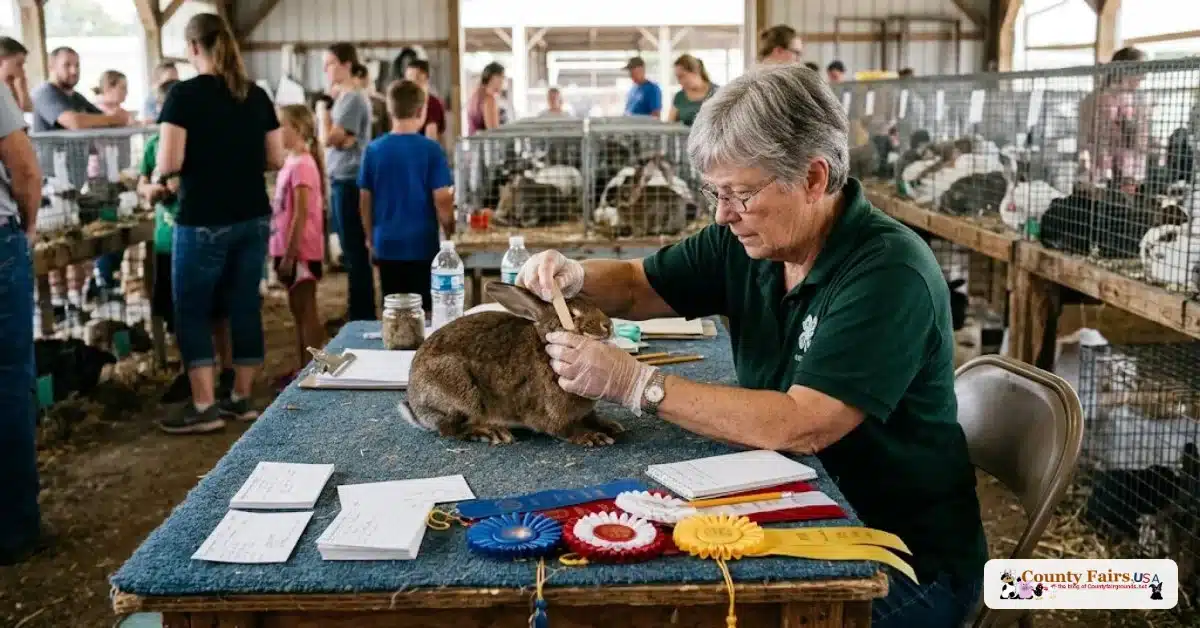
Practice posing a rabbit on a small piece of indoor-outdoor carpet at home. Carpet gives the rabbit traction, which prevents slipping and builds confidence. Start with five-minute sessions twice a day, rewarding calm behavior with a small pinch of rolled oats or a tiny piece of carrot.
Mastering Rabbit Showmanship and Judge Questions
While breed classes judge the rabbit’s physical traits, rabbit showmanship judges you. Showmanship tests how well you handle, inspect, and understand your animal. For many first-time exhibitors, winning showmanship is more achievable than winning Best in Show because your preparation directly controls the score.
During rabbit showmanship, the judge asks you to perform a complete health check right on the table. You must follow a logical head-to-tail order while keeping control of your rabbit at all times.
- Eyes and Nose: Check both eyes for clearness and inspect the nose and inside front paws for any wet discharge, which indicates snuffles.
- Teeth: Gently part the upper lips with your thumb and index finger to show the judge that the top incisors overlap the bottom incisors cleanly.
- Ears: Turn the head slightly to display the ear tattoo in the left ear and show that both ear canals are clean and free of mites.
- Front Legs and Toenails: Check each front leg for straightness and count all five toes, including the dewclaw, making sure no nails are missing or broken.
- Belly, Vent, and Hind Legs: Safely turn the rabbit onto its back in the crook of your arm, support its spine, and check the chest, abdomen, sex organs, and four back toes.
- Fur and Tail: Run your hand from tail to head to show coat density and check that the tail is straight and free of breaks.
Study the standard county fair rabbit showmanship scorecard before fair week so you know how points are divided between handling, appearance, and oral questions. Judges commonly ask about your rabbit’s breed origin, daily feed ration, ear tattoo numbers, and common rabbit diseases.
Reviewing winning livestock show tips will also help you polish your ring etiquette, eye contact, and posture when answering tough questions under pressure.
Fair Day Packing Checklist and Barn Care
County fair barns get crowded, noisy, and warm during summer months. Rabbits do not sweat and can overheat quickly when temperatures climb above 85 degrees Fahrenheit. Packing the right gear keeps your rabbit safe, hydrated, and looking sharp for the show ring.
Use this checklist when loading your supplies for fair check-in day:
- Heavy Ceramic Crocks: Pack two heavy crocks for food and water so your rabbit cannot tip them over in the fair cage.
- Familiar Pelleted Feed: Bring enough of your rabbit’s regular pellets for the entire week. Sudden feed changes cause digestive upset and diarrhea.
- Grooming Supplies: Pack a slicker brush, a fine-tooth comb, nail clippers, styptic powder, and a damp washcloth for wiping stained feet.
- Frozen Water Bottles: Bring four to six frozen plastic water bottles in a cooler. Placing a frozen bottle inside the cage gives your rabbit something cool to lie against during hot afternoons.
- Carrier with Wire Floor: Transport your rabbit in a sturdy metal carrier with a removable drop pan so its fur stays clean on the drive to the fairgrounds.
- Paperwork Folder: Keep your entry receipts, pedigree copy, and health certificates in a waterproof sleeve.
Groom your rabbit at home two days before the fair, not five minutes before your class. Trim sharp toenails carefully so you do not nick the quick. Mist your hands lightly with water and stroke the coat from head to tail to remove loose dead hair.
Remember to look after yourself in the barn as well. Spending long hours near livestock tents takes energy, so follow practical strategies for staying cool at fairs while waiting for your class number to be called. Understanding a fair judge’s day also helps you stay patient when large breed classes run behind schedule.
Frequently Asked Questions
What do judges look for when showing rabbits?
Judges evaluate how closely your rabbit matches its official ARBAStandard of Perfection for body type, weight, fur density, and color. They check for disqualifications like bad teeth, ear mites, or missing toenails. In showmanship, judges focus on your handling control, grooming preparation, and knowledge of rabbit health.
Does a show rabbit need an ear tattoo?
Yes, nearly every county fair requires a permanent, legible ear tattoo in the rabbit’s left ear before check-in. Fair officials use this tattoo to verify your entry paperwork and prevent animal substitutions. You should have your breeder or local 4-H leader apply the tattoo at least three weeks before the fair.
What is the best rabbit breed for a first 4-H project?
Compact, calm breeds like Holland Lops, Mini Rex, and Netherland Dwarfs work well for first-time exhibitors because they are small and easy to carry. New Zealand and Californian rabbits are also popular beginner choices for youth entering market meat classes, though their larger size requires stronger handling skills.
How do you pose a rabbit for showmanship?
Place your rabbit on a carpeted surface facing left or toward the judge. Tuck the front paws directly beneath the eyes and slide the back feet forward until the toes align with the front of the hip. Smooth the ears neatly and step back slightly while keeping watch.
What should you wear to a rabbit show?
Wear a clean, long-sleeved white button-down shirt or a neat 4-H club polo with dark, clean pants and closed-toe shoes. Long sleeves protect your forearms from accidental scratches when carrying your rabbit. Tie back long hair and avoid dangling jewelry that could distract the judge or catch on cage wire.
Booking Your Fair Entry and Practice Sessions
Now that you understand how to show a rabbit, your next step is checking your county fair’s entry deadline and tattoo clinic dates. Most county fairs close livestock entries four to six weeks before opening day, so mark that date on your calendar right away. Once your paperwork is submitted, commit to ten minutes of daily table posing at home so both you and your rabbit step onto the show carpet calm, prepared, and confident.