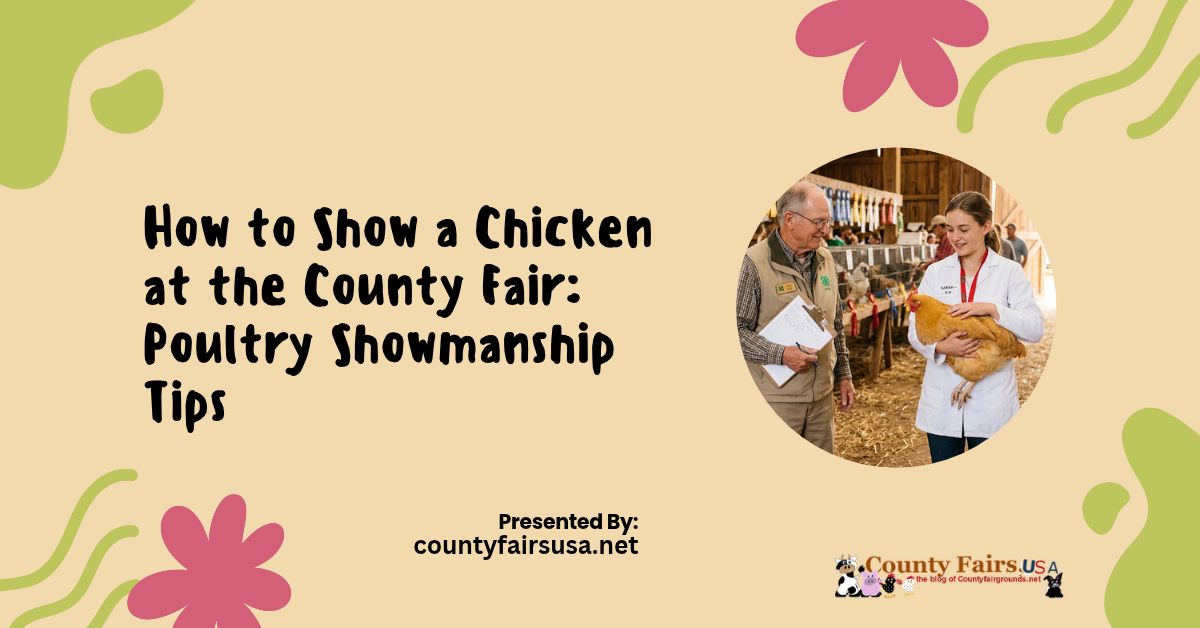
Learning how to show a chicken at the county fair starts with daily handling, thorough bathing, and practicing the standard bird examination table routine. Judges evaluate your poise, handling skills, and knowledge rather than just the bird’s genetics, making 4-H and FFA programs an accessible entry point for first-time youth exhibitors.
In this article: Key Takeaways, Choosing the Right Show Chicken, Preparing Your Bird for Fair Week, Mastering the Poultry Showmanship Routine, Understanding What the Poultry Judge Looks For, Fair Day Biosecurity and Health Rules, Frequently Asked Questions, Stepping Into the Show Ring With Confidence
Key Takeaways
- Daily Handling: Taming your bird at least four weeks before the fair prevents flapping, scratching, and stress on the judging table.
- Showmanship Focus: Judges score the exhibitor on handling technique, attire, and poultry knowledge rather than the bird’s physical perfection.
- Pre-Fair Grooming: Washing your bird two to three days before check-in ensures feathers dry completely and regain their natural oils.
- Biosecurity Compliance: Health certificates, pullorum-typhoid testing, and strict barn hygiene keep local flocks safe from contagious diseases.
- Structured Routine: Memorizing the exact sequence of removing, posing, and inspecting your bird demonstrates poise and thorough preparation.
Choosing the Right Show Chicken
Selecting the right bird sets the foundation for a successful county fair experience. Beginners often assume they need an expensive, rare breed to win a blue ribbon, yet temperament and manageability matter far more than pedigree in youth divisions. When you learn how to show a chicken, starting with a calm, docile bird allows you to focus on your own posture and handling technique without fighting a nervous animal.
Smaller breeds are frequently the top choice for younger exhibitors. A bantam is a miniature chicken, roughly one-fourth to one-fifth the size of a standard fowl, making it much easier for small hands to grip securely. Breeds like Silkies, Cochins, and Plymouth Rocks are famous for their laid-back personalities and tolerance for frequent handling. If you prefer a larger standard breed, Orpingtons and Australorps offer gentle dispositions and sturdy frames that sit calmly on a judging table.
Beyond individual breeding birds, many fairs offer market divisions. A broiler pen consists of three uniform meat birds, usually Cornish Cross chickens, raised specifically for weight, muscle development, and carcass quality. Unlike showmanship classes where you handle one bird individually, market pens require you to match three birds closely in size and feathering.
| Show Division | Typical Bird Type | Primary Judging Focus | Best For |
|---|---|---|---|
| Poultry Showmanship | Single bantam or standard bird | Exhibitor skill, handling, and knowledge | Beginners and youth focusing on presentation |
| Standard Breeding Class | Purebred large fowl | Breed type, feather quality, and conformation | Exhibitors interested in heritage genetics |
| Bantam Breeding Class | Purebred miniature fowl | Breed standard accuracy and condition | Younger exhibitors or those with limited coop space |
| Market Broiler Pen | Trio of uniform meat birds | Breast meat yield, uniformity, and finish | Exhibitors focused on agricultural meat production |
Acquiring a healthy show chicken does not require a massive budget. Expect to pay between $15 and $50 for a quality purebred chick or started pullet from a reputable local breeder, though prices vary by region and bloodline. Always inspect potential birds for straight toes, clear eyes, clean nostrils, and smooth plumage before bringing them home.
Preparing Your Bird for Fair Week
A calm, clean bird reflects weeks of steady preparation at home. You cannot cram for a livestock show the night before check-in, because chickens need time to build trust with their handlers and recover from grooming. Beginning your training routine at least one month before the fair gives your bird time to adapt to the sights, sounds, and physical contact of the show ring.
Daily Taming and Table Training
Start by spending 15 minutes each day handling your bird in a quiet, enclosed space. Practice sliding your hand under its breast while securing its legs between your fingers, keeping the bird’s head facing toward your body. Once your bird sits comfortably on your forearm, place it on a sturdy waist-high table covered with a rubber mat or towel to simulate the judging surface.
Gently stroke its back, spread its wings, and touch its comb and feet so it grows accustomed to physical inspection. Reward calm behavior with small treats like mealworms or scratch grains. Consistent handling eliminates panic responses and teaches your bird to stand tall and alert when posed.
Bathing and Grooming Steps
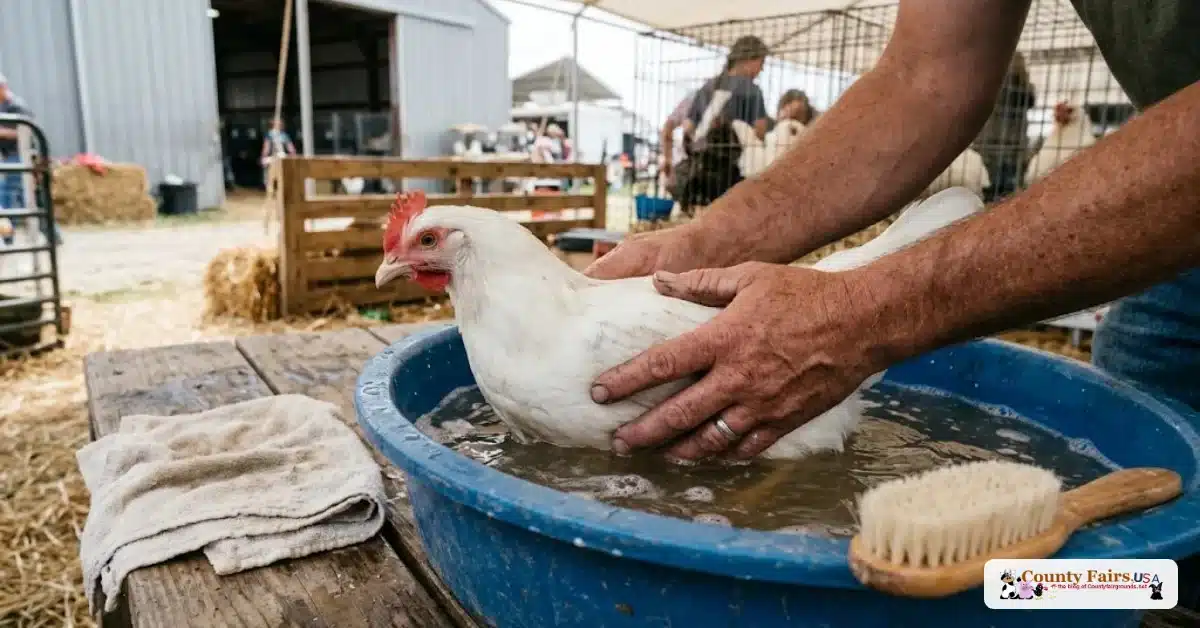
Washing a chicken removes dirt, dust, and stains while helping feathers lie flat against the body. Plan to bathe your bird two to three days before fair check-in so its plumage dries completely and regains its natural sheen. Set up your washing station in a warm, draft-free room using three five-gallon buckets filled with lukewarm water.
- Wet the feathers: Lower the bird gently into the first bucket containing water and a mild, tear-free pet shampoo, keeping its head well above the waterline.
- Wash gently: Work the lather into the feathers in the direction of growth, using an old toothbrush to scrub dirt from the legs, toes, and toenails.
- Rinse thoroughly: Move the bird to the second bucket of clean lukewarm water to remove all soap residue, which can otherwise make feathers look dull and stiff.
- Condition the plumage: Dip the bird into the third bucket, adding a splash of white vinegar to help strip remaining soap and restore natural feather luster.
- Dry carefully: Wrap the bird in a thick bath towel to blot excess moisture, then place it in a clean, draft-free cage with fresh shavings until completely dry.
After the feathers dry, apply a tiny dab of petroleum jelly or vet-approved conditioning balm to the comb, wattles, and legs. This simple touch brings out rich color and gives the scales a healthy shine without leaving a greasy residue. Finally, use standard pet nail clippers to trim the tips of the toenails and beak if they appear overgrown, avoiding the pink quick inside.
Mastering the Poultry Showmanship Routine
Understanding how to show a chicken inside the ring requires a precise, repeatable sequence of movements. Unlike general livestock classes where judges primarily evaluate the animal’s conformation, poultry showmanship is entirely about you. Every time you open a cage door, hold your bird, or answer a question, you are demonstrating safety, respect for the animal, and attention to detail.
Dressing the Part
Your appearance signals professionalism before you even speak a word. Wear clean, neat clothing that allows you to move comfortably around the judging table. Long-sleeved white shirts or official club polo shirts tucked into clean dark jeans or slacks are standard across most county fairs.
Avoid wearing loose jewelry, dangling necklaces, or brightly colored nail polish that can distract the judge or catch on cage wires. Closed-toe boots or sturdy leather shoes are mandatory for safety in the barn. Tie long hair back securely so it never falls across your face while you examine your bird.
Step-by-Step Bird Examination
When the judge calls your class to the table, carry your bird calmly against your body and stand at your assigned spot. Keep your eyes on the judge while maintaining a firm, gentle grip on your bird. When it is your turn to perform the bird examination, follow these established steps smoothly and deliberately:
- Pose the bird: Set your bird squarely on the table facing the judge’s side, using your hands to tuck its wings and encourage an upright, alert stance.
- Inspect the head: Cup your hand gently under the bird’s body, turn it toward the judge, and point out the clear eyes, clean nostrils, proper beak alignment, and healthy comb color.
- Check the wings: Slide one hand under the keel bone, then gently extend the near wing outward to display the primary and secondary flight feathers before folding it back and repeating on the opposite side.
- Examine the body and keel: Run your fingers smoothly along the breastbone to check for straightness, fullness of meat, and any hidden sores or blisters.
- Assess width and capacity: Place your fingers gently between the pubic bones and from the pubic bones to the tip of the keel to show egg-laying capacity in hens.
- Inspect the vent and plumage: Part the fluffy feathers below the tail briefly to show a clean, moist vent free of mites or lice, then smooth the feathers back into place.
- Check legs and feet: Lift the bird slightly to display the shanks and toes, showing smooth scales, straight toes, and clean, trimmed nails before setting the bird back into its pose.
Practicing this sequence in front of a mirror helps eliminate awkward pauses. For additional visual breakdowns of proper hand placement, review this Utah State University guide on preparing your bird for competition.
Understanding What the Poultry Judge Looks For
Stepping up to the table feels much less intimidating when you understand the mindset of the person holding the clipboard. A poultry judge looks for a smooth partnership between exhibitor and bird, rewarding calm control over flashy movements. Knowing how fair judges evaluate entries helps you anticipate what they notice from the moment you enter the barn.
Judges use standardized scorecards that divide points across bird condition, handling technique, exhibitor appearance, and oral knowledge. You can study a complete Penn State Extension scoresheet to see the exact point breakdown used in many youth competitions. Notice how heavily handling and attitude weigh into your final score.
Even if your bird flaps its wings or tries to step off the table, how you recover determines your score. Never grab a bird by its wings, tail, or neck, and never show frustration or slam cage doors. Quietly secure the bird back against your chest, soothe it with a gentle stroke, and reset its pose while keeping your composure.
Fair Day Biosecurity and Health Rules
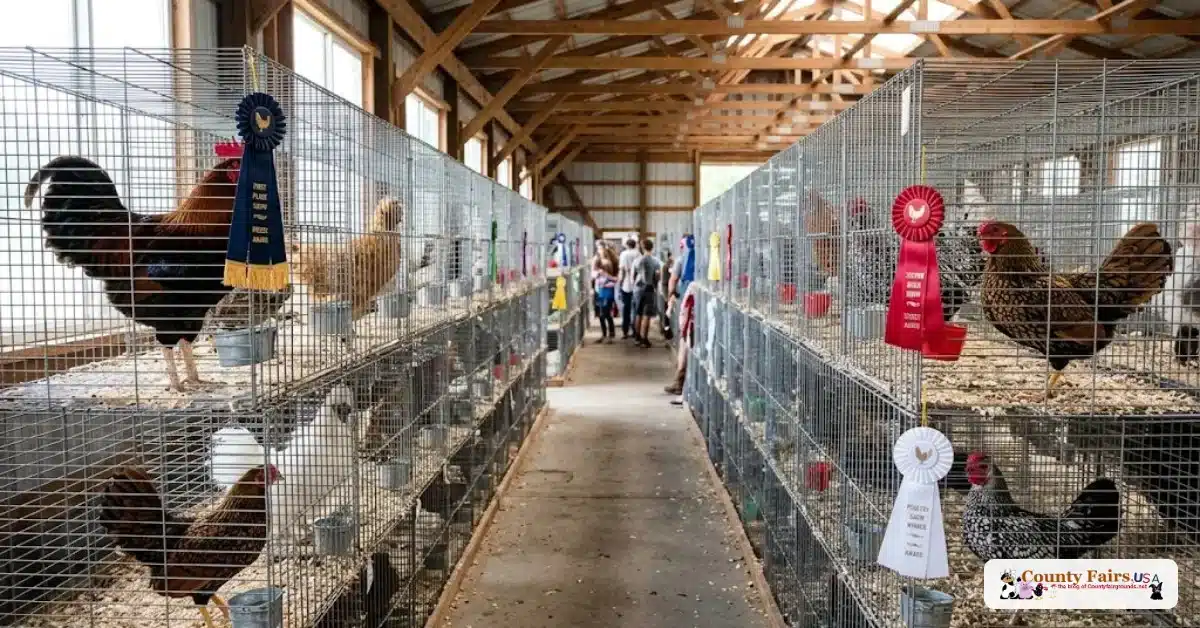
County fairs bring hundreds of birds from different farms under one roof, creating an environment where germs can spread rapidly. Protecting your flock and your neighbors’ animals requires strict adherence to fair health rules and daily barn management. Reviewing current poultry biosecurity guidelines before loading your travel crates helps prevent disease outbreaks and disqualifications.
Before you pack your show supplies, use this pre-fair checklist to make sure your paperwork and gear meet standard fairground regulations:
- Health Certificates: Obtain a Certificate of Veterinary Inspection or official pullorum-typhoid test record within the timeframe specified by your fair book.
- Leg Bands: Verify that your bird wears a numbered leg band matching the exact identification listed on your entry form.
- Sanitized Crates: Scrub and disinfect all transport carriers, feed cups, and waterers before leaving home.
- Dedicated Footwear: Pack a separate pair of barn boots that you wear exclusively inside the poultry tent or exhibit hall.
- Quarantine Plan: Prepare an isolated coop at home where your show birds will stay for at least 30 days after the fair ends.
Once your bird is settled in its show cage, check its water cup several times a day, especially during hot summer afternoons. Keep feed pans clean and avoid sharing grooming brushes, towels, or nail clippers with other exhibitors. Similar to showing dairy goats or other livestock, keeping your exhibit area tidy reflects well on your program and educates fairgoers walking through the aisles.
While fair visitors love looking at colorful feathers, remind spectators to keep their fingers outside the cage wires. Unlike petting zoo animals that are managed specifically for public contact, show birds stay calmer and healthier when left undisturbed between classes.
Frequently Asked Questions
How is a broiler chicken judged?
Judges evaluate a broiler chicken primarily on breast meat yield, body width, uniformity, and skin quality. They feel the keel bone for straightness and fullness, ensuring the meat is firm and well-finished. Any bruises, torn skin, breast blisters, or uneven sizes within a three-bird pen will lower the final placing.
What are the easiest chickens to show for beginners?
Bantam breeds like Silkies, Cochins, and Plymouth Rocks are the easiest chickens for beginners to show. Their compact size fits comfortably in smaller hands, and their naturally docile temperaments make them easy to tame. Among standard-sized chickens, Buff Orpingtons and Black Australorps are famous for calm behavior on the table.
How do you wash a show chicken?
Wash a show chicken two to three days before the fair using three buckets of lukewarm water. Lather the feathers gently with mild pet shampoo in the first bucket, rinse completely in the second, and dip in a third bucket containing a splash of white vinegar before towel-drying in a warm room.
What questions do poultry judges ask?
Poultry judges ask questions tailored to your age and experience level, covering basic anatomy, breed standards, nutrition, and disease prevention. Beginners often identify parts like the comb, wattles, or keel bone, while older exhibitors explain feed protein percentages, parasite control, or specific disqualifications listed in the American Standard of Perfection.
Do show chickens need health testing before the fair?
Yes, almost all county fairs require proof of a negative pullorum-typhoid test or documentation showing the bird originated from a certified clean flock. Many states also require an official Certificate of Veterinary Inspection issued within 30 days of entry, so always check your local fair book rules well in advance.
Stepping Into the Show Ring With Confidence
Mastering how to show a chicken comes down to consistent daily practice, careful preparation, and a calm, respectful attitude toward your animal. Download your county fair’s official premium book today, verify your entry deadlines and health testing dates, and schedule 15 minutes this evening to begin table-training your bird.