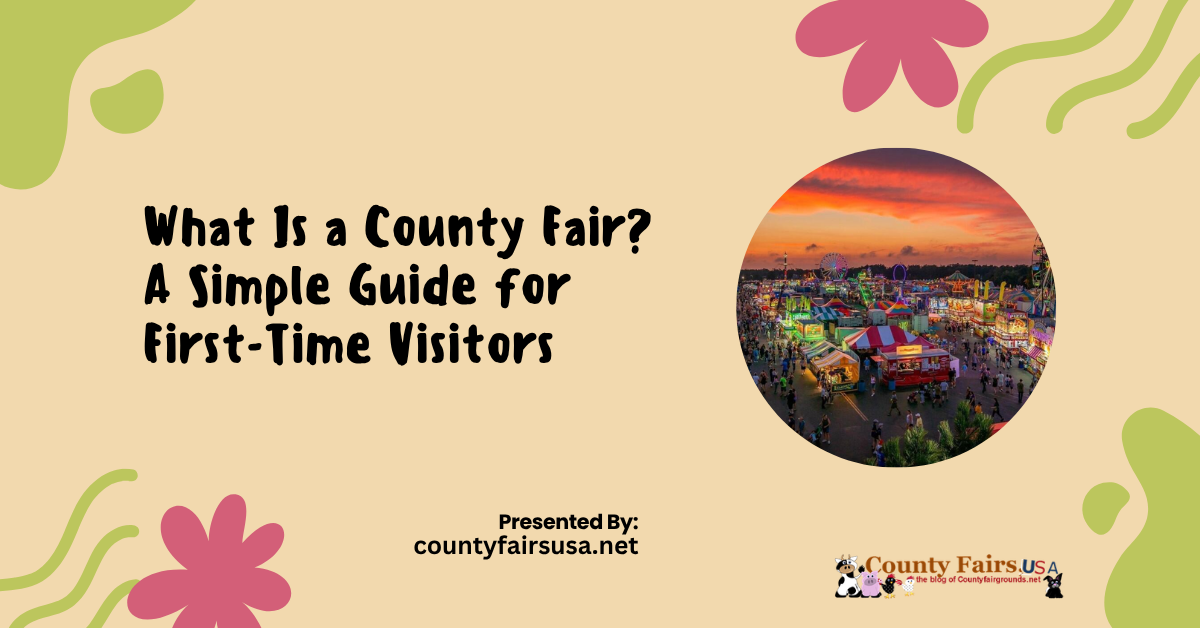
A county fair is a yearly community event held in a single county to celebrate local farming, food, families, and fun. It usually runs for several days in summer or early fall on permanent fairgrounds. You will find livestock shows, baking contests, carnival rides, fair food, live music, and plenty of people you know from town. If you are new to fairs, our guide on what to do at a county fair shows how to fill your day.
In this post, we explain the meaning of a county fair, where the idea came from, what happens during fair week, and why these events still matter today.
County Fair Meaning in Plain Words
The Merriam-Webster definition of county fair describes it as a yearly fair held at a set place in a county to show off local farm products and livestock. That is the heart of it. A county fair is where farmers, ranchers, gardeners, cooks, and young people bring their best work to be seen and judged by the community.
Over time, county fairs added entertainment like rides, games, concerts, rodeos, and demolition derbies. Today they mix old farm traditions with modern fun, which is why they appeal to people who live on farms and in cities alike.
A Short History of County Fairs in America
Fairs have existed for centuries as places to trade goods and meet neighbors. The American county fair as we know it is often traced to Elkanah Watson, a farmer in Pittsfield, Massachusetts. In the early 1800s, he showed his sheep on the town green and later helped form the Berkshire Agricultural Society, which held organized fairs with prizes for the best animals and crops. The IAFE history of fairs covers this story in more detail.
The idea spread quickly. By the mid-1800s, agricultural societies across the country were holding yearly fairs to share farming methods, reward good work, and bring rural families together. Read our full post on the evolution of county fairs in the USA to see how they changed over two centuries.
What Happens at a County Fair?
Every fair is a little different, but most share the same core parts.
| Part of the Fair | What You Will Find |
|---|---|
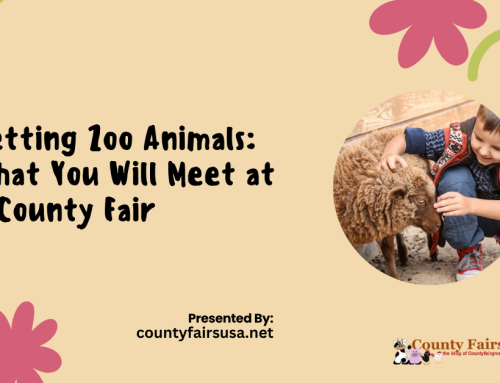
| Livestock barns | Cattle, pigs, sheep, goats, rabbits, and poultry raised by local youth and farmers |
| Show rings | Judging of animals for quality, care, and showmanship |
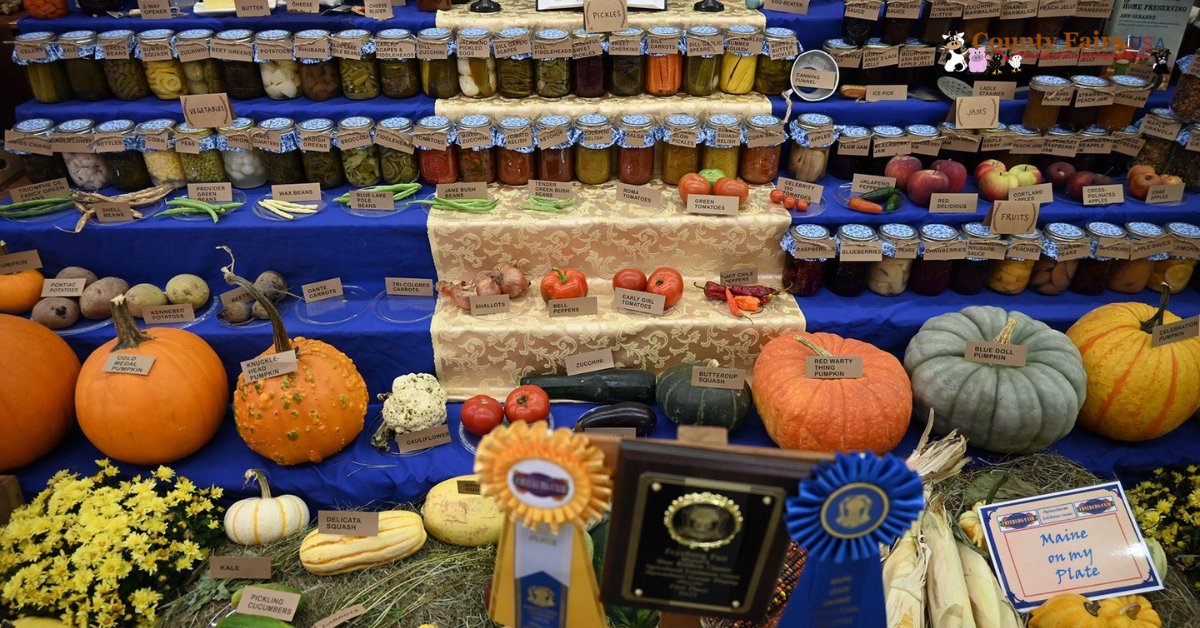
| Exhibit halls | Baked goods, canned foods, quilts, crafts, art, photos, flowers, and vegetables |
| Midway | Carnival rides, games, and prizes |
| Food stands | Corn dogs, funnel cakes, lemonade, turkey legs, and fried treats |
| Grandstand | Concerts, rodeos, tractor pulls, and demolition derbies |
| Vendor booths | Local businesses, clubs, and crafters selling goods |
Livestock Shows and Youth Programs
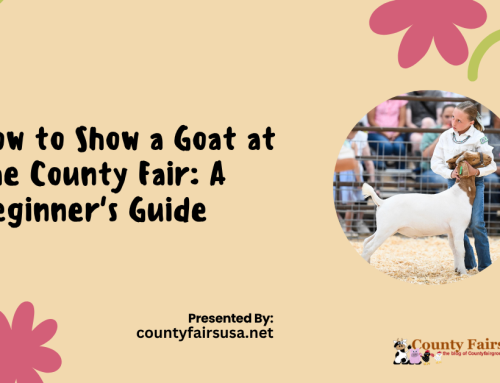
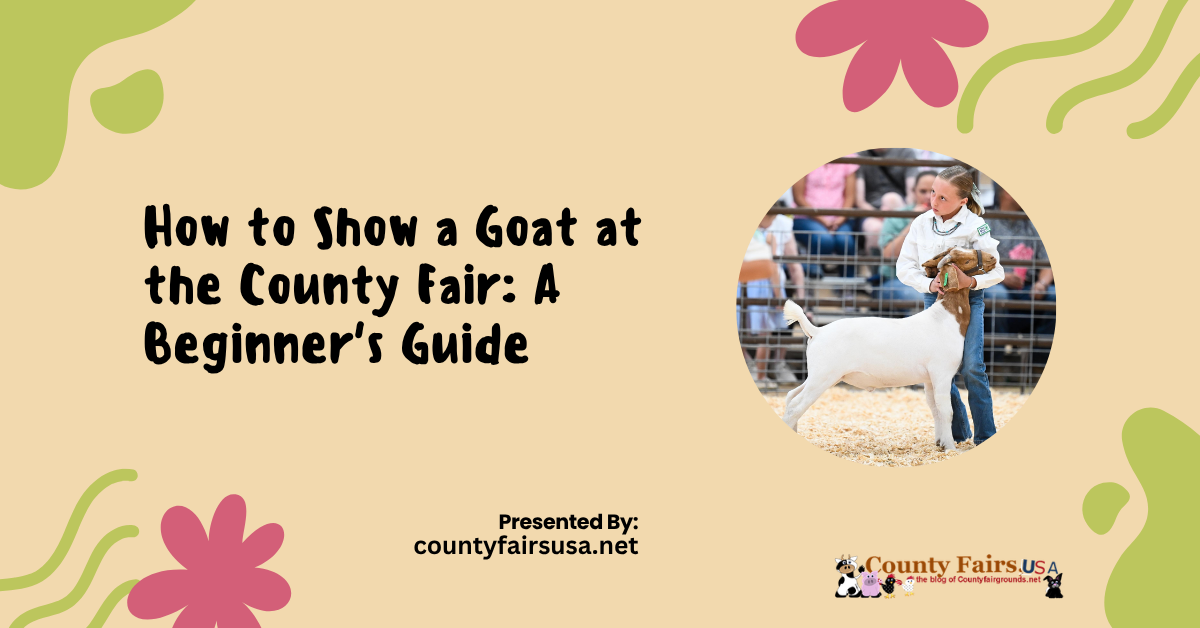
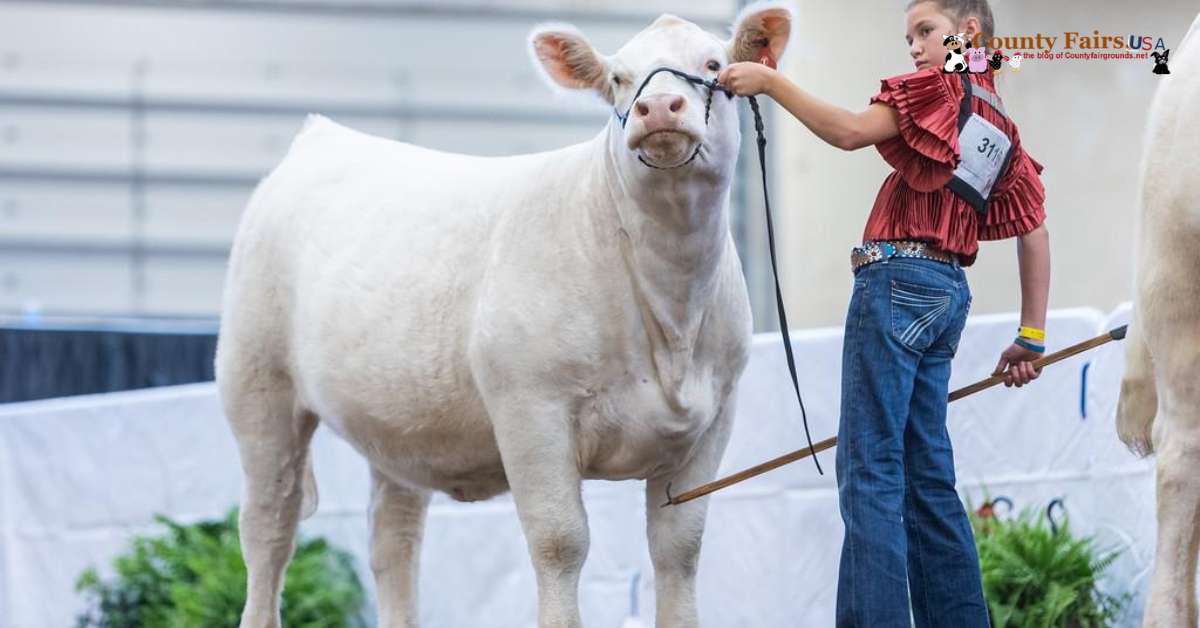
For many families, the livestock show is the main event. Kids in 4-H and FFA spend months raising an animal and then show it in front of a judge. Many fairs end with an auction where local businesses buy the animals to support these young people. Learn more in our post on 4-H and FFA at county fairs.
Competitions and Blue Ribbons
Almost anything can be judged at a county fair. Pies, jams, pickles, quilts, flower arrangements, photos, and giant pumpkins all compete for ribbons. Winning a blue ribbon is a point of pride that families talk about for years.
Carnival and Entertainment
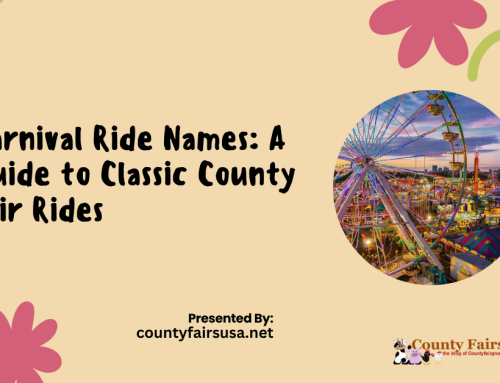
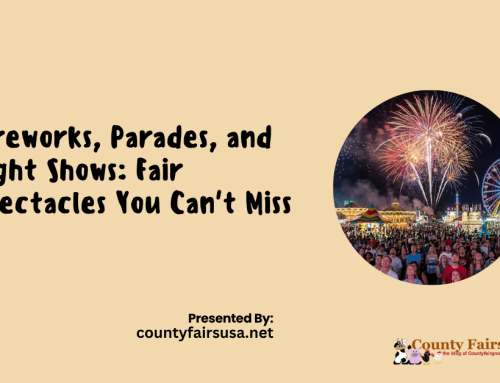
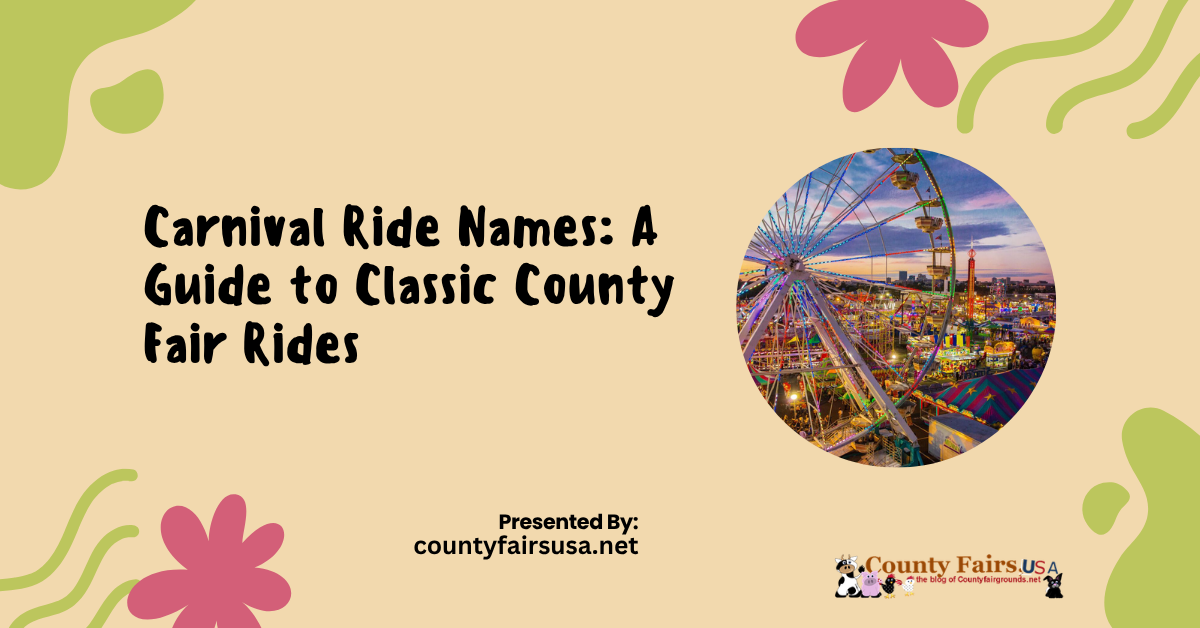
The midway brings bright lights, rides, and games. Evening shows at the grandstand often include local bands, country music acts, rodeos, and motorsports.
Fair Food
Fair food is a big reason people come back every year. Classics like corn dogs, cotton candy, and elephant ears share space with new creations that change every season.
County Fair vs State Fair
People often mix up county fairs and state fairs. The main difference is size and scope. A county fair serves one county and is run mostly by local volunteers and a fair board. A state fair draws exhibitors from across the whole state and is much larger, with bigger crowds, more rides, and major concerts. Many county fair winners go on to compete at the state fair. Our full comparison of county fair vs state fair explains the details.
Who Runs a County Fair?
Most county fairs are run by a fair board or agricultural society. Many are non-profit groups that rely on volunteers, sponsors, ticket sales, and some local or state support. Extension offices, 4-H clubs, and local farm groups play a big role in organizing the youth and livestock parts of the fair.
Planning a fair takes all year. Boards book carnival companies and entertainers months ahead, update rules for exhibitors, arrange judges, and prepare the grounds.
Why County Fairs Still Matter
County fairs are one of the few events that bring an entire community together in one place. They give farm families a stage to show their work and help city families learn where food comes from. They also bring money to local businesses through visitors, vendors, and sponsors.
- They celebrate local farming and teach the next generation.
- They give young people real skills through raising and showing animals.
- They support local business and tourism.
- They keep traditions alive in a fast-changing world.
For many people, the fair is also simply a summer ritual. Grandparents who showed calves decades ago now watch their grandkids do the same in the same barn.
Common County Fair Words to Know
Fairs have their own language, and knowing a few terms makes your first visit easier. Here are the words you will hear most often around the fairgrounds.
| Term | What It Means |
|---|---|
| Fair book | The guide that lists every contest, rule, entry deadline, and prize |
| Exhibitor | A person who enters an animal, food, or craft to be judged |
| Midway | The area with carnival rides, games, and food stands |
| Grandstand | The big seating area for concerts, rodeos, and derbies |
| Showmanship | A contest that judges how well a person handles their animal |
| Premium | The prize money or award paid to contest winners |
| Junior livestock sale | The auction where youth exhibitors sell their animals |
If you plan to enter a contest yourself, read the fair book closely. Entry dates often close weeks before the fair opens, and each category has its own rules about size, labels, and how items are delivered.
When Do County Fairs Happen?
Most county fairs run in summer, from June through August, when crops and animals are ready to show and kids are out of school. Some southern states hold fairs in fall or even early spring because of the heat. A typical fair lasts four to ten days.
To find your local fair, check your county website, your state department of agriculture, or local news. Many fairs post their schedules months ahead.
Tips for Your First County Fair
A little planning goes a long way on your first visit.
- Check the schedule for livestock shows, judging times, and grandstand events.
- Wear comfortable shoes, since you will walk a lot on grass and dirt.
- Bring cash for food stands and small vendors, even if some take cards.
- Go early in the day for smaller crowds and cooler weather.
- Visit the barns and exhibit halls, not just the midway.
Our list of mistakes first-time fair visitors make can help you skip common slip-ups.
Frequently Asked Questions About County Fairs
What is the purpose of a county fair?
The main purpose is to celebrate and promote local agriculture while bringing the community together for education, competition, and fun.
Are county fairs only for farmers?
No. Anyone can attend, and most fairs have exhibit categories for crafts, baking, art, and photos that anyone in the county can enter.
How much does it cost to go to a county fair?
Prices vary by fair. Many charge a small gate fee, with extra costs for rides, games, and grandstand shows. Some smaller fairs are free to enter.
Can kids enter county fair contests?
Yes. Many fairs have youth divisions, and 4-H youth programs give kids a structured way to raise animals and build projects to show.
How long does a county fair last?
Most county fairs last between four days and a week and a half.
A county fair is a mix of tradition, hard work, and simple summer fun. Whether you come for the animals, the rides, or the food, you will leave with a better feel for what makes your community special.