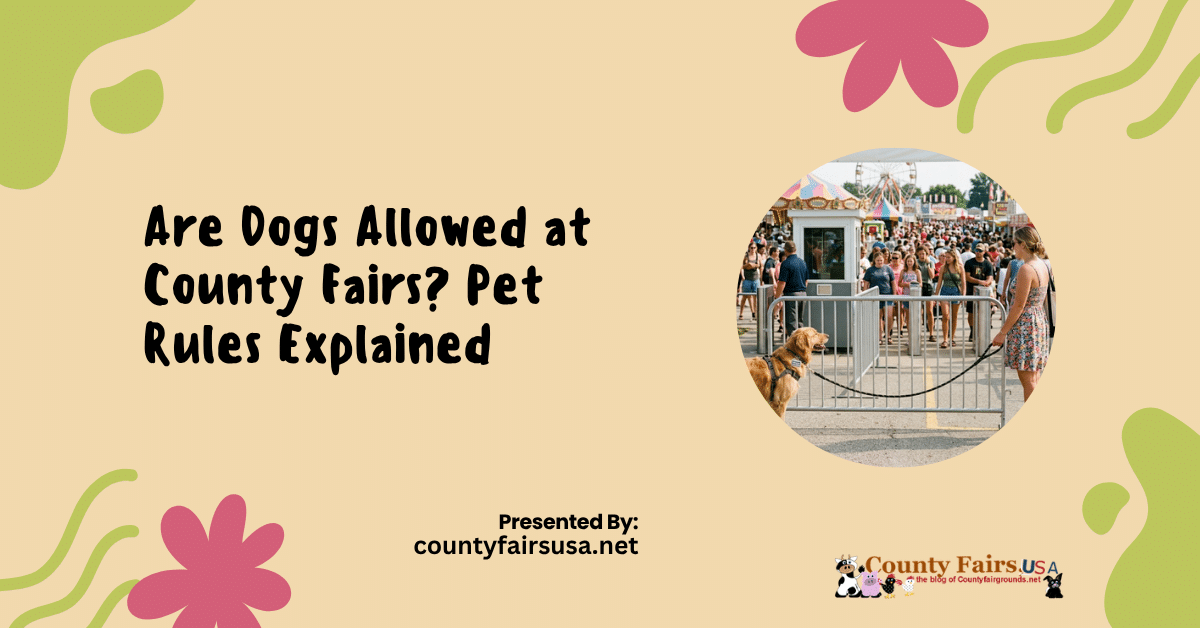
Most county fairs do not allow pet dogs on the grounds. Only service animals under the Americans with Disabilities Act are guaranteed entry. A small number of fairs run dog show days, 4-H dog project events, or pet parades where dogs are welcome, but that access is the exception and it is almost always date-specific.
I have covered county and state fairs for over twenty five years, and I own a very loud Shiba named Scamp. So this question comes up in my inbox every summer. Here is the honest version.
Are Dogs Allowed at County Fair: The Short Answer!
Assume the answer is no until the fair office tells you otherwise. Nearly every fairground in the United States posts a “no pets” line in its gate rules, right next to the ban on coolers, drones, and outside alcohol.
There is no national policy. Each fair board writes its own rules, and those rules can differ from the year-round fairground facility rules. That is why one county allows leashed dogs in the parking lot while the county next door tows you for it.
Why Most County Fairs Restrict Pet Dogs
The ban is not about disliking dogs. It comes down to four practical problems that fair managers deal with every single year.
- Livestock biosecurity. Barns hold cattle, swine, poultry, sheep, and rabbits owned by 4-H and FFA kids. Dogs can carry pathogens on paws and coats, and outbreaks cost exhibitors their entire show season.
- Heat and pavement. Midways are asphalt and gravel. Surface temperatures can run 40 to 60 degrees above the air temperature, which burns paw pads in under a minute.
- Noise and crowd stress. Carnival rides, livestock auction PA systems, and grandstand fireworks put even calm dogs into a fear response. Bites at fairs almost always trace back to a startled pet, not an aggressive one.
- Liability and insurance. Fair associations carry event insurance that frequently excludes pet incidents. One bite claim can eat a small fair’s entire annual profit.
According to the American Veterinary Medical Association, heat-related illness in dogs progresses quickly once body temperature passes 104°F, and hard surfaces under direct sun are a common trigger. A fair midway in July is close to a worst-case setting for that.
Service Animals vs Emotional Support Animals at Fairgrounds
This is where most of the confusion sits, and where fairgoers get turned away at the gate feeling blindsided.
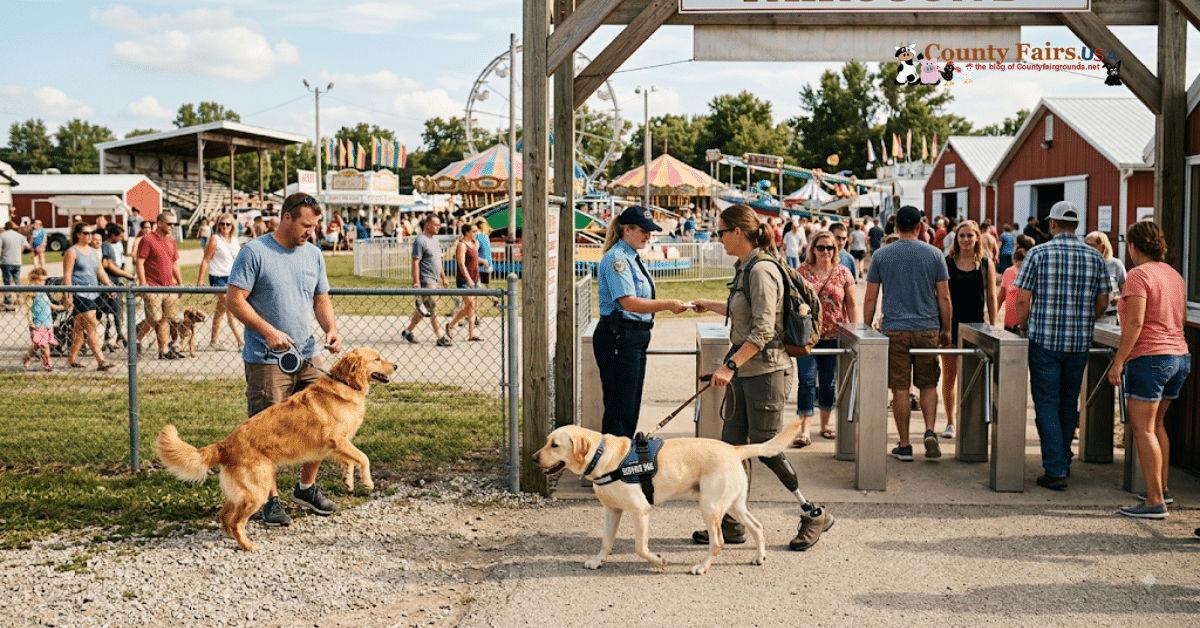
Under the ADA, a service animal is a dog individually trained to perform a task for a person with a disability. Guiding, alerting to seizures, retrieving items, and interrupting panic episodes all qualify. Emotional support animals, comfort animals, and therapy dogs do not fall under this definition, even with a doctor’s letter or an online registration certificate.
What fair staff can legally ask:
- Is the dog required because of a disability?
- What work or task has the dog been trained to perform?
What they cannot do:
- Ask about your medical condition
- Demand ID, a vest, paperwork, or a registration number
- Charge a pet fee for a service animal
- Ask the dog to demonstrate the task
Vests and patches are common but not required by law. Staff can still remove a service animal that is out of control or not housebroken. You can read the full federal guidance at ADA.gov.
Miniature horses trained as service animals are also covered under a separate ADA provision, which matters at fairgrounds more than you would expect.
Fairs That Do Allow Dogs, and When
Dog access at fairs is usually tied to a specific event on a specific day, not a general open-door policy.
- Dog shows and agility trials. Many county fairs schedule an AKC-sanctioned or open show, and entered dogs get access to a defined competition area.
- 4-H dog project days. Youth exhibitors bring dogs for obedience, showmanship, and agility judging. This is one of the most common legitimate reasons for a dog to be on grounds.
- Pet parades and dog days. Some fairs run a promotional pet parade or a “dogs welcome” evening, usually early in the run before crowds peak.
- Open-air festivals on fairground property. Fall festivals, craft shows, and swap meets held at the same fairgrounds often have looser rules than the fair itself.
The important detail is that entered dogs are usually restricted to the show ring, warm-up area, and a designated crating zone. Walking a competition dog through the livestock barns or down the midway is normally still off limits.
How to Check Your Local Fair’s Pet Policy Before You Go
Blog posts and old forum threads go stale fast. Fair boards revise gate rules every year, often after an incident. Check the current source.
- Read the fair’s official website, specifically the FAQ, gate rules, or admission page
- Call the fair office directly, since staff answer this question daily during fair week
- Check the fair’s Facebook page, where policy updates get posted faster than the website
- Ask separately about the parking lot, campground, and RV areas, which sometimes have different rules
- Confirm whether the rule is a fair rule or a year-round fairground facility rule
One question that saves people a wasted trip: “Is there any day during the fair when dogs are welcome?” That is how you find the pet parade or dog show date.
Rules for Dogs Competing at the Fair
If your dog is entered in a show, the paperwork side is stricter than most first-time exhibitors expect.
Requirements vary by state and by fair, but the common list includes a current rabies vaccination certificate, proof of DHPP and bordetella, a signed entry form submitted before the deadline, and in some states a health certificate issued by a licensed veterinarian within a set window before the event.
Typical on-grounds rules for entered dogs:
- Leash no longer than six feet, no retractable leads
- Dog crated when not being shown
- Owner responsible for cleanup, with fines for violations
- No access to livestock barns, food courts, or carnival areas
- Females in season often barred from the show ring
What Happens If You Show Up With a Dog Anyway
You get turned away at the gate. Tickets purchased in advance are rarely refunded, and there is usually nowhere on site to leave the dog.
The dangerous fallback is leaving the dog in the car. More than half of US states have laws addressing animals in hot vehicles, and many give police, animal control, or in some states any citizen the authority to remove the animal. A parked car on a fairground lot with no shade heats faster than almost any other setting. Book a local boarding kennel or daycare instead, and book it early, because fair week fills them.
Safety Tips If Your Dog Is Allowed at the Fair
Permission does not automatically make it a good day for the dog. If you have cleared entry, plan around the dog rather than around your schedule.
- Press your palm to the pavement for seven seconds. If you cannot hold it, the dog cannot walk on it.
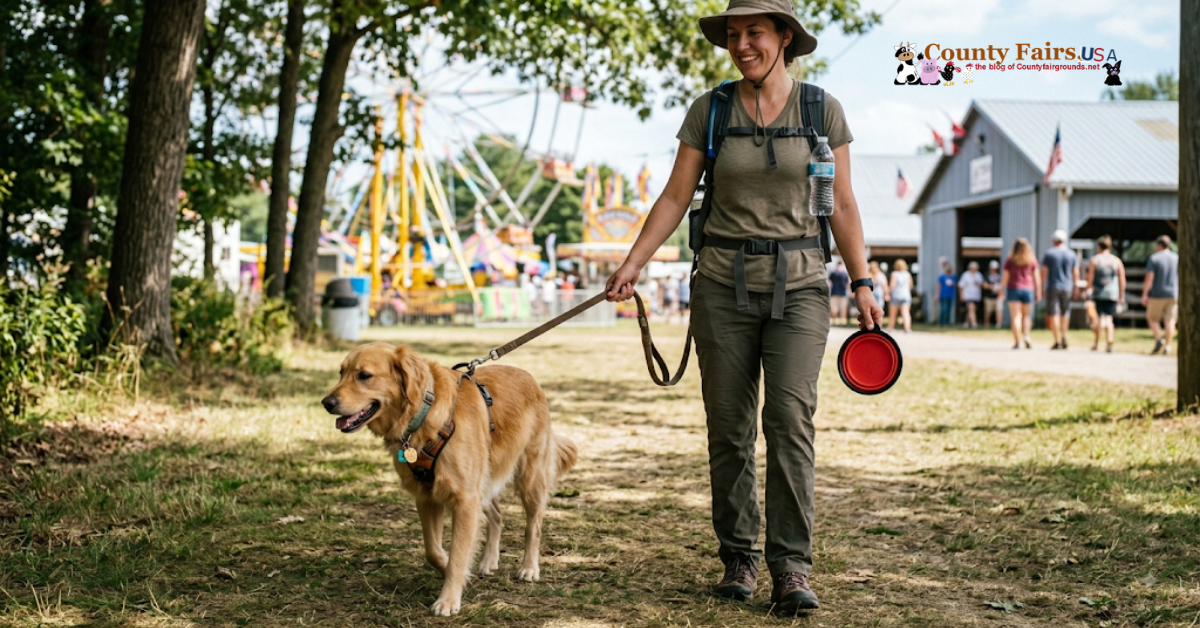
- Carry a collapsible bowl and offer water every 20 to 30 minutes
- Go in the first two hours after gates open or the last hour before closing
- Skip fireworks nights, demolition derby nights, and concert nights entirely
- Watch the ground constantly for corn dog sticks, chicken bones, chocolate, grapes, and anything sweetened with xylitol
- Keep an ID tag with a current phone number on the collar, and confirm the microchip registration is up to date
- Know where the first aid station and the nearest emergency vet are before you need them
Fair food is the underrated hazard here. Dropped food is everywhere on a midway, and a fast dog will swallow a corn dog stick before you can react.
Pet Dog vs Service Dog vs Show Dog: Access Compared
| Access type | Midway and food court | Livestock barns | Show ring area | Paperwork needed |
| Pet dog | Usually not allowed | Not allowed | Not allowed | N/A |
| Service dog (ADA) | Allowed | Generally allowed, some biosecurity exceptions | Allowed | None required |
| Entered show dog | Not allowed | Not allowed | Allowed | Entry form, rabies, vaccination records |
| ESA or therapy dog | Treated as a pet | Not allowed | Not allowed | Letter carries no legal weight |
Frequently Asked Questions
Can I bring my dog to a state fair? State fairs are stricter than county fairs, not looser. Attendance is higher, livestock volume is larger, and nearly all limit access to service animals and entered competition dogs.
Are service dogs allowed inside livestock barns? Usually yes, but a fair can restrict access to a specific barn during a documented disease concern. Ask the barn superintendent rather than the gate staff.
Can I leave my dog in the fairground parking lot? No. Even with windows cracked, interior temperatures climb into dangerous territory within ten minutes, and you risk a citation along with the health emergency.
Do fairs offer kennels or pet daycare? Very few do. A handful of larger fairs partner with a local boarding facility, but plan on arranging your own care.
Are dogs allowed at rodeos and festivals on fairgrounds? Rodeos follow livestock rules and generally say no. Standalone outdoor festivals on the same property are often more relaxed, so check that specific event’s rules rather than assuming.
Plan the Fair Trip Around Your Dog, Not Despite It
The workable approach is simple. Assume dogs are not permitted, call the fair office to confirm, and look for the one day on the schedule built for dogs. If the answer is no, book boarding and enjoy the fair without spending the afternoon worrying about a hot midway.
Scamp has never set foot on a fairground, and honestly, he would bark at every single thing there. Some dogs are better company at home.