There is a moment at every fair when the rides slow and everyone looks up. The first firework cracks open the sky and the whole crowd gasps at once. That shared moment is what people remember long after the funnel cake is gone.
At Countyfairgrounds, we have covered fair nights for over twenty years, and the big shows are still what pull families back. This guide walks through the three spectacles that define a fair night and how to enjoy each one.
Why Fair Spectacles Are the Soul of Every Fair
Fairs have always been about gathering. The big shows give an entire town a reason to stop and look in the same direction at the same time, something the rides and games cannot do.
They also drive the gate. Fair organizers know a strong fireworks night or a headline parade can double attendance on a slow weekday, which is why the spectacle is the heart of the whole event.
Fireworks: The Classic Fair Showstopper
Nothing says fair night like fireworks. The sound, the color, and the way the light reflects off the carnival rides make it the most photographed moment of the week.
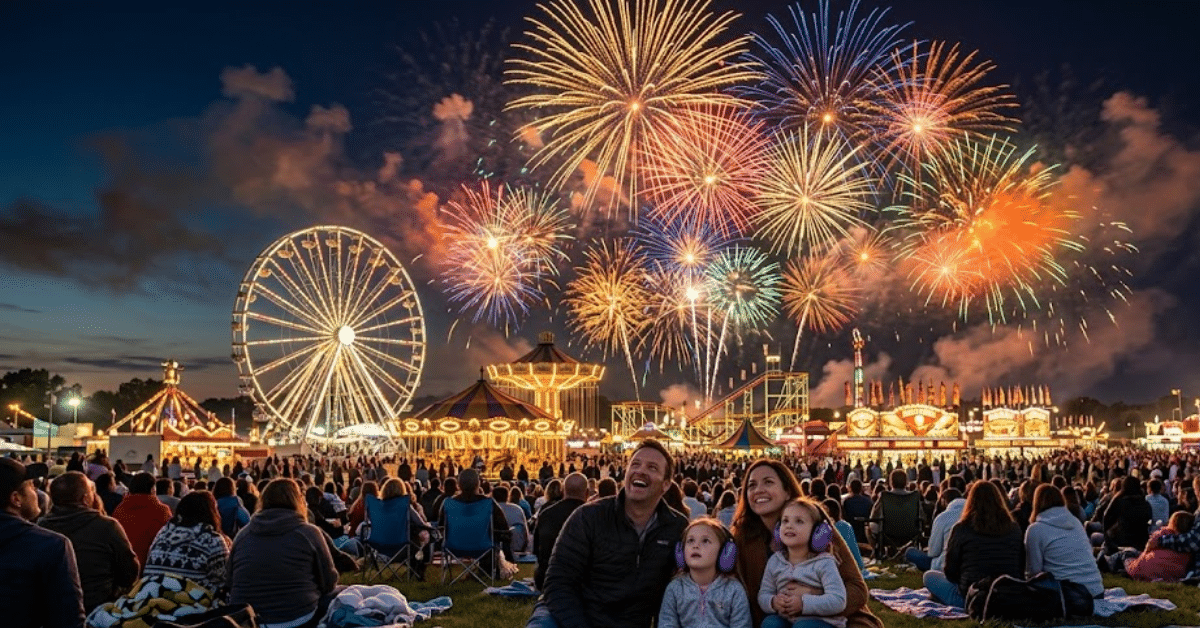
Most fairs save the big displays for the dates that draw the biggest crowds, so check the daily schedule when you arrive. Watch for these nights:
- Opening night, when organizers want a strong first impression
- 4th of July, if the fair runs through the holiday
- Closing night, often the largest show of the run
Where to Watch With the Family
The grandstand offers the closest seats, but it fills fast and gets loud. For families with young kids, a grassy hill near the edge of the grounds gives a full view without the crush. A few tips help:
- Sit upwind so smoke does not block your view
- Arrive thirty minutes early to claim a spot
- Bring ear protection for toddlers and a blanket for everyone
Parades: Tradition Marching Down Main Street
Parades are the daytime heart of many fairs. While fireworks light up the night, the parade brings the community out in the sun to wave at floats and cheer for the local high school band.
A fair parade is a moving snapshot of the town, which is part of why Countyfairgrounds loves covering them. You will usually see:
- Decorated floats from local clubs and businesses
- Marching bands and dance teams from area schools
- Livestock and 4-H members showing prize animals
- Antique tractors, fire trucks, and classic cars
Finding the Route and the Best Spot
Parade times are often posted weeks ahead on the fair website and the local chamber of commerce page. If you cannot find it online, the fair office can usually tell you the start time and the streets it follows.
Corners and turns make great viewing spots, since floats slow down and performers put on a show there. Bring chairs, water, and a small bag for the candy many parades toss to the crowd.
Light Shows: The New Wave of Fair Entertainment
Fairs are changing, and the night sky is changing with them. Over the past few years, light shows have moved from a novelty to a main attraction at fairs across the country.
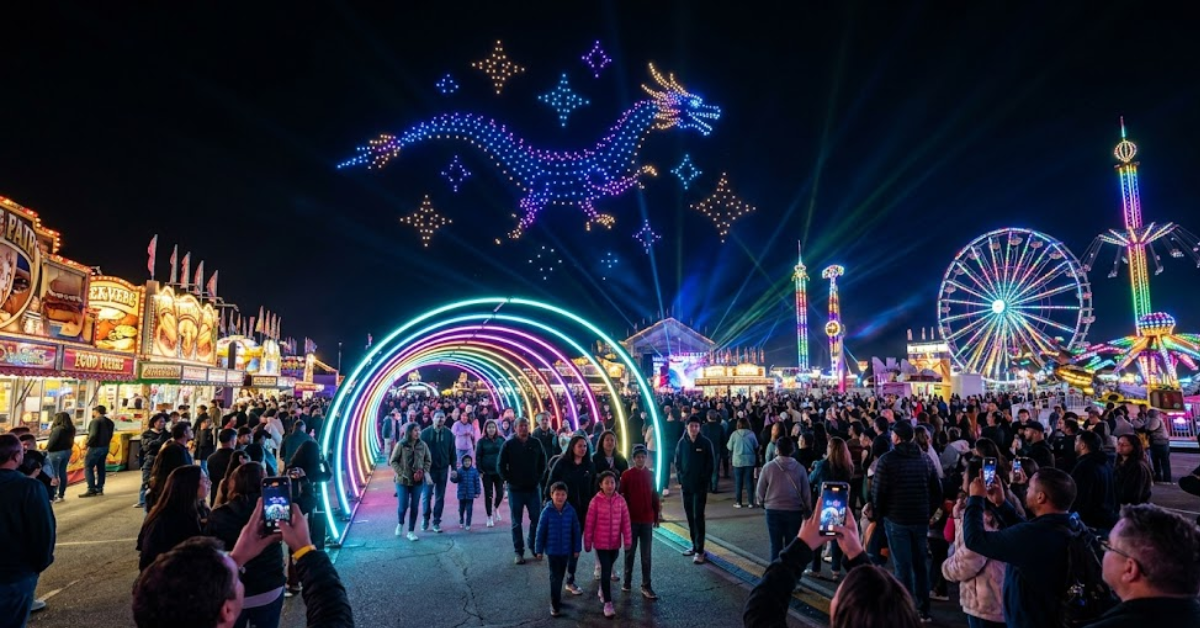
Drone shows use hundreds of small aircraft flying in sync to form shapes, logos, and animated scenes. Some fairs run them alongside fireworks for a longer finale, while others have switched to drones entirely. Beyond the sky, fairgrounds now add ground-level light experiences too:
- Laser shows projected onto buildings or water screens
- LED-lit walking tunnels and photo zones
- Synchronized light and music displays near the main stage
Why Fairs Are Shifting to Light Tech
The move is not just about looks. Several practical reasons are driving the change:
- Safety, since drones carry far less fire risk than shells
- Less smoke and noise that disturbs animals and neighbors
- Reliability, because drone shows run in conditions that ground fireworks
- Custom designs that match a fair’s theme each year
Many fairs now run both, giving the crowd the classic boom of fireworks and the precision of a drone display in one evening.
How to Plan Your Night Around the Big Shows
A little planning turns a good fair night into a great one. The big shows run on a fixed schedule, so build your evening around them rather than hoping to catch them by luck.
Eat dinner and ride the rides earlier, then move toward the viewing area at least thirty minutes before showtime. A few habits the Countyfairgrounds team swears by:
- Pull up the daily schedule the moment you arrive
- Scout your parking on the way in, since lots empty all at once
- Check the weather, as wind or rain can push a show to a later slot
Capturing the Moment on Your Phone
You will want to remember these shows, so a few quick settings make a big difference. The goal is sharp color without blur.
- Turn off the flash, which does nothing for distant fireworks
- Tap to lock focus on the sky before the show starts
- Use night mode or a burst setting to catch each peak
- Steady your phone against a railing or use a small tripod
For drone shows, hold the shot a little longer, since the formations build slowly compared to a fast firework burst.
The Glow That Stays With You
Long after the gates close, it is the spectacles that linger. The crack of the first firework, the local band rounding the corner, the glowing shapes a drone fleet paints across the dark. These are the moments that turn a regular night out into a story families retell for years.
Before your next visit, pull up your local fair schedule and circle the show dates. Plan your evening around the fireworks, the parade, and the light displays, and give yourself the full experience. The rides and the food are fun, but the spectacles are what you will be talking about on the drive home.