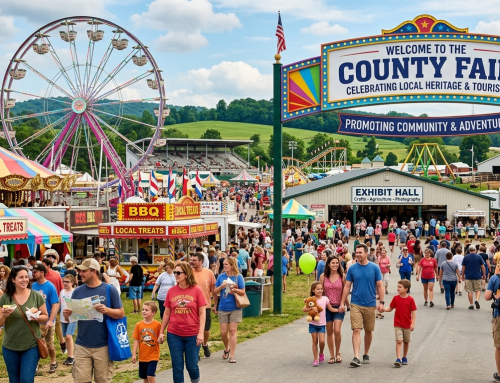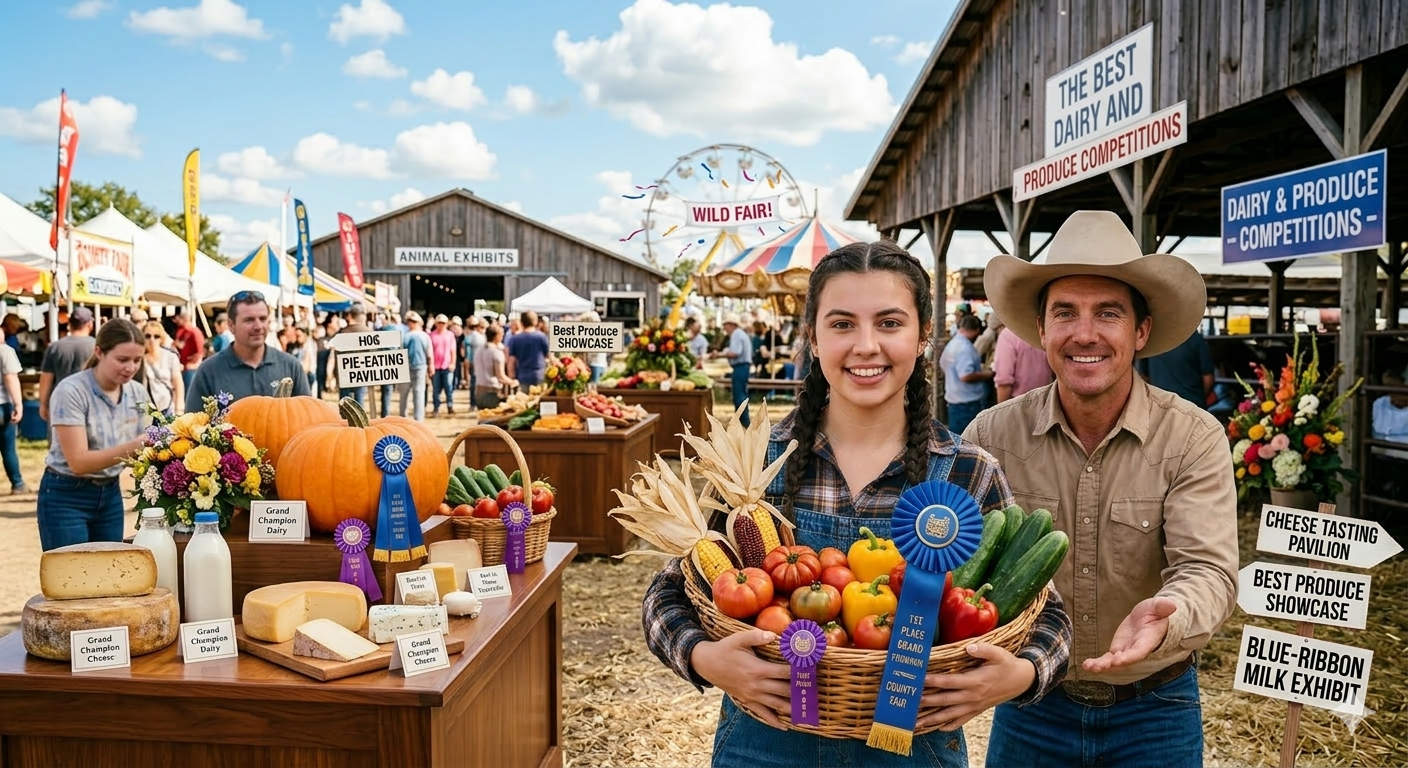
Walk into the agricultural exhibit hall at any major county fair and you immediately understand what the whole event was originally built around. Rows of perfect tomatoes on white paper plates. Jars of honey catching the light.
Best Dairy and Produce Competitions at County Fairs
Braided garlic hanging from display boards. Long before county fairs had carnival rides and headliner concerts, they had these competitions. The best dairy and produce competitions at county fairs are not side events. They are the heart of the tradition, and at CountyFairsUSA.net, we have been covering them across the country since 1999.
Why These Competitions Are the Soul of the Fair
County fairs were created in early 19th century America specifically to showcase the quality of local agricultural output. Farmers brought their best crops and dairy products to compare against their neighbors, learn from one another, and earn recognition for their work.
Today these competitions serve a dual role. They recognize genuine farming excellence while giving urban and suburban visitors a direct connection to where their food actually comes from. Watching a trained judge assess a wheel of handmade cheese or a single perfect ear of corn is a reminder that real skill and sustained effort go into every item at a farmers market or grocery store.
Dairy Competitions: Butter, Cheese and More
Dairy competitions at county and state fairs cover a much wider range than most fairgoers realize. It is not just about which cow produced the most milk. From butter quality and artisan cheese to ice cream and cultured dairy, these contests draw serious competitors who have spent months preparing their entries.
The Los Angeles International Dairy Competition at the LA County Fair uses a 100-point scoring system that evaluates entries on flavor, texture, appearance, bacteria content, finish, salt level, and melting quality depending on the product category. Fairplex That level of scrutiny reflects how seriously these contests are taken at major fairs across the country.
Common dairy competition categories found at county and state fairs:
- Butter quality judging open to both commercial dairy farms and home producers
- Artisan and farmstead cheese competitions evaluated on texture, rind development, flavor, and aging consistency
- Fluid milk and cream quality contests for working dairy farmers
- Dairy goat competitions that combine live animal showing with milk quality judging
- Ice cream, yogurt, and cottage cheese categories at larger state fair dairy programs
- Honey and beeswax competitions, frequently grouped alongside dairy in the exhibit hall
- Butter sculpture contests, a visual tradition with well over 100 years of history at major American fairs
Produce Competitions: From Perfect Tomatoes to Giant Pumpkins
Produce competitions cover the full range of what American growers can pull from the ground, from a single perfect cucumber to a pumpkin that requires a forklift to move.
The Minnesota State Fair vegetable and potato competition alone runs approximately 150 different categories. The superintendent who has overseen the competition for 36 years describes produce judging as a beauty contest, where judges look but do not taste, evaluating entries entirely on visual criteria.
Standard produce categories found at county and state fairs across America:
- Tomatoes judged on color development, shape uniformity, skin condition, and correct stem preparation
- Corn on the cob evaluated on kernel development, husk condition, and tip fill
- Cucumbers, peppers, onions, beets, and root vegetables in open class divisions
- Garlic competitions including braided garlic rope categories, a specialty class with passionate regular competitors
- Sunflowers, dahlias, and cut flower arrangements in horticultural divisions alongside vegetables
- Collection and display classes where variety and overall presentation are judged together
The Giant Pumpkin Category
Giant pumpkin competitions deserve their own mention entirely. At the North Carolina State Fair, the competition is sanctioned by The Great Pumpkin Commonwealth, an international organization that promotes growing giant vegetables. Top winners in pumpkins take home between $1.50 and $3 per pound, and in 2024 two pumpkins weighed more than 2,000 pounds each.
Serious growers spend five or more months managing soil conditions, watering schedules, and vine training for a single pumpkin. The weigh-in at a major state fair draws a crowd that gathers just to watch the forklift maneuver the giant entries onto the scale. It is one of the most genuinely impressive things you can see at any fairground.
Canned Goods, Preserves and Fermented Foods
Canned and preserved goods sit at the crossroads of dairy, produce, and baking, and they attract some of the most dedicated competitors on the fairgrounds. A winning jar of strawberry jam or a perfectly preserved batch of dill pickles represents months of planning and multiple test batches.
Judges evaluate entries before they even open the jar. Seal integrity, headspace, color clarity through the glass, and visual presentation all factor into the score before flavor is even considered. A jar with rust on the lid or cloudiness in the brine loses points immediately.
Preserved and fermented categories commonly found at county and state fairs:
- Jams, jellies, and fruit preserves judged on set consistency, clarity, color, and flavor
- Pickles and fermented vegetables including cucumbers, beets, and specialty fermented entries
- Canned fruits, tomatoes, and vegetables in both water bath and pressure canning classes
- Salsa competitions, one of the fastest-growing categories at county and state fairs right now
- Honey and infused vinegar in specialty preserve divisions
- Fermented foods including kimchi-style entries and cultured dairy products at progressive fairs
CountyFairsUSA.net covers Fermented Foods, Organic Food, Fruit, and Food categories across our fair listings, and participation in these categories continues to grow every season.
What Judges Actually Look For
Dairy and produce judges use standardized scorecards and evaluate entries against defined criteria. Personal preference plays almost no role. Entries are measured against an ideal standard for their specific category, not compared subjectively against each other.
Correct preparation trips up many first-time entrants. Judges look carefully at whether items have been harvested correctly and whether stems have been trimmed or removed properly per the category rules. These preparation standards exist because they reflect best practices for extending shelf life and storability, and ignoring them costs points that have nothing to do with the quality of the product itself.
What judges look for by category:
- Produce: variety correctness, size and shape uniformity, vibrant color development, freedom from blemishes, and proper stem or leaf preparation per the premium book
- Dairy: clean flavor without off-notes, proper body and texture for the product type, color consistency, and no processing defects
- Canned and preserved goods: clean seal, correct headspace, visual clarity through the jar, appropriate color for the contents, and flavor balance on tasting
Tips for First-Time Entrants
Entering a produce or dairy competition for the first time is more accessible than most people expect. The biggest mistakes come from not reading the rules carefully and underestimating how much small presentation details matter to a trained judge.
Practical tips for first-time dairy and produce competitors:
- Read the fair’s premium book completely before you plant, grow, or make anything intended for entry
- Grow or produce more than you plan to enter so you can choose only your best specimens on judging day
- Harvest produce as close to entry time as possible to keep freshness and firmness at their peak
- For canned goods, make multiple batches and enter only the cleanest, most consistent jar
- Clean entries carefully before bringing them in, because a blemish-free tomato with a dirty stem loses points it did not need to lose
- Ask the fair office for written judging feedback after results are posted. Most fairs provide comments, and those notes are genuinely useful for the following year
Dairy and produce competitions at county fairs represent something rare at any public event: a real expert evaluation of agricultural craftsmanship, open to anyone willing to put in the work. At CountyFairsUSA.net and CountyFairgrounds.net, we cover these competitions and the fairs that run them across all 50 states.