Uncategorized

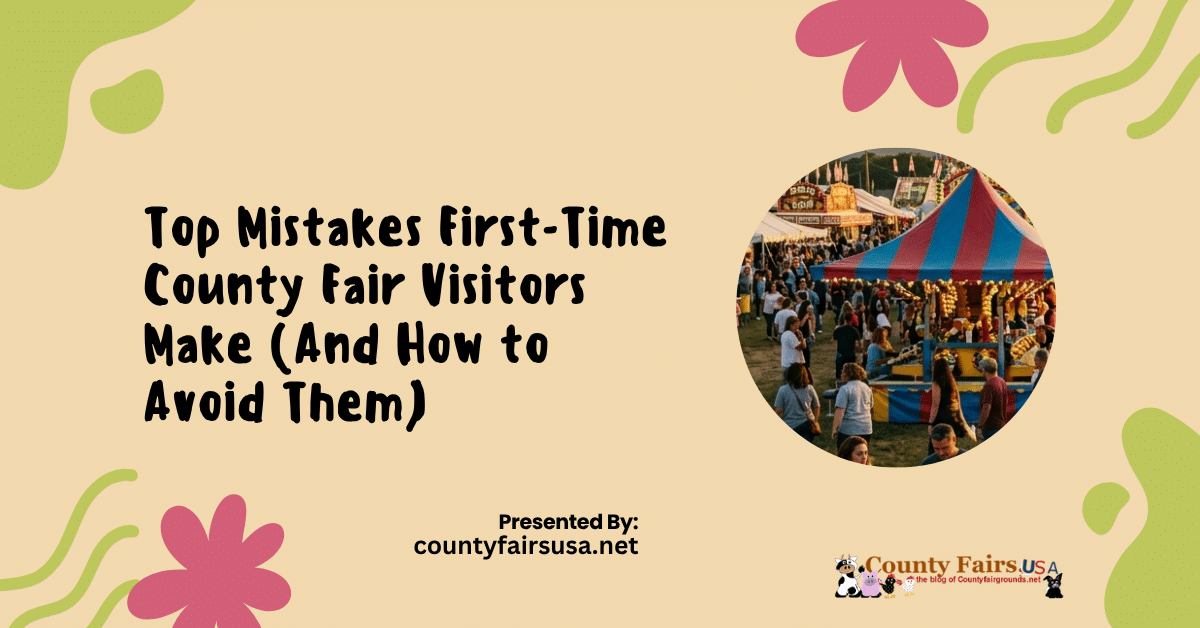
Top Mistakes First-Time County Fair Visitors Make (And How to Avoid Them)

County fairs look simple from the outside. You show up, eat some fair food, watch a few shows, and head home. But first-time visitors almost always leave feeling like they missed something, overspent, or wore the wrong shoes. What Do Most First-Time County Fair Visitors Miss? At County Fairs USA, we have been covering county and state fairs across America since 1999. After 25+ years watching first-timers navigate fairgrounds from Texas to Washington State, the same patterns repeat every single season. Here is what to avoid and how to actually enjoy your first county fair. Arriving Without Checking the Schedule Most first-timers show up with no idea what is happening when. County fairs pack a huge amount of programming into a short window: livestock competitions, rodeo events, grandstand concerts, specialty acts, pie contests, and tractor pulls all run on overlapping schedules. Walking in without a plan means missing things you would have wanted to see. Check the fair's official website or County Fairs USA before you go, download the daily schedule, pick three or four priorities, and build your day around them. Paying Gate Price Without Looking for Deals Walk-up gate prices at county fairs are almost always the most expensive way to get in. Most fairs offer multiple ways to save that first-timers simply never know to look for. Common discount opportunities worth checking before you go: Early bird online tickets purchased in advance Family Day or Kids Day where children get in free or at a reduced rate Senior Day and Military Day admission pricing Grocery store and bank partner promotions (the State Fair of Texas regularly partners with local organizations for discounted entry) Weekday vs. weekend pricing at larger fairs Season passes if you plan to visit more than once Wearing the Wrong Shoes This sounds minor until you are limping through hour four of a hot fairground in sandals. County fairgrounds involve miles of walking across uneven ground, grass, gravel, and packed dirt. The State Fair of Texas alone covers 277 acres. Even a modest county fair will have you on your feet for most of the day. Wear closed-toe, comfortable shoes you have already broken in before fair day. Sandals are fine for a casual afternoon, not for a full day at the fair with kids in tow. Eating Everything at the First Booth You See This is one of the most universal first-timer mistakes. You spot a funnel cake stand near the entrance, the smell hits you, and fifteen minutes in [...]

By |2026-04-13T10:36:17+00:00April 10th, 2026|Uncategorized|Comments Off on Top Mistakes First-Time County Fair Visitors Make (And How to Avoid Them)

How Much Does It Cost to Run a County Fair?

Most people walk through the fairground gates thinking about corn dogs and carnival rides. Very few stop to wonder what it actually cost to put all of that together. The answer is more than most would guess. What Does It Really Cost to Run a County Fair? At CountyFairsUSA.net, we have been covering county and state fairs across America since 1999. One county fair board president described it plainly: the fair is really like a small business, and it costs a lot of money to pay for insurance, water, sewer, electric, maintenance, and grounds upgrades before a single guest walks through the gate. The Range: Small Fair vs. Large Fair There is no single number that answers this question because the range is genuinely wide. A small rural county fair running three or four days operates on a very different budget than a ten-day state fair drawing hundreds of thousands of visitors. A small community county fair might operate on a total budget of $50,000 to $150,000. A mid-size county fair can cost $300,000 to $800,000 to produce. Major fairs like the State Fair of Texas or the Minnesota State Fair run multi-million dollar operations. According to a 2025 IAFE Economic Impact Study, US fairs collectively generated $51.9 billion in economic impact in 2024, which gives a sense of the total scale these individual events feed into. Entertainment: The Biggest Line Item Entertainment is almost always the largest single expense a county fair board faces, and bookings happen six to twelve months in advance. At CountyFairsUSA.net, we have covered the full range of acts that county fairs bring in, from country music headliners to specialty performers including jugglers, hypnotists, stiltwalkers, sword swallowers, and human cannonballs. The Bureau County Fair in Illinois paid approximately $75,000 for a single headliner concert. Their board president kept the tradition going despite the cost because that act was what brought people to the fair. Here is a realistic entertainment cost range by type: Regional headliner concerts: $15,000 to $75,000 per show National headliner acts: $100,000 to $500,000 or more Specialty performers (hypnotists, stiltwalkers, animal shows, human cannonballs): $1,500 to $10,000 per act per day Rodeo production (stock contractors, rodeo clowns, announcers): $10,000 to $50,000 depending on scale Sound and staging equipment rental: $5,000 to $30,000 for a multi-day event Smaller fairs control this expense by relying on local talent, tractor pulls, 4-H demonstrations, and community competitions instead of booking outside acts. Carnival and Ride Contracts Most county fairs do not own their [...]

By |2026-04-13T10:15:33+00:00April 9th, 2026|Uncategorized|Comments Off on How Much Does It Cost to Run a County Fair?
Go to Top