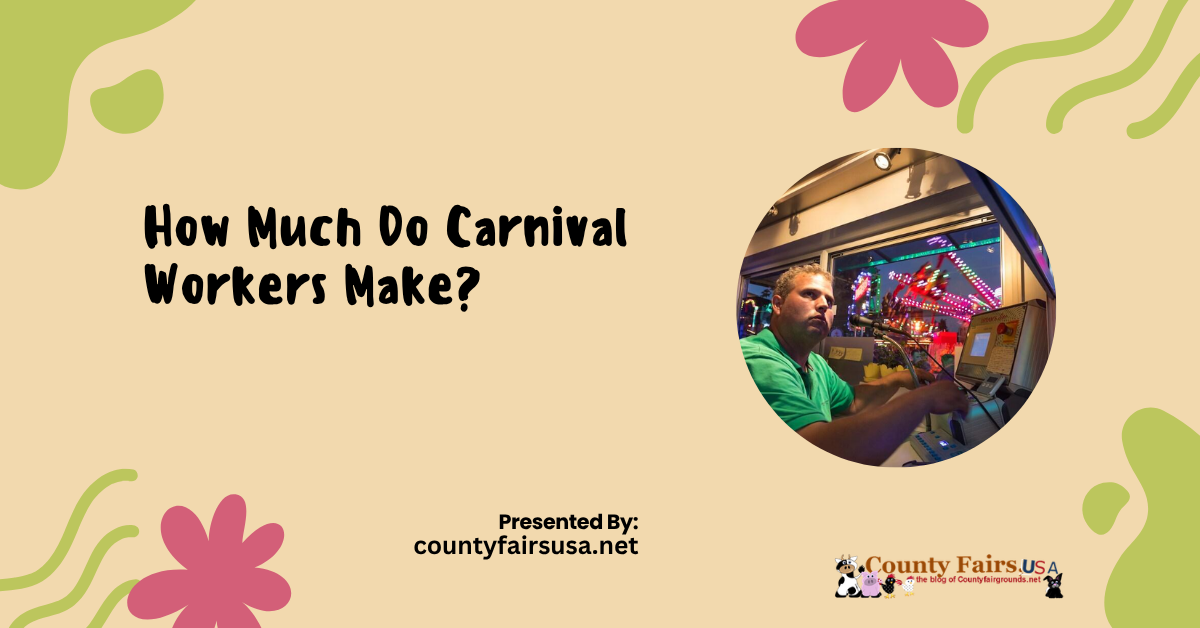
Every county fair runs on the hard work of people most visitors never think about. Ride operators, game attendants, food stand cooks, and setup crews keep the midway running from morning to midnight. So how much do carnival workers make, and is it a good job? The short answer is that pay varies a lot by role, company, and how many hours a person works. If you are curious about the business side of fairs, our look at how county fairs are organized behind the scenes is a good place to start.
This guide breaks down how carnival workers are paid, which jobs tend to earn more, and what the lifestyle looks like for people who travel with a show.
Average Carnival Worker Pay at a Glance
Salary sites track carnival pay using job listings and reports from workers. As of October 2026, ZipRecruiter carnival pay data lists an average of about $21 per hour for carnival workers in the US. Other sources show lower figures, and many entry-level game and ride jobs start close to local minimum wage. The gap comes from who is counted. Managers, ride mechanics, and truck drivers pull the average up, while seasonal helpers pull it down.
The BLS amusement attendant outlook tracks a related group of workers that includes ride operators and game attendants. It is a useful reference for how these jobs are paid across the country, though it also counts theme parks and other venues.
How Are Carnies Paid?
Carnival pay is not always a simple hourly wage. Depending on the company and the job, workers may be paid in one or more of these ways.
- Hourly pay: common for ride operators and food stand staff at larger shows.
- Weekly flat pay: some traveling shows pay a set amount per week no matter the hours.
- Commission: game attendants may earn a share of what their booth brings in.
- Bonuses: some shows pay an end-of-season bonus to workers who stay all year.
- Housing and travel: many shows offer a bunk in a trailer and help with travel instead of higher pay.
Because hours on fair days can be very long, weekly pay can look better or worse depending on how you do the math. A worker on a 70-hour week with flat pay may earn less per hour than a local hourly employee working 30 hours.

Carnival Jobs and How Pay Differs
| Job | What They Do | Pay Level (General) |
|---|---|---|
| Game attendant | Runs a midway game booth | Entry level, often with commission |
| Ride operator | Loads riders, checks safety bars, runs the ride | Entry to mid level |
| Food stand worker | Cooks and serves fair food | Entry level, sometimes tips |
| Ticket seller | Sells ride tickets and wristbands | Entry level |
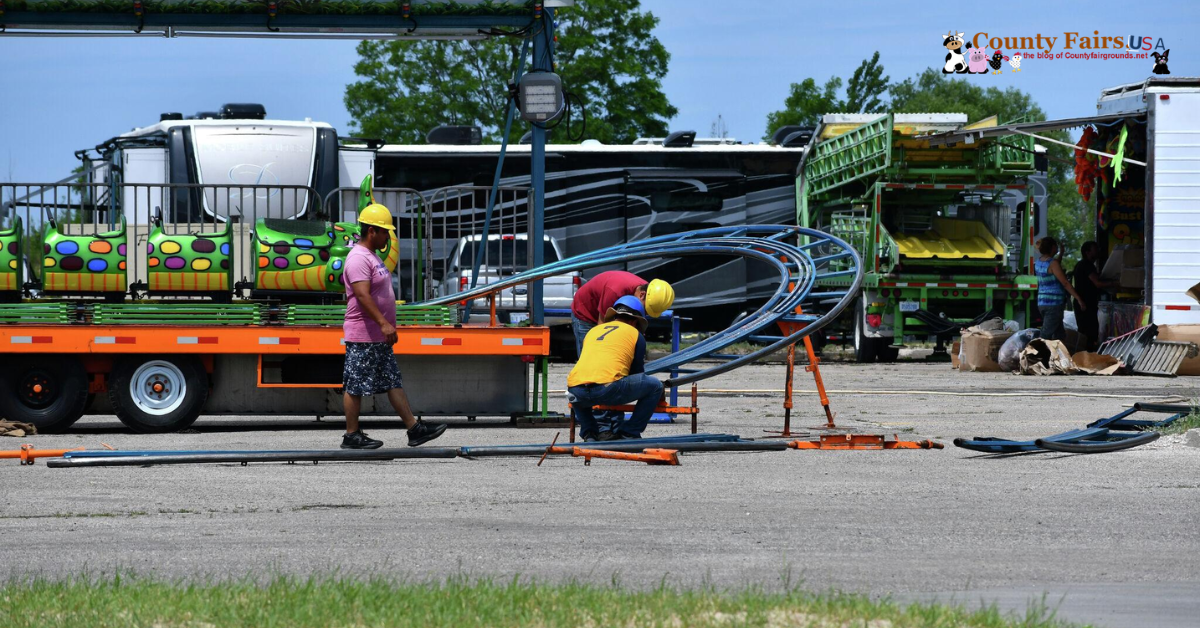
| Setup and teardown crew | Builds and packs rides between fairs | Mid level, long hours |
| Ride mechanic | Inspects and repairs rides | Higher, skilled role |
| CDL truck driver | Moves rides and trailers between towns | Higher, licensed role |
| Ride or show manager | Manages crews and daily operations | Highest among staff |
| Concession or game owner | Owns booths and keeps profits | Varies widely |
Skilled jobs pay more because they are harder to fill. A worker with a commercial driver’s license, mechanical skills, or ride certification is valuable to a show. Owners of food stands and game booths can earn the most, but they also take on the most risk. Read our breakdown of how much vendors make at county fairs to see the owner side of the numbers.
What Affects How Much a Carnival Worker Earns?
Size of the Show
Large carnival companies that play big state fairs usually pay more and have clearer pay structures. Small family-run shows may pay less but offer a closer team.
Length of the Season
Most shows run from spring to fall. Workers who stay the whole season earn more in total and are more likely to get bonuses. Some shows go south in winter and keep working nearly all year.
Hours Worked
Fair days are long. Setup can start before dawn, and the midway may stay open until late at night. Workers on hourly pay can earn a lot during a busy fair week.
Location
Pay often follows the local cost of living and state minimum wage. A show working in a high-wage state may need to pay more than one in a lower-wage area.
Experience
Returning workers often get raises, better jobs, or the chance to move into management.
What Is Life Like for Carnival Workers?
Working for a traveling carnival is not like a normal job. Shows move from town to town, sometimes every week. Workers often live in bunkhouse trailers or campers that travel with the show. Days are packed with setup, running rides, and teardown.
Many workers say they love the freedom, the friendships, and seeing new places. Others find it tiring and hard to keep up with for more than a season or two. Weather, long hours, and time away from family are the biggest challenges.
Some large carnival companies also hire seasonal workers from other countries through the H-2B seasonal worker program, which sets rules on pay and working conditions for those workers.
Is Working at a Carnival a Good Job?
It can be, depending on what you want. Carnival work is a good fit for people who enjoy travel, hands-on work, and being part of a tight crew. It can also be a way into skilled trades like ride maintenance or truck driving. On the other hand, the hours are long, the pay can be uneven, and the season is not year-round for everyone.
If you want a taste without hitting the road, look at local fair jobs. Many county fairs hire people from the area for parking, gate tickets, food stands, and cleanup. These jobs last only a week or two but can be a fun way to see how a fair works from the inside.
Skills That Help Carnival Workers Earn More
The workers who move up fastest usually pick up a skill the show needs. A commercial driver’s license lets a worker haul rides between towns. Basic welding and mechanical skills open the door to ride maintenance. Strong people skills help game attendants sell more tries and earn better commission. Workers who show they are reliable season after season are often the first in line for crew lead and manager roles.
Some shows also pay for training, such as ride operator certification or safety courses. Asking about these options during hiring is a smart move for anyone who wants to make carnival work a longer career.
How to Get a Job at a Carnival or County Fair
- Check the websites and social pages of carnival companies that play your local fair.
- Contact your county fair office about seasonal hiring for gate, parking, and concessions.
- Ask food vendors at the fair if they need help next season.
- Look for job fairs that big shows hold in spring before the season starts.
Most entry-level roles do not need experience, but showing up on time and being able to handle long days matters a lot. Ride jobs may require training and a background check.
Who Else Earns Money at the Fair?
Carnival workers are just one part of the fair economy. Local farmers, 4-H families, entertainers, food vendors, and nearby businesses all benefit. Our post on the economics of county fairs explains how the money flows through a community during fair week.
Frequently Asked Questions About Carnival Worker Pay
How much do carnival workers make per hour?
Reported averages are around $21 per hour on some salary sites, but many entry-level jobs pay closer to local minimum wage. Skilled roles pay more.
Do carnival workers get paid weekly?
Many traveling shows pay weekly, often in a flat amount or by hours worked. Payment methods differ between companies.
Where do carnival workers sleep?
Workers on traveling shows usually sleep in bunkhouse trailers or their own campers parked near the fairgrounds.
Do game attendants make more than ride operators?
Sometimes. Game attendants on commission can earn more on busy nights, while ride operators usually have steadier pay.
Can teenagers work at a carnival?
Many local fairs hire teens for food stands and tickets, but ride operation jobs usually require workers to be adults. Rules depend on state labor laws.
The next time you hand over a ticket or win a prize, remember the crew who made it happen. Carnival workers put in long days so everyone else can enjoy the fair.