Walk through any county fair or state festival, and you’ll see them everywhere. Corn dogs, candied apples, deep-fried Oreos, cheese curds, and dozens of other treats, all proudly served on wooden sticks. At CountyFairgrounds.net, we’ve covered hundreds of fairs across America, and one thing never changes: people love food on a stick.
But this isn’t just a modern fair gimmick. The story behind food on a stick stretches back thousands of years, and there are real reasons why it continues to dominate fairgrounds nationwide. Let’s explore the fascinating history and discover why this simple concept remains so incredibly popular.
The Ancient Origins of Food on a Stick
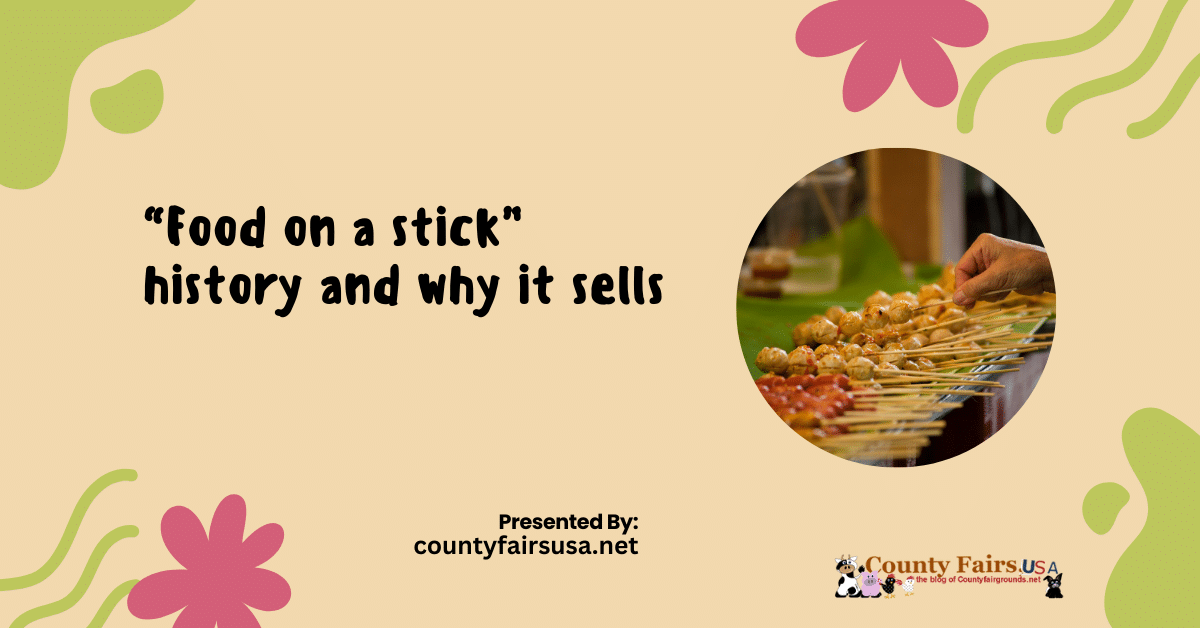
Long before corn dogs became a state fair staple, ancient civilizations were already skewering their meals. Archaeological evidence shows people have been cooking food on sticks since humans first controlled fire. When you’re cooking over an open flame, you need something to hold your food without burning your hands. A stick was the obvious answer.
The ancient Greeks enjoyed souvlaki, with chunks of meat grilled on wooden skewers. Middle Eastern cultures developed kebabs, threading meat and vegetables onto sticks for cooking and eating. In Japan, yakitori became a street food tradition centuries ago. These weren’t just cooking methods but some of the earliest forms of portable, hand-held meals that let people eat while moving through markets and festivals.
Medieval European festivals featured vendors selling skewered foods to crowds. When immigrants brought their food traditions to America, these stick-based foods came along. By the late 1800s and early 1900s, American fairs began experimenting with their own versions, realizing that food on a stick was convenient, memorable, and surprisingly profitable.
How American Fairs Created the Stick Food Revolution
The real explosion happened at American state and county fairs during the 20th century. Creative vendors started pushing boundaries and inventing the iconic fair foods we cover on CountyFairgrounds.net today.
The corn dog has a disputed origin story, with multiple vendors claiming they invented it first. Some credit the Fletcher brothers at the Texas State Fair in 1942, while others point to earlier versions. Regardless of who came first, the corn dog became the gold standard. It was hot, filling, portable, and absolutely perfect for fairgoers walking the midway.
Candied apples appeared even earlier, becoming popular at carnivals in the early 1900s. The 1950s and 1960s saw an explosion of creativity as fair vendors competed to create the next big thing:
- Deep-fried cheese curds on a stick became a Wisconsin fair tradition
- Chocolate-covered frozen bananas gained popularity at West Coast fairs
- Pronto pups with different batter became a Pacific Northwest favorite
- Funnel cake on a stick made the classic fair treat even more portable
The modern era brought the deep-fried craze. Minnesota State Fair and Iowa State Fair now compete annually to debut the most outrageous foods on sticks. Deep-fried Oreos, Twinkies, Snickers bars, butter, and even pickles have all gotten the stick treatment. This competition drives innovation and keeps people coming back to see what’s new each year.
Why Food on a Stick Outsells Almost Everything Else
What makes food on a stick such a powerhouse at fairs and festivals? The answer involves psychology, practicality, and smart marketing that we’ve observed at countless events featured on CountyFairgrounds.net.
The Practical Benefits
The obvious advantages work for both vendors and customers. Fairgoers can walk around while eating without juggling plates and forks. One hand stays free for holding drinks, playing games, or keeping track of kids. It’s much less messy than trying to eat traditional fair food while standing, and there’s no need to hunt for picnic tables.
For vendors, the benefits are equally compelling:
- Faster preparation and serving times mean more sales per hour
- Lower equipment costs compared to plated meals
- Less cleanup and simplified waste disposal
- Easy portion control keeps food costs predictable
- Simple presentation requires minimal staff training
The Psychology That Drives Sales
Beyond practicality, food on a stick taps into powerful mental triggers. For many people, it represents childhood memories of county fairs, summer festivals, and family outings. When adults see a corn dog or candied apple on a stick, they’re not just buying food but reconnecting with cherished memories.
The novelty appeal also matters. Taking familiar foods and putting them on sticks creates just enough novelty to seem special without being unfamiliar. A deep-fried Snickers bar on a stick is still recognizable, but the presentation makes it feel like an event-specific treat you can only get at the fair.
Food on a stick looks great and photographs well. In today’s social media age, that visual impact matters. People snap photos of their stick food and share them online, creating free advertising for vendors and fairs. The “only at the fair” mentality also creates urgency. Most people visit their county fair once a year, so there’s a sense of “get it now or wait another year.”
What’s Coming Next for Fair Food
The food on a stick trend keeps evolving in interesting directions. More fairs now offer grilled vegetable skewers, fresh fruit kabobs, and lean protein options for health-conscious fairgoers. These healthier choices still deliver the convenience without the guilt.
Gourmet upgrades are appearing at festivals nationwide. Food trucks and artisan vendors bring upscale versions like lobster corn dogs, truffle mac and cheese on a stick, and artisan gelato bars. American fairs are also incorporating international street foods:
- Filipino barbecue skewers with traditional marinades
- Brazilian churrasco with authentic seasonings
- Korean corn dogs with interesting coatings
- Thai satay with peanut sauce
Some fairs are moving toward biodegradable bamboo sticks and eco-friendly serving materials as environmental awareness grows. The concept stays the same, but the sustainability improves.
The Final Bite
Food on a stick has endured for thousands of years because it solves real problems while creating memorable experiences. From ancient civilizations cooking over open fires to modern state fairs competing for the craziest deep-fried creation, the stick has remained constant.
The next time you visit a fair featured on CountyFairgrounds.net and bite into a corn dog or try the latest creation on a stick, remember you’re participating in a tradition connecting you to countless generations of festival-goers. It’s practical, fun, and absolutely delicious. Whether you’re a corn dog purist or someone willing to try anything deep-fried and skewered, food on a stick is here to stay.