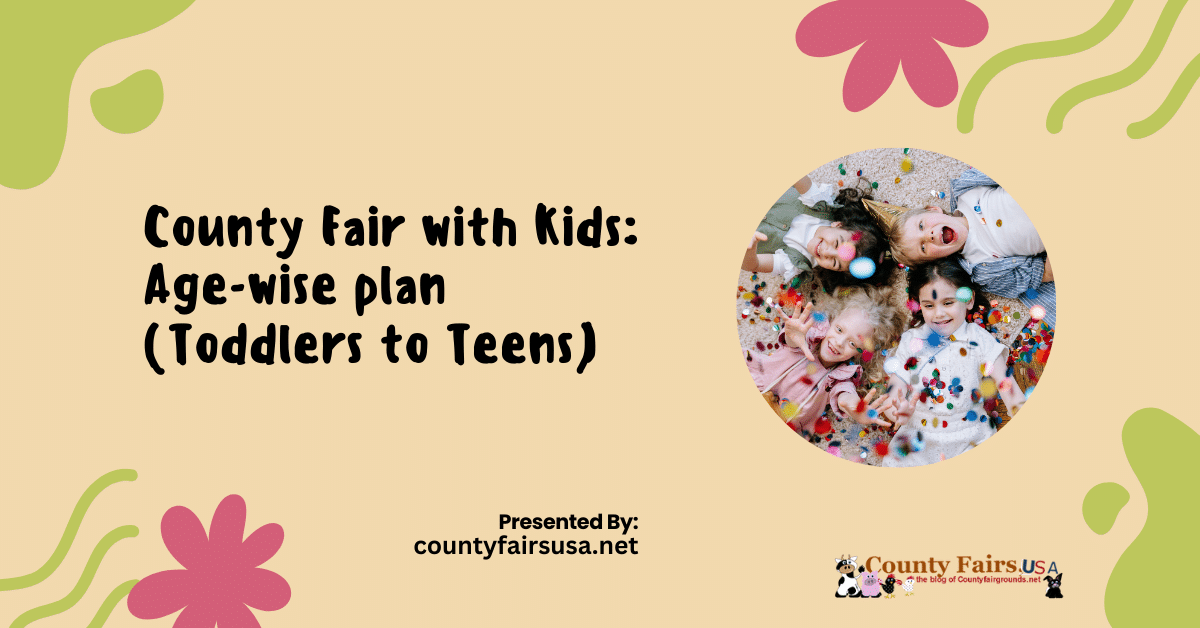
I’ve been running CountyFairgrounds.net since 1999, and over the years I’ve seen plenty of families at county fairs. Some are having the time of their lives, others look like they’re ready to pull their hair out. The difference? Usually comes down to planning for the right age group.
2026 County Fair with Kids – Premium Family Guide
Taking a toddler to a county fair is completely different from taking a teenager. What works for one age will frustrate another. Here’s what I’ve learned about making fair visits work for every stage of childhood, from the diaper bag years to the “can I go with my friends?” years.
Toddlers (Ages 1-3): Keep It Short and Simple
Toddlers at county fairs need a totally different approach. Their attention span is about as long as a goldfish, they get overwhelmed easily, and a meltdown can happen faster than you can say “funnel cake.”
- Visit early morning (9-11am) or late afternoon when it’s cooler
- Plan for 2 hours maximum before someone loses it
- Stick to the animal barns and petting zoo
- Skip the loud midway games
- Bring your own snacks and drinks
The carousel is usually a winner, and most toddlers are fascinated by the farm animals. At CountyFairgrounds.net, we list which fairs have the best petting zoos and animal exhibits. Don’t try to see everything. Pick two or three things and call it a win.
Preschoolers (Ages 4-5): More Rides, Still Easy
This age wants to do what the big kids do, but they’re not quite ready yet. They can handle a bit more stimulation than toddlers, and they actually remember the fair afterward, which is nice.
- Try kiddie rides beyond just the carousel
- Let them play a few simple games
- Visit the agricultural exhibits (they’re learning about everything)
- Face painting is usually a big hit
- Budget about 3-4 hours
Preschoolers are old enough to walk most of the time, which is good because strollers get annoying in fair crowds. They’re also starting to have opinions about what they want to do. Pick your battles.
Elementary Kids (Ages 6-10): The Golden Years
This is honestly the best age for county fairs. Kids are old enough to go on most rides, not too cool to be excited about everything, and they can walk all day without complaining too much.
- They can handle the bigger carnival rides
- Midway games become more interesting (and expensive)
- Let them try different fair foods
- 4-H exhibits and demonstrations keep their attention
- Plan for a full afternoon or evening
Elementary age kids are also great at the educational stuff without realizing it’s educational. They love seeing how butter is made, watching sheep shearing, or learning about tractors. Check CountyFairgrounds.net for fairs with strong agricultural programs.
This is the age where you can give them a small budget for games and food and let them make choices. They’ll probably blow it all in the first hour, but that’s part of learning. Bring extra cash anyway.
Tweens (Ages 11-13): Freedom with Training Wheels
Tweens are in that weird phase where they want independence but aren’t quite ready for it. County fairs are actually perfect for practicing.
- Let them walk around with friends (set boundaries first)
- Establish check-in times and meeting spots
- They’ll want the thrill rides and probably the concerts
- Give them a phone if possible
- Set a realistic budget
This age group will roll their eyes at the animal barns but secretly still enjoy them. They want to seem grown up, so let them have some freedom within limits you’re comfortable with. The fair is safer than a mall for practicing independence.
Teens (Ages 14+): Basically Just Drive Them There
Teenagers at county fairs mostly want you to drop them off and pick them up later. And honestly, that’s fine. They’re there for their friends, the rides, and whatever band is playing.
- Agree on pick-up time and location beforehand
- Make sure they have a charged phone
- Give them enough money (they’ll spend it all)
- Evening visits work best for this age
- They probably won’t want you tagging along
Let them go. They’re not going to get lost, and the fair is a controlled environment. Just have clear expectations about when and where you’re meeting afterward.
General Tips That Work for All Ages
Some things apply no matter how old your kids are. County fairs are hot, crowded, and expensive if you’re not careful.
- Weekday visits are less crowded than weekends
- Bring sunscreen and refillable water bottles
- Wear comfortable shoes (you’ll walk miles)
- Have a meeting spot picked out in case you get separated
- Check CountyFairgrounds.net for special discount days
Most fairs have certain days with cheaper admission or ride wristbands. It’s worth planning around those deals, especially if you have multiple kids. Also, eat before you go. Fair food is part of the fun, but it shouldn’t be your whole meal budget.
Conclusion
Every age experiences county fairs differently, and that’s what makes them special. Your toddler won’t remember much, but you’ll have the pictures. Your teenager will remember going with friends for years. Plan for the age you’ve got, not the age you wish you had.
The fairs listed on CountyFairgrounds.net happen all summer long. Find one near you, plan according to your kids’ ages, and just enjoy it. Things won’t go perfectly, but that’s part of the experience.