
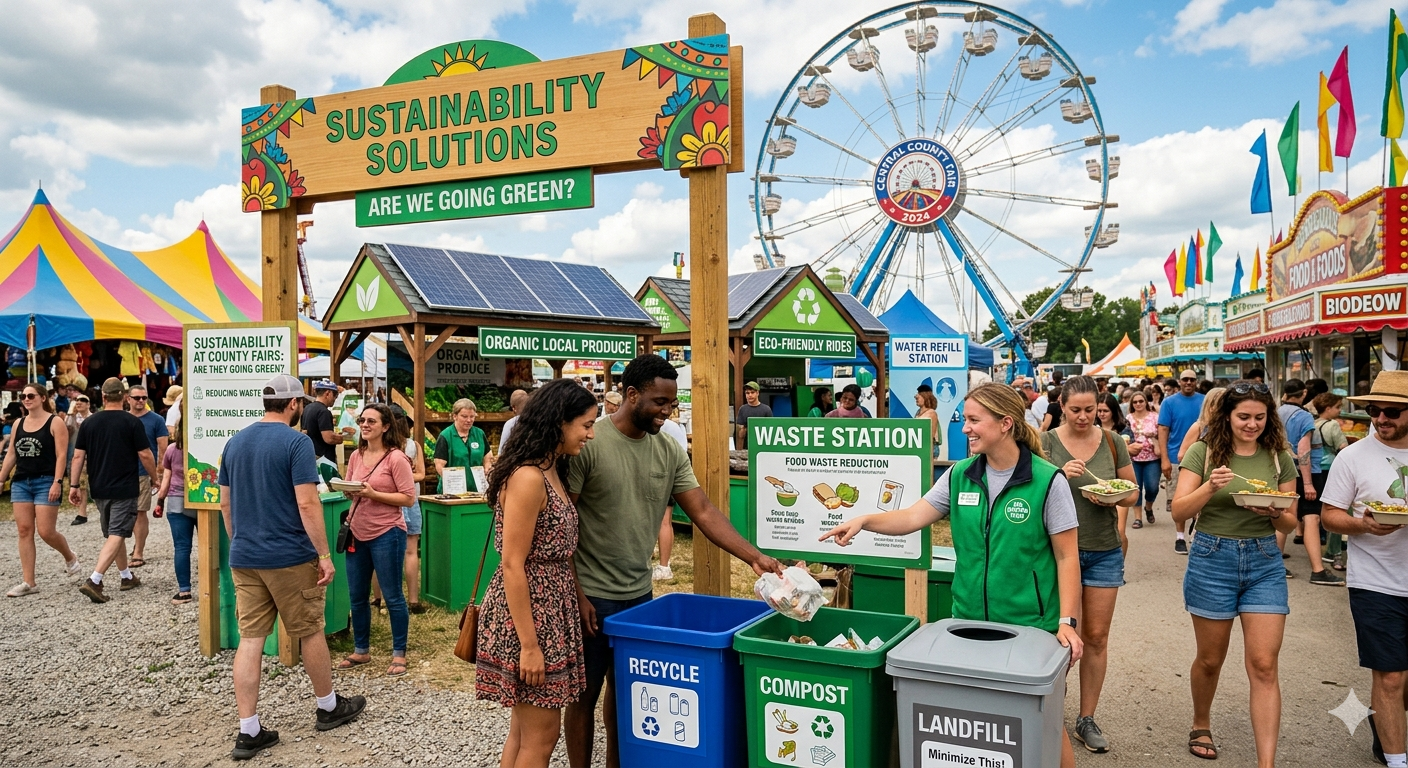
Sustainability at County Fairs: Are They Going Green?
Sustainability at County Fairs: Are Fairs Going Green? Think about what a county fair actually involves. Thousands of visitors over several days, hundreds of food vendors running fryers all day, diesel generators humming behind every booth, and mountains of single-use cups and packaging piling up by the hour. It is a lot. At CountyFairsUSA.net, we have been covering county and state fairs across America since 1999, and one of the most notable shifts we have observed in recent years is how seriously many fairgrounds are taking their environmental footprint. Sustainability at county fairs is no longer a fringe conversation. It is becoming part of how the best fairs operate. The Environmental Reality of Running a County Fair A multi-day fair that draws tens of thousands of visitors creates significant waste and energy demands. Food waste, plastic packaging, fuel consumption, and water usage all add up fast, especially when you are feeding a small city for a week straight. The good news is that awareness has grown considerably. Fairs across the country are now implementing green programs that include solar power, waste diversion, water conservation, and energy-efficient products, and many are partnering with public agencies and private companies to support sustainable practices at fairgrounds. CA The question is no longer whether fairs should go green. It is how fast they can get there. Waste Reduction: Where Most Fairs Start Food waste and single-use plastics are the most visible sustainability problems at any large fair, and they are also where the most progress is being made. Fairs that are serious about going green tend to start here because the impact is immediate and visible to attendees. The Marin County Fair in California has built one of the most aggressive zero-waste programs in the country, collecting more than 28 tons of recycling and 80 tons of compost in a single fair season, and achieving a 92% waste diversion rate over more than a decade. Marin County Fair They have also banned single-use plastic bottles entirely from vendor sales and installed water refilling stations throughout the fairgrounds. Common waste reduction steps fairs are taking right now include: Replacing single-use plastic cups and utensils with compostable or reusable alternatives Setting up clearly marked recycling and composting stations throughout the fairgrounds Requiring food vendors to use eco-friendly packaging as part of their vendor agreements Partnering with food banks and shelters to donate unsold food at the end of each fair day Collecting used cooking oil from food vendors and converting it into biodiesel [...]