
county fair livestock shows

How to Throw Your Own Backyard County Fair

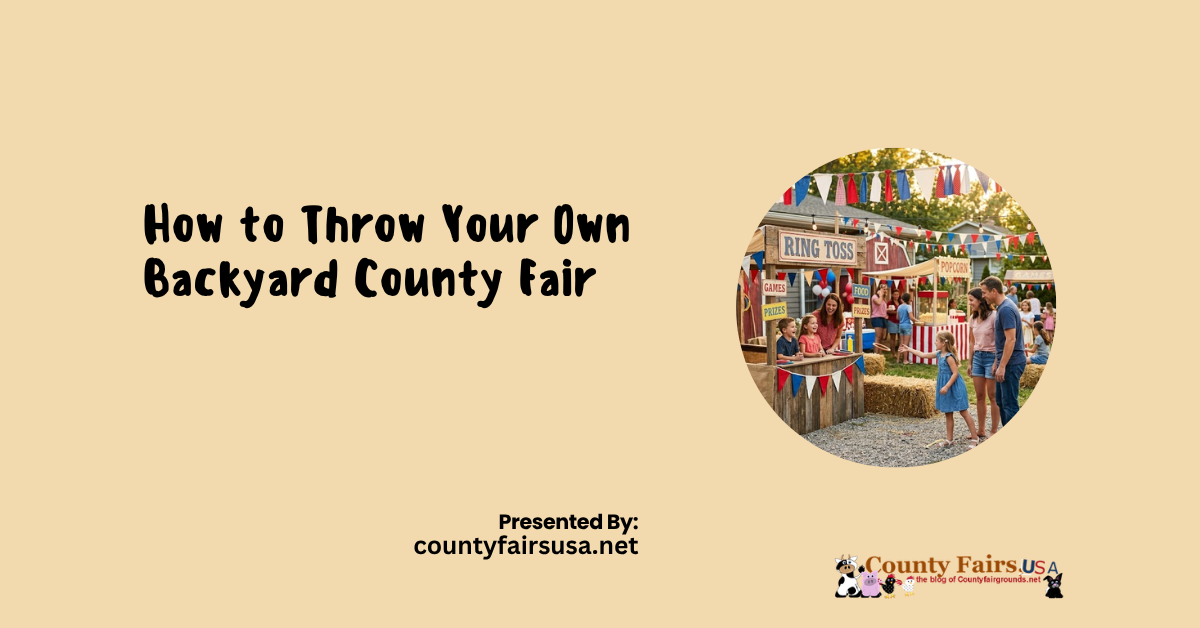
There is something about a county fair that stays with you. The smell of funnel cakes, the squeal of kids at a ring toss, a blue ribbon pinned to a homemade pie. You do not need a fairground or a ticket booth to enjoy any of it. With a little planning, you can throw your own backyard county fair on almost any budget. At County Fairs USA we have covered fairs and fairgrounds for over two decades, and these are the ideas that translate best to a backyard. Why Host a Backyard County Fair? A backyard fair gives you the fun of a real county fair without the crowds, the parking, or the cost of admission for a whole family. It also turns a plain weekend into a day people remember long after the lights come down. People love hosting one because: It keeps kids busy for hours on a small budget It brings neighbors and extended family together in one spot It works for birthdays, holiday weekends, or any Saturday afternoon You control the food, the games, and the schedule Best of all, most of what you need can be borrowed, reused, or built from things already sitting in your garage. Planning Your Backyard Fair Good planning is what separates a fun fair from a stressful one. Start a few weeks out so you have time to gather supplies, line up helpers, and send invites without a last-minute scramble. Pick a Date and Theme Choose a date with mild weather, ideally a weekend morning or late afternoon to dodge the midday heat. A theme ties the whole event together and makes every later decision easier. Popular themes include: Classic county fair with red, white, and blue bunting Western and rodeo with hay bales, cowboy hats, and bandanas Harvest fair with pumpkins, corn stalks, and warm fall colors Set a Budget Decide early how much you want to spend, then split that number across three buckets: food, games and prizes, and decorations. This keeps any one area from eating the whole budget. Most backyard fairs run well under a hundred dollars when you reuse decorations and ask guests to bring a dish to share. Send Invites Handmade tickets give the event an authentic fair feel and double as keepsakes for the kids. Print simple "admit one" tickets and have guests hand them over at the gate. For larger groups, a free online invite works fine. Just be clear about the date, time, and whether guests should bring [...]
By |2026-06-14T12:10:23+00:00June 11th, 2026|County Fair, Livestock, State Fair|Comments Off on How to Throw Your Own Backyard County Fair

4-H and FFA at County Fairs: Opportunities for Young Farmers

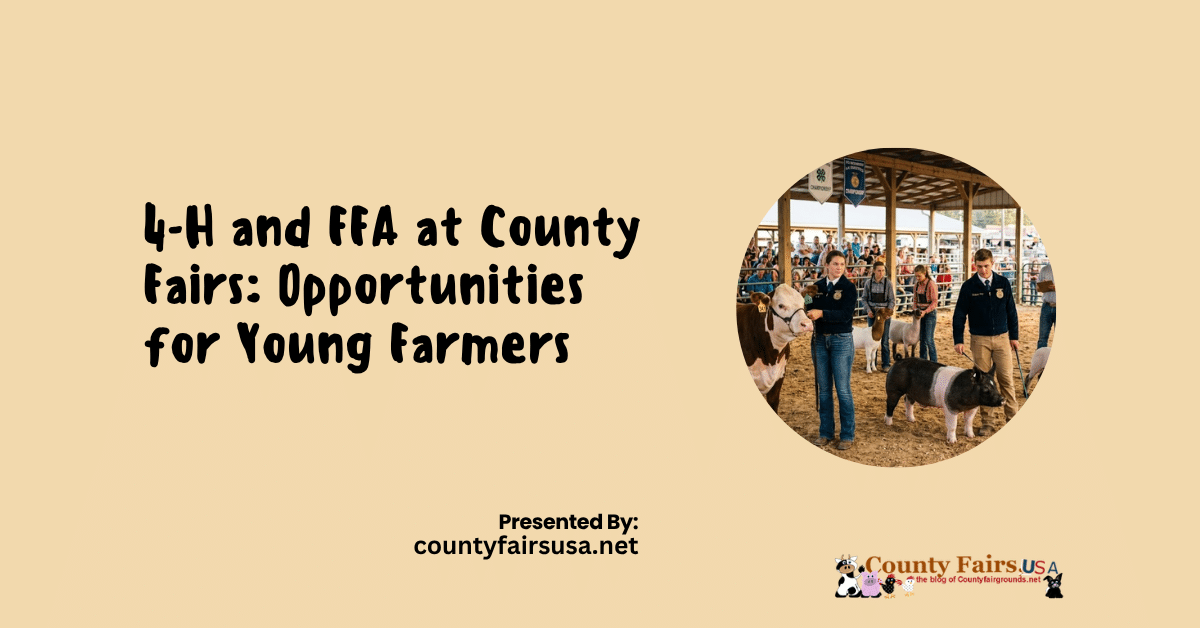
For many rural families, the county fair is the week that matters most. Months of work in a barn or a backyard plot finally get tested in front of judges, neighbors, and buyers. At the center of that work are two youth programs that shape young farmers across the country: 4-H and FFA. At County Fairs USA, we see these programs as the backbone of every fair we cover. This guide explains what they offer, the skills kids gain, and how a beginner can start before the next entry deadline. What Are 4-H and FFA? Both programs build practical agriculture and life skills, but they run differently. 4-H is community-based, tied to your local Cooperative Extension office, and open to kids as young as five. Members meet in clubs and pick projects that go well beyond animals. FFA, once called Future Farmers of America, is school-based and runs through agriculture classes, usually starting in middle or high school. The common thread is the fair, where both groups show what they have raised, grown, or built. Why County Fairs Matter for Young Farmers A county fair gives a young person something rare: a real deadline with real stakes. The animal has to be ready on a set date, the records have to be complete, and the judging happens in public. That pressure teaches accountability faster than a classroom can. Fairs also connect kids to a wider community. Across the events County Fairs USA follows, members meet buyers, veterinarians, and seasoned breeders whose advice often outlasts any ribbon. Livestock Shows and Competitions The barns are usually the heart of the fair for 4-H and FFA members. Showing an animal is the most visible and demanding part of either program, and it covers a wide range of species. Common animals shown at county fairs include: Beef and dairy cattle Market hogs and breeding pigs Meat and dairy goats Sheep and lambs Poultry such as chickens, ducks, and turkeys Rabbits How Judging Works Judging splits into two main types. Market classes evaluate the animal for traits like muscle, structure, and finish. Showmanship classes judge the handler on how well they present and control the animal. A young farmer can place low in market class but win showmanship, because that ring rewards preparation and skill over genetics. Many veterans say showmanship is where the real learning happens. The Auction and the Money Side Many fairs close with a livestock auction where members sell market animals to local buyers. For a lot of [...]

By |2026-06-14T11:50:37+00:00June 6th, 2026|Agriculture|Comments Off on 4-H and FFA at County Fairs: Opportunities for Young Farmers
Go to Top