
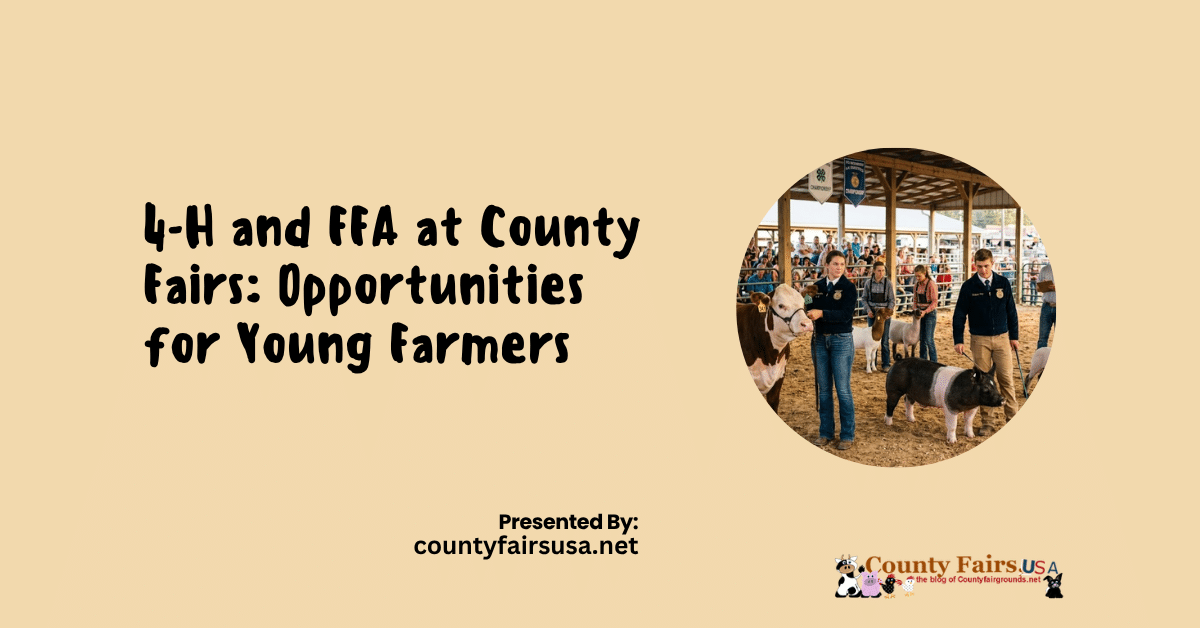
4-H and FFA at County Fairs: Opportunities for Young Farmers
For many rural families, the county fair is the week that matters most. Months of work in a barn or a backyard plot finally get tested in front of judges, neighbors, and buyers. At the center of that work are two youth programs that shape young farmers across the country: 4-H and FFA. At County Fairs USA, we see these programs as the backbone of every fair we cover. This guide explains what they offer, the skills kids gain, and how a beginner can start before the next entry deadline. What Are 4-H and FFA? Both programs build practical agriculture and life skills, but they run differently. 4-H is community-based, tied to your local Cooperative Extension office, and open to kids as young as five. Members meet in clubs and pick projects that go well beyond animals. FFA, once called Future Farmers of America, is school-based and runs through agriculture classes, usually starting in middle or high school. The common thread is the fair, where both groups show what they have raised, grown, or built. Why County Fairs Matter for Young Farmers A county fair gives a young person something rare: a real deadline with real stakes. The animal has to be ready on a set date, the records have to be complete, and the judging happens in public. That pressure teaches accountability faster than a classroom can. Fairs also connect kids to a wider community. Across the events County Fairs USA follows, members meet buyers, veterinarians, and seasoned breeders whose advice often outlasts any ribbon. Livestock Shows and Competitions The barns are usually the heart of the fair for 4-H and FFA members. Showing an animal is the most visible and demanding part of either program, and it covers a wide range of species. Common animals shown at county fairs include: Beef and dairy cattle Market hogs and breeding pigs Meat and dairy goats Sheep and lambs Poultry such as chickens, ducks, and turkeys Rabbits How Judging Works Judging splits into two main types. Market classes evaluate the animal for traits like muscle, structure, and finish. Showmanship classes judge the handler on how well they present and control the animal. A young farmer can place low in market class but win showmanship, because that ring rewards preparation and skill over genetics. Many veterans say showmanship is where the real learning happens. The Auction and the Money Side Many fairs close with a livestock auction where members sell market animals to local buyers. For a lot of [...]