The 25 Best Carnival Prizes for Adults

The 25 Best Carnival Prizes for Adults

Walking through a county fair midway isn't just a kids-only experience anymore. Adults line up at game booths just as eagerly, eyeing the top-shelf prizes and calculating how many throws it will take. The truth is, carnival prizes have grown up right alongside the fairgoers. At CountyFairs USA, we've spent over two decades covering fairs, festivals, and everything that makes them worth attending. One thing we've noticed over the years is that the best carnival booths stock prizes adults genuinely want to take home. Here are 25 of the best carnival prizes for adults, organized by category so you know exactly what to look for at your next county fair. Wearable Carnival Prizes That Turn Heads There's nothing quite like winning a prize you can put on immediately and wear around the fairgrounds all night. Wearable prizes are crowd favorites because they double as conversation starters and instant photo props. Oversized Novelty Sunglasses. Comically large, impossible to ignore, and perfect for fair day selfies. Felt Stovepipe Hats. Colorful and ridiculous in the best possible way. Adults love the mix of fancy and funny. Mardi Gras Masks. Metallic carnival masks work at the fair, at office costume parties, and everywhere in between. Metallic Bead Necklaces. A timeless carnival classic that adds instant festival energy to any outfit. Flower Lei Necklaces. Perfect for luau-themed booths and tropical carnival setups. They photograph beautifully and feel like a mini vacation. Stress Relievers and Desk Toys If there's one prize category that resonates with every adult at a county fair, it's stress relief. These small, satisfying prizes end up on office desks and kitchen counters long after the fair is over. Relaxable Sports Balls. Soft, squeezable, and perfect for long meetings or slow afternoons at work. Lump of Coal Stress Balls. A novelty shape that's especially fun as a holiday-themed carnival prize. Fidget and Puzzle Cubes. Nostalgic, addictive, and surprisingly useful during conference calls. Inspirational Stones. Smooth stones with positive messages that double as paperweights or garden accents. Winning one at the fair makes it feel more personal than buying one at a store. Fun and Games Prizes Adults Actually Fight Over Adults are competitive. Give them a chance to win something entertaining, and they'll keep coming back to the booth all night. These carnival prizes for adults tap directly into that competitive spirit. Jumbo playing cards are a consistent winner at county fair game booths. They're practical for outdoor gatherings and hilarious for anyone whose eyesight has started to slip. Clear [...]
By |2026-02-13T11:41:01+00:00February 13th, 2026|Fair|Comments Off on The 25 Best Carnival Prizes for Adults

Best Photo Spots at the State Fair

Everyone takes photos at the state fair. But most people end up with the same blurry ride shots and half-eaten corn dog snapshots that look exactly like everyone else's. The fair is actually full of incredible photo opportunities if you slow down and pay attention to what is around you. Where Are the Best Photo Spots At The State Fair? At CountyfairsUSA, we have been covering county fairs, state fairs, and festivals across America since 1999. Over the years, we have noticed that the best fair photos almost never come from the obvious spots. Here is where to point your camera for shots that actually stand out. The Midway During Golden Hour The hour before sunset is the single best window for photos at any state fair. The warm, low-angle sunlight bounces off metal rides, colorful signage, and the faces of fairgoers in a way that makes everything look cinematic. If you only have one chance to shoot, this is when you should be on the midway. Shoot facing away from the sun so that warm backlit glow wraps around your subjects. The Ferris wheel silhouetted against an orange sky is a classic shot for a reason, and it only takes a few seconds to capture if you are in the right place at the right time. The Ferris Wheel From Every Angle No other structure at the fair gives you as many photo options as the Ferris wheel. It works as a subject during the day and completely changes character after dark when the lights come on. Most people only photograph it from one angle, but you should try several. From directly below looking straight up through the spokes for a dramatic geometric shot From a distance with the full wheel framed against the sky or the midway crowd From the top looking down at the entire fairgrounds spread out below you At night with long exposure if your phone or camera supports it, so the lights streak into glowing circles Neon Signs and Food Stand Lights After Dark Once the sun sets, the fair becomes a completely different place for photography. Every food stand, game booth, and ride lights up with neon and LED signage that creates bold, colorful backdrops you cannot find anywhere else. Lemonade stands and cotton candy carts are some of the most photogenic vendors because of their bright yellow and pink lighting Use portrait mode on your phone to blur the background lights into soft bokeh behind your subject Step back [...]

By |2026-02-13T11:20:56+00:00February 13th, 2026|State Fair|Comments Off on Best Photo Spots at the State Fair

Food on a Stick: The Surprising History Behind America’s Favorite Fair Food

Walk through any county fair or state festival, and you'll see them everywhere. Corn dogs, candied apples, deep-fried Oreos, cheese curds, and dozens of other treats, all proudly served on wooden sticks. At CountyFairgrounds.net, we've covered hundreds of fairs across America, and one thing never changes: people love food on a stick. But this isn't just a modern fair gimmick. The story behind food on a stick stretches back thousands of years, and there are real reasons why it continues to dominate fairgrounds nationwide. Let's explore the fascinating history and discover why this simple concept remains so incredibly popular. The Ancient Origins of Food on a Stick Long before corn dogs became a state fair staple, ancient civilizations were already skewering their meals. Archaeological evidence shows people have been cooking food on sticks since humans first controlled fire. When you're cooking over an open flame, you need something to hold your food without burning your hands. A stick was the obvious answer. The ancient Greeks enjoyed souvlaki, with chunks of meat grilled on wooden skewers. Middle Eastern cultures developed kebabs, threading meat and vegetables onto sticks for cooking and eating. In Japan, yakitori became a street food tradition centuries ago. These weren't just cooking methods but some of the earliest forms of portable, hand-held meals that let people eat while moving through markets and festivals. Medieval European festivals featured vendors selling skewered foods to crowds. When immigrants brought their food traditions to America, these stick-based foods came along. By the late 1800s and early 1900s, American fairs began experimenting with their own versions, realizing that food on a stick was convenient, memorable, and surprisingly profitable. How American Fairs Created the Stick Food Revolution The real explosion happened at American state and county fairs during the 20th century. Creative vendors started pushing boundaries and inventing the iconic fair foods we cover on CountyFairgrounds.net today. The corn dog has a disputed origin story, with multiple vendors claiming they invented it first. Some credit the Fletcher brothers at the Texas State Fair in 1942, while others point to earlier versions. Regardless of who came first, the corn dog became the gold standard. It was hot, filling, portable, and absolutely perfect for fairgoers walking the midway. Candied apples appeared even earlier, becoming popular at carnivals in the early 1900s. The 1950s and 1960s saw an explosion of creativity as fair vendors competed to create the next big thing: Deep-fried cheese curds on a stick became a Wisconsin fair tradition Chocolate-covered frozen [...]

By |2026-02-11T08:54:03+00:00January 16th, 2026|Fair Food|Comments Off on Food on a Stick: The Surprising History Behind America’s Favorite Fair Food

What Happens at Fairgrounds When Fairs Are Not Running?

Drive past your local fairground in February or October, and you might think it's abandoned. The truth is quite different. While county and state fairs typically run for just one or two weeks each year, these sprawling properties stay remarkably busy serving their communities in dozens of unexpected ways. What Happens at Fairgrounds Off-Season (2026) Most fairgrounds operate year-round, hosting everything from weddings to rodeos, farmers markets to concerts. Understanding what happens during the off-season reveals why these properties remain valuable community assets long after the carnival rides are packed away. Community Events Fill the Calendar Fairgrounds transform into community gathering spaces throughout the year. Local organizations and businesses rely on these venues because they offer large, affordable spaces that can accommodate crowds of any size. Weekly farmers markets are among the most common off-season uses. Vendors set up under pavilions or in exhibition halls, selling fresh produce, baked goods, and handmade crafts. These markets often run from April through November, keeping fairgrounds active for most of the year. Other regular community events include: Craft fairs and antique shows using exhibition buildings Flea markets and swap meets in parking areas Community fundraisers and charity events High school graduation ceremonies in grandstands Local festival celebrations throughout the seasons Seasonal Celebrations Create New Revenue Holiday events have become major revenue generators for many fairgrounds. October brings Halloween attractions that rival the fair itself in popularity. Barns that housed livestock transform into haunted houses, while open fields become elaborate corn mazes and pumpkin patches. Christmas events follow close behind. Some fairgrounds host massive light displays where families drive through decorated grounds. Others set up holiday markets in heated buildings, giving local artisans a place to sell seasonal goods. According to event calendars on Countyfairgrounds.net, these holiday attractions often run for several weeks, bringing in steady income during traditionally slow months. Concerts and Entertainment Keep Grandstands Active The same grandstands that host tractor pulls during fair week become concert venues the rest of the year. Country music acts, classic rock bands, and tribute shows regularly book fairground stages because the outdoor atmosphere appeals to audiences. Popular entertainment events include: Regional touring acts and local bands Monster truck shows and demolition derbies Auto racing events and car shows Outdoor movie nights during summer Community theater productions Many fairgrounds have upgraded sound systems and lighting to compete with traditional venues. The unique setting and ample parking make them attractive options for both performers and audiences. Rodeos and Equestrian Events Utilize Existing Facilities Fairgrounds [...]

By |2026-02-11T08:54:24+00:00January 16th, 2026|County Fairgrounds|Comments Off on What Happens at Fairgrounds When Fairs Are Not Running?

How Carnival Rides Are Inspected and What Safety Signs Mean

There's something magical about walking into a county fair and seeing those carnival rides lit up against the evening sky. The smell of funnel cakes, the screams from the Gravitron, kids begging their parents for just one more ride on the Tilt-A-Whirl. But here's something most people don't think about: those rides get loaded onto trucks and hauled across the country dozens of times each year. So who makes sure they're actually safe to ride? The answer might surprise you. Carnival rides go through more inspections than most people realize. From daily operator checks to state inspector visits, there's a whole system in place to keep fairgoers safe. And those safety signs posted everywhere? They're not just decoration. They exist because someone, somewhere, learned the hard way what happens when the rules get ignored. Who Actually Inspects Carnival Rides The inspection process isn't a one-and-done deal. Multiple people check these rides at different times for different reasons. Ride operators start every morning with a safety checklist before the gates even open. State inspectors show up at least once a year, sometimes more depending on local laws. Some states require monthly inspections for traveling carnival rides. Insurance companies also send their own inspectors to protect their investment. On CountyFairgrounds.net, we get questions about ride safety all the time, especially from parents with young kids. The short answer is that legitimate carnival companies take inspections seriously because one accident can shut them down permanently. The Daily Safety Checklist Carnival operators don't just flip some switches and call it good. Every morning, before the first customer walks through the gate, someone walks each ride and runs through a checklist. This happens whether it's opening day or the last night of the fair. Here's what gets checked every single day: All restraint systems get tested (lap bars, shoulder harnesses, seat belts, safety chains) Brake systems and emergency stop buttons get verified Visual inspection for loose bolts, frayed cables, cracked welds, or damaged parts At least one empty test run of the ride Confirmation that all safety signs are visible and readable If something looks wrong or doesn't pass the test, that ride stays closed until it gets fixed. Simple as that. What State Inspectors Look For When the state inspector shows up, things get more technical. These aren't just regular safety officers. They have specialized training in amusement ride mechanics and engineering. Some states require them to be certified engineers. State inspectors dig deeper than the daily checks: Structural integrity including [...]

By |2026-02-11T08:56:00+00:00January 16th, 2026|Carnivals|Comments Off on How Carnival Rides Are Inspected and What Safety Signs Mean

County Fair with Kids: Age-wise plan (Toddlers to Teens)

I've been running CountyFairgrounds.net since 1999, and over the years I've seen plenty of families at county fairs. Some are having the time of their lives, others look like they're ready to pull their hair out. The difference? Usually comes down to planning for the right age group. 2026 County Fair with Kids – Premium Family Guide Taking a toddler to a county fair is completely different from taking a teenager. What works for one age will frustrate another. Here's what I've learned about making fair visits work for every stage of childhood, from the diaper bag years to the "can I go with my friends?" years. Toddlers (Ages 1-3): Keep It Short and Simple Toddlers at county fairs need a totally different approach. Their attention span is about as long as a goldfish, they get overwhelmed easily, and a meltdown can happen faster than you can say "funnel cake." Visit early morning (9-11am) or late afternoon when it's cooler Plan for 2 hours maximum before someone loses it Stick to the animal barns and petting zoo Skip the loud midway games Bring your own snacks and drinks The carousel is usually a winner, and most toddlers are fascinated by the farm animals. At CountyFairgrounds.net, we list which fairs have the best petting zoos and animal exhibits. Don't try to see everything. Pick two or three things and call it a win. Preschoolers (Ages 4-5): More Rides, Still Easy This age wants to do what the big kids do, but they're not quite ready yet. They can handle a bit more stimulation than toddlers, and they actually remember the fair afterward, which is nice. Try kiddie rides beyond just the carousel Let them play a few simple games Visit the agricultural exhibits (they're learning about everything) Face painting is usually a big hit Budget about 3-4 hours Preschoolers are old enough to walk most of the time, which is good because strollers get annoying in fair crowds. They're also starting to have opinions about what they want to do. Pick your battles. Elementary Kids (Ages 6-10): The Golden Years This is honestly the best age for county fairs. Kids are old enough to go on most rides, not too cool to be excited about everything, and they can walk all day without complaining too much. They can handle the bigger carnival rides Midway games become more interesting (and expensive) Let them try different fair foods 4-H exhibits and demonstrations keep their attention Plan for a full afternoon [...]

By |2026-02-11T08:56:52+00:00January 16th, 2026|County Fair|Comments Off on County Fair with Kids: Age-wise plan (Toddlers to Teens)

NEW County Fair Foods 2026: What’s Actually Worth Trying This Year

I've been running Countyfairgrounds.net since 1999, and every year I think fair food can't get any weirder. Then 2026 rolls around and proves me wrong. The NEW county fair foods 2026 vendors are bringing out are absolutely wild, and honestly, some of them sound too crazy to actually taste good. But here's the thing. After covering hundreds of fairs across the country, I've learned that the weirdest combinations often turn out to be the best. So let's talk about what's actually showing up at fairgrounds this summer and what you should try before the season ends. The Dessert Situation Has Gone Completely Bonkers Funnel cakes used to be the peak of fair desserts. Those days are long gone. This year's sweet treats are designed to make your Instagram followers jealous and your dentist concerned. The deep-fried cookie dough trend isn't new, but vendors are taking it further. Now they're stuffing them with Nutella, peanut butter cups, or caramel before battering them up. One stand I saw was doing cookie dough stuffed with crushed Oreos, which feels like overkill but I'm not complaining. Milkshakes have turned into full-blown dessert towers. We're talking mason jars topped with slices of pie, cotton candy clouds, and churro straws. Some vendors are making "cereal milk" versions using Fruity Pebbles or Cinnamon Toast Crunch. They're ridiculous and messy and you'll probably need help finishing one. What's Actually New in 2026: Savory funnel cakes topped with bacon, cheese, and sour cream S'mores funnel cakes with torched marshmallow Ice cream stuffed between two fresh-made donuts Cotton candy burritos filled with ice cream and toppings The traditional powdered sugar funnel cake isn't going anywhere. But if you want to see what vendors are getting creative with, these variations are everywhere this season. Savory Foods Are Where Real Innovation Happens Sweet stuff gets attention, but the savory side of NEW county fair foods 2026 is where vendors are really competing. Everyone's trying to create the next viral food that gets shared across social media. Corn dogs got a serious upgrade. You'll find jalapeño cheddar batters, pretzel-coated versions, and Korean-style ones stuffed with mozzarella that creates an insane cheese pull. The "everything bagel" seasoned corn dog sounds weird but actually works really well. Loaded fries have completely taken over. These aren't side dishes anymore. They're full meals piled high with toppings, and honestly, they're perfect for sharing while you walk around. You can find them topped with pulled pork and coleslaw, Philly cheesesteak ingredients, buffalo chicken, or even [...]

By |2026-02-11T08:59:34+00:00January 16th, 2026|Fair Food|Comments Off on NEW County Fair Foods 2026: What’s Actually Worth Trying This Year

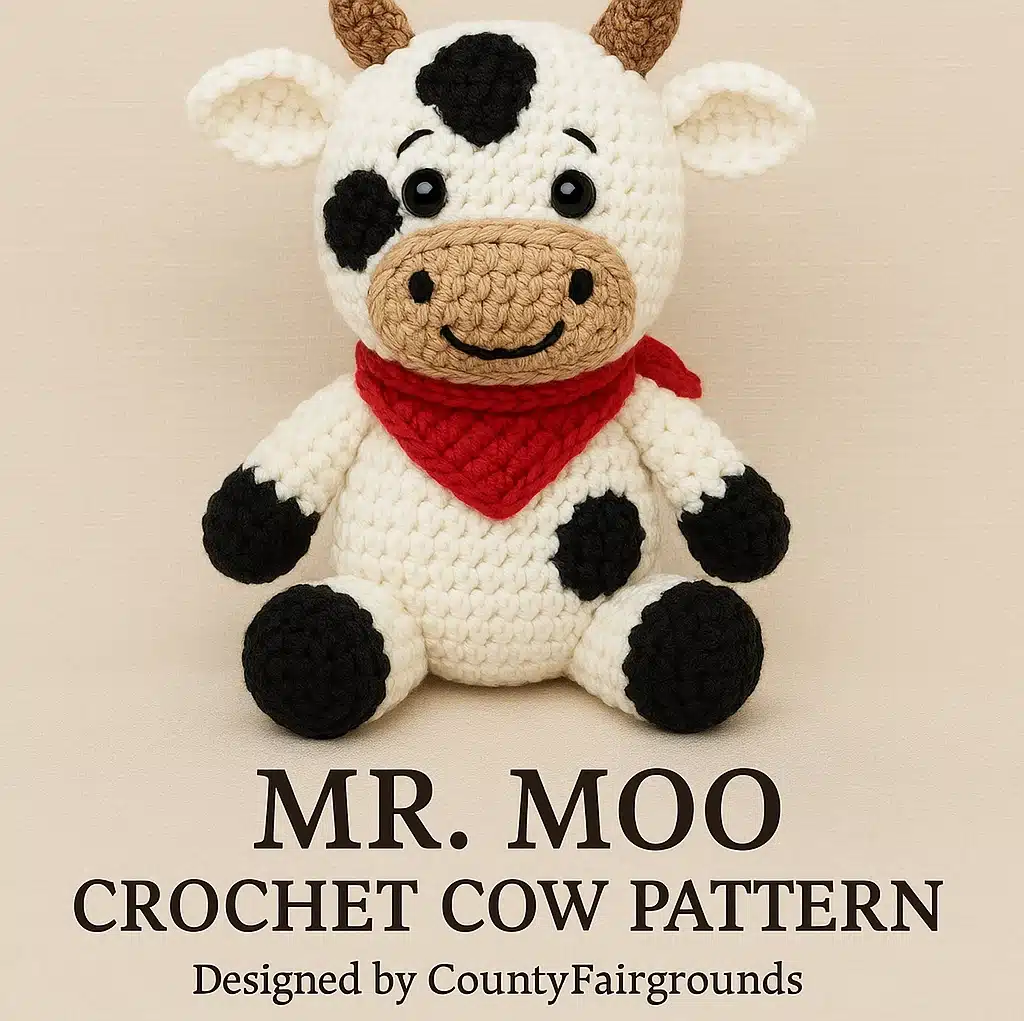
Mr. Moo – our own crochet pattern

Mr. Cow is a friendly, classic farm animal designed as part of the CountyFairgrounds Crochet Farm Animals Collection. With his soft cream body, contrasting black details, sweet embroidered smile, and optional floral neck accent, Mr. Cow makes a charming handmade gift, nursery décor piece, or craft fair favorite. This pattern is written in U.S. crochet terms and includes step-by-step instructions for creating a standing amigurumi cow. Clear assembly directions are included so all parts come together smoothly, even for confident beginners. Mr. Cow pairs perfectly with Mrs. Moo and the rest of the CountyFairgrounds farm animal patterns. Pattern At a Glance • Finished size: ~9 inches tall • Yarn: Worsted Weight (4) • Hook: 4.0 mm (G) • Skill level: Easy to Intermediate • Written in U.S. crochet terms 📏 Finished Size When made with worsted weight (4) yarn and a 4.0 mm (G) crochet hook, Mr. Cow will measure approximately: 9 inches tall (from the bottom of the hooves to the top of the head) 🧶 Materials Needed Worsted Weight (4) yarn Cream or off-white (main body) Black (hooves, muzzle, spots) Small amount of brown or tan (hair tuft) Optional: accent colors for floral neck detail 4.0 mm (G) crochet hook Fiberfill stuffing Safety eyes (10–12 mm) Yarn needle Stitch marker Scissors 🧵 Pattern Notes Written in U.S. crochet terms Worked in continuous rounds unless otherwise stated Skill level: Easy to Intermediate Finished cow stands on its own when properly stuffed Mr. Cow Crochet Pattern (U.S. Crochet Terms) Stitches & Abbreviations ch – chain sc – single crochet inc – increase (2 sc in same stitch) dec – decrease (sc 2 together) sl st – slip stitch Head (Cream) Magic ring, 6 sc (6) Inc in each st around (12) (1 sc, inc) around (18) (2 sc, inc) around (24) 5–8. Sc around (24) (3 sc, inc) around (30) 10–14. Sc around (30) (3 sc, dec) around (24) (2 sc, dec) around (18) Insert safety eyes between rounds 9–10, about 6 stitches apart. Begin stuffing the head firmly. (1 sc, dec) around (12) Dec around (6) Fasten off and close opening. Muzzle (Black) Magic ring, 6 sc (6) Inc in each st around (12) (1 sc, inc) around (18) 4–5. Sc around (18) Lightly stuff. Sew muzzle centered on the lower front of the head. Embroider nostrils and smile with black yarn. Ears (Make 2 – Cream) Magic ring, 6 sc (6) (1 sc, inc) around (9) 3–4. Sc around (9) Flatten slightly and sew to [...]

By |2026-01-04T23:51:42+00:00January 4th, 2026|Cow, Cows, Crochet|0 Comments
Go to Top